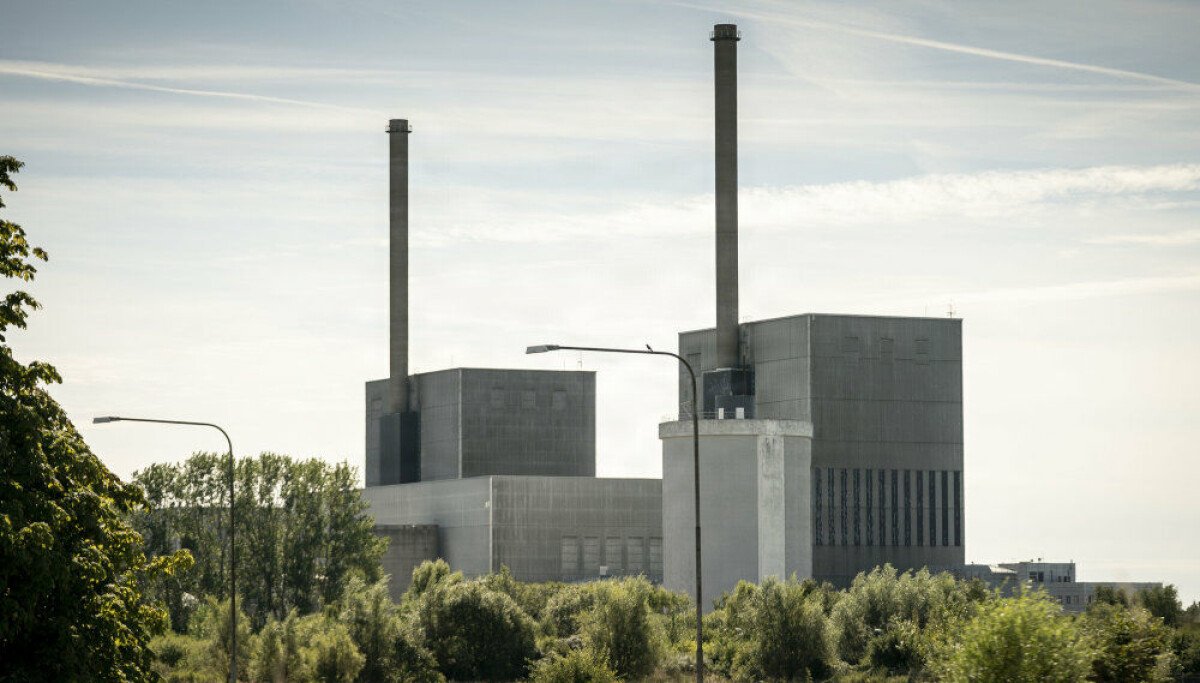
Company aims to have a reactor operating at Barsebäck “well before 2035”, if permits are granted.
The possibility of a new Swedish nuclear power plant in Barsebäck, approximately 23 kilometers from Copenhagen, causes concern among nearly 40 percent of Danes.
This is shown by a survey conducted by the analysis institute Voxmeter for Ritzau.
Here, 39.5 percent declare that they strongly agree or agree that it worries them that Sweden places a nuclear power plant so close to Denmark.
It is the company Nordic Baseload Power that has applied for support to build nuclear reactors at Barsebäck.
The application must now be processed by the Swedish Ministry of Finance, the Swedish government announced in mid-June.
In the Voxmeter analysis, 22.4 percent answered that they neither agreed nor disagreed with the question.
33.7 percent disagree or strongly disagree that it worries them, while 4.5 percent answer “don’t know”.
The measurement from Voxmeter is based on a questionnaire survey with answers from 1023 respondents over the age of 18 in the period 19 June to 26 June.
In roughly the same way, the answers to the question of whether Sweden should place a nuclear power plant so close to Denmark or not are distributed.
Here, 38.4 percent strongly agree or agree that Sweden should not do this, while 29.6 percent strongly disagree or disagree.
25.8 percent declare that they neither agree nor disagree, while 6.2 percent have indicated “don’t know” as an answer.
The former nuclear power plant in Barsebäck, also called Barsebäck plant, consisted of two reactors, which were put into operation in 1975 and 1977 respectively.
The location then led to great debate, and during Danish protests in the 1970s and 1980s, “What’s going to go? Barsebäck!” a familiar cry.
Following a decision by the Swedish government, the two units were closed in 1999 and 2005 respectively.
In August last year, the Swedish government opened the door for companies to apply to build new nuclear power reactors in Sweden.
On Thursday last week, Sweden entered into an agreement on state aid for the construction of three new nuclear reactors at the Ringhals plant south of Gothenburg.
The agreement was called by the Swedish Prime Minister, Ulf Kristersson, “a completely historic decision”.
According to the Swedish news agency TT, however, the plan still needs to be approved by the EU to ensure that it does not break the rules on state aid.
Both in Sweden and the rest of Europe, security of supply in the area of electricity is a major topic of debate.
Sweden currently has six active nuclear reactors in operation.
/ritzau/