The IRGC’s attacks on multiple ships in the Strait of Hormuz on July 6-7 are a stark reminder that the IRGC hardliners are in charge in Iran at the moment, and that presently Iran is demonstrating no inclination to compromise over transits through the Strait, either in the 60-day negotiating period or thereafter.
The two vessels hit on Monday have now been identified by multiple sources.
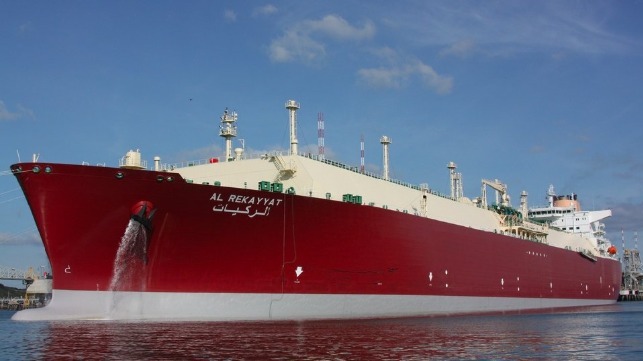
The Marshall Island-flagged Al Rekayyat (IMO 9397339) was struck by a drone off Limah on the Musandam Peninsula, having used the Omani coastal channel to exit the Gulf. The Qatari Ministry of Foreign Affairs spokesman Majed Al Ansari confirmed that the Nakilat tanker is Qatari-owned. Although the drone strike caused a fire in the engine room, this was extinguished, and the tanker continued on its passage. The Al Rekayyat had loaded at Ras Laffan, and therefore the IRGC has struck a Qatari asset, in the full knowledge that Qatar is hosting the technical talks between Iran and the United States in Doha – and more than being a host, it is also a mediator.
The second vessel hit on July 6 was the Bahri-owned and Saudi-flagged VLCC Wedyan (IMO 9524970), which appears to have completed loading at Ras Tanura on July 3. The tanker left a trail of crude spillage visible in satellite imagery as it continued its passage, and was last reported off Fujairah.
So far on July 7, indicative of ongoing IRGC operations, an LNG carrier made a U-turn, having been threatened on Channel 16 by the IRGC Navy; another tanker was hit but managed to continue its journey; and a Liberian-flagged LNG carrier shifted to the Iranian navigation channel, having been ordered to do so by the IRGC Navy. On July 6 and 7, many more vessels were using the Iranian channel than the Omani coastal route, likely in response to Iranian radio threats. But Kpler has assessed that whereas 25 vessels transited on July 6, towards midnight on July 7 the total was seven. Over the last week, there had been on average about 40 transits per day, down from 125 normally seen prior to February 28.

Stay on Top of the Daily Maritime News
The maritime news
that matters most
Get the latest maritime news delivered to your inbox daily.
From these activities over the last two days, it is apparent that Iran intends to stick to its attempt to be the sole controller of Strait of Hormuz transits. These actions accord with the political mood in Tehran, which is dominated by the maximalist demands of the Paydari and IRGC hardliners. The moderates, or at least those who can be labeled pragmatic, are in hiding. Both the chief Iranian negotiator Mohammad Bagher Ghalibaf and the Iranian Foreign Minister Abbas Araghchi have been subjected to abuse when they made appearances at the funeral proceedings, showing some bravery to show up in the face of such hostility. The Houthi delegation at the funeral is also in an extremely belligerent mood.
Someone in CENTCOM will be deciding whether now is the right time, when tempers are very hot, to reassert rights of navigation in the Strait, or whether it would be better to take counter-action once the late Supreme Leader is safely interred.
The opinions expressed herein are the author’s and not necessarily those of The Maritime Executive.