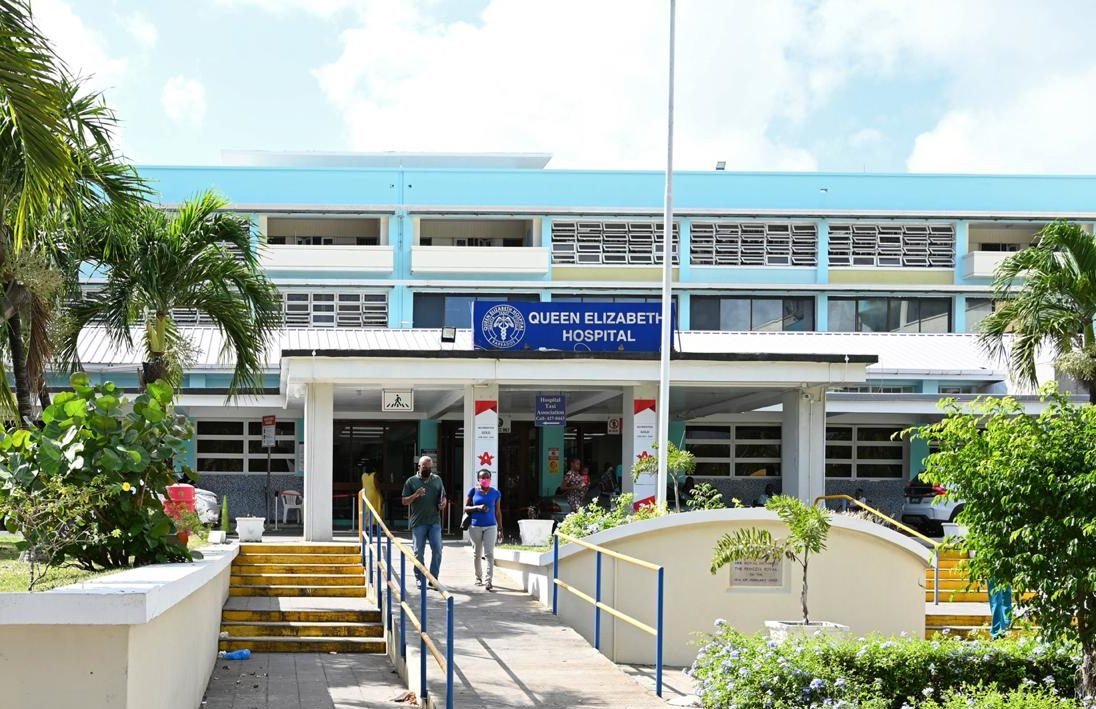
The Queen Elizabeth Hospital (QEH) has said its pharmacy has returned to normal service levels after disruptions caused by the introduction of a new digital system.
Director of Clinical and Diagnostic Services, Dr Corey Forde, told the QEH Pulse Radio programme that the technical problems experienced during the rollout have been resolved and that patients are once again receiving prescriptions at the same rate as before the transition:
“At present, in terms of the pharmacy, we’re back up and going at the rate that we were going before. I’m happy to say that. It really required us to do a few strategic moves, which we did pretty quickly once we figured what was going on internally with the new system.”
The hospital faced criticism from patients after long waiting times developed while pharmacy staff adapted to the new software. Dr Forde explained that the delays were the result of technical issues encountered during implementation and not the fault of pharmacy employees.
“There were a few kinks that occurred, some challenges on the ground, IT related aspects etc. The internal team worked on that, and the providers were working on fixing those nuances which occurred. I believe these sort of things can happen sometimes when you’re implementing a new system.”
He acknowledged the inconvenience experienced by patients and apologised for the disruption:
“I apologise if there are any issues that happened. It’s not technically the pharmacy’s fault but more a technical issue, but at the end of the day, the output of it is felt through the pharmacy.”
He urged members of the public to use the pharmacy’s ticketing system responsibly, noting that some people had been collecting multiple tickets for relatives and friends, creating unnecessary delays.
“I’m asking people not to take one and two and three and four and five and six and ten tickets, and some for friends who are not there, because those things cause problems. Be responsible in using that ticketing system.”
Patients were also encouraged to avoid waiting until they have run out of medication before requesting refills.
Dr Forde said: “If you’re going to be out of your medication, at least a week in advance, come and get it. Don’t wait until you’re on your last or until you lose your last pill to show up at the pharmacy.”
The digitisation programme is part of the hospital’s Health Information System 2025 – 2028 strategy. Dr Forde said the current pharmacy model will continue evolving as the Health Information System is introduced over the coming months.
“The doctors will eventually be putting your prescriptions online. The pharmacy can even start filling some of them before. Over time, you’re going to see a major improvement in the system.”
He added that the hospital is working towards allowing patients to collect repeat prescriptions closer to home rather than travelling to the QEH.
“We’re trying to get you to stay close to your communities to get your medication, as opposed to having you come all the way down to the hospital if you’re just getting repeats,” he said, adding that discussions are underway with community pharmacies.
Host Shane Sealy, the hospital’s communications specialist, said the reduction in prescriptions filled each day occurred while staff became familiar with the new technology but noted that productivity has now returned.
He said: “Staff were getting acclimatised to the new system, so it really pulled back the number of prescriptions that could be filled within a given day. But we are getting back up to things as they were before, so that is some good news.”
The hospital is also exploring extended pharmacy opening hours to help clear any remaining backlog created during the transition, he added.
Dr Forde praised pharmacy staff for their commitment throughout the transition.
“I want to thank every single member of the QEH pharmacy who put in more than a tremendous effort. It’s not easy sometimes when these things happen… I want to thank every single one, from the chief and his deputies to all of those who work at the window, all of those who work in patients and certainly all of those who work in procurement.”
Beyond the pharmacy, Sealy reminded listeners that departments are continuing to relocate as part of the Enmore Redevelopment Project.
The Phlebotomy Department has already relocated to the QEH Annex at the corner of 6th Avenue, Belleville and Pine Road, while the Ear, Nose and Throat (ENT) Clinic is scheduled to move to Belleville in the coming weeks. Additional updates on department relocations are to be provided as work on the redevelopment project progresses.
(LE)