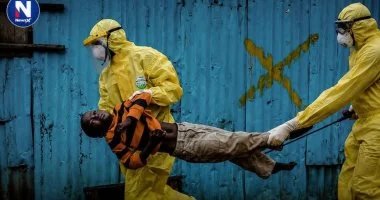
Dr. Tedros Adhanom Ghebreyesus, Director-General of the World Health Organization, confirmed during a press conference on Wednesday EbolaThe protocol for one of the trials has been approved by the authorities in the Democratic Republic of the Congo, and is now going through the final regulatory stages, stressing that the two main treatments that will be studied are:
MVP-134, and Regeneron. The trial also includes several treatment arms that include the use of treatments individually, or in combined combinations. This trial is considered the most advanced, because its protocol had been prepared before the outbreak of this outbreak as part of advance preparedness plans, and this demonstrates the importance of Preparing experimental protocols and approved before outbreaks occur.
The first oral antiviral
He added that work is underway to develop a new oral antiviral known as Obeldesivir, which is an important development because we did not have a similar oral treatment in previous outbreaks.
He explained that this work is being carried out in close coordination between national authorities, the World Health Organization, the African Centers for Disease Control and a number of research partners, and a clinical trial protocol is currently being prepared to study the use of this drug as a preventive method after exposure to the virus. He explained that it is expected that the start of this study will take about two to three weeks.
Dr. Tedros Adhanom Ghebreyesus, Director-General of the World Health Organization, added that other countries are required to be well prepared, explaining that Ebola is not the only problem facing these countries, whether in Uganda or South Sudan, as preparedness and emergency preparedness represent an essential element in the amendments to the International Health Regulations.
He stressed that all countries must therefore evaluate their capabilities in accordance with the requirements of the International Health Regulations in order to prepare for this outbreak and also for future outbreaks.
He explained, “The message is very clear,” adding, “Neighboring countries must remain vigilant, strengthen health surveillance at the borders, exchange information quickly, keep the borders open for essential supplies, deploy regional emergency teams, and engage local communities and religious leaders to build trust and ensure the continuation of the humanitarian response where there are conflicts.” He stressed, “I believe that solidarity and cooperation represent the backbone of controlling this outbreak, and therefore we will continue to communicate and coordinate with them by all possible means.”
He explained that all high-risk countries have reviewed their emergency plans and estimated the budgets necessary to implement them. Three employees have also been deployed in South Sudan, and some countries have received small initial funding to begin implementing simulation exercises and review their capabilities in the field of clinical care.
He stressed that some countries have already identified the facilities that will be used To receive patients In the event that positive cases of Ebola are recorded, each country will also receive 500 sets of personal protective equipment to be pre-stored within those countries.
He said, “We currently have 10 countries classified as high risk, but all countries in the African region also participate in the regional preparedness and preparedness plan.”
For her part, Dr. Theresa Zakaria, Head of the Humanitarian Operations and Disaster Response Unit at the World Health Organization, said: I would also like to comment on the question of how to build population confidence. It is important to fully realize that there is great suffering in the three affected provinces within the Democratic Republic of the Congo, and there is also great suffering in South Sudan. Uganda hosts large numbers of refugees, and it is necessary to maintain the continued provision of basic services to the population.
She explained that we have more than 500 health facilities working through our partners, most of whom are local Congolese organizations that provide services to the population.
She said, “It is very important that we provide these facilities with the necessary support so that they continue to provide services, and at the same time be able to contribute to the ongoing response to the Ebola outbreak,” adding, “Ensuring continued access to health care and protection for all populations in need is an essential part of the success of the response.”