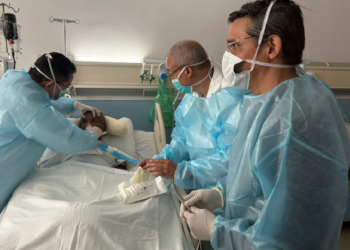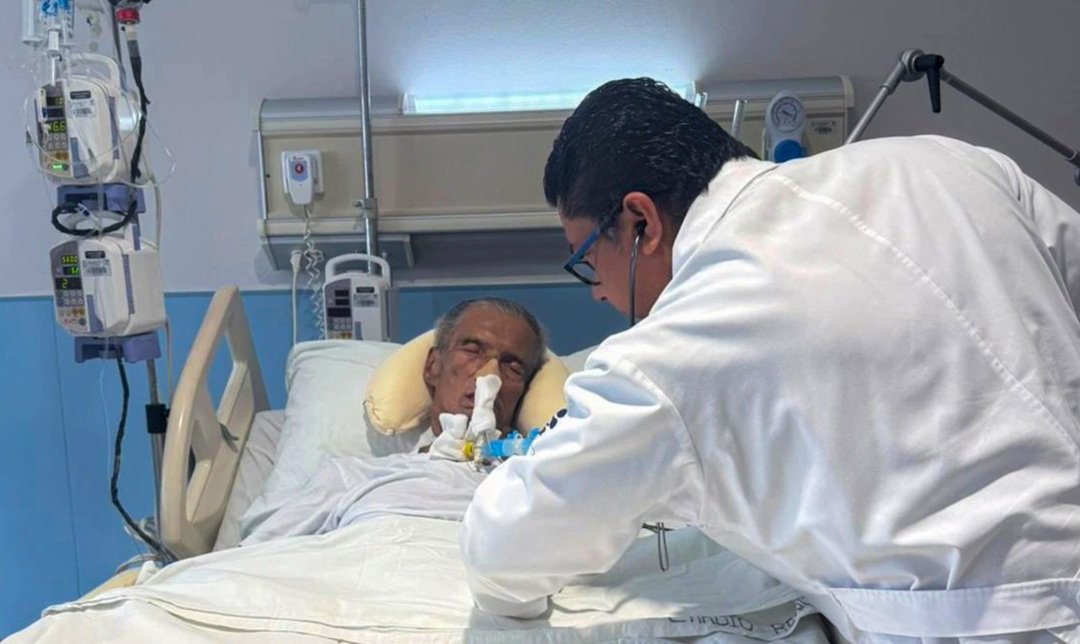
After months of insistence by the media and international human rights bodies, the regime headed by Daniel Ortega and Rosario Murillo in Nicaragua showed images of the indigenous leader Brooklyn Rivera in an agonizing state, almost three years after his detention, who died a few days later. Although the death of Brooklyn Rivera gives rise to a presumption of unlawful death in accordance with the Minnesota Protocol, it may also reveal a pattern of torture hitherto unnoticed.
One of the main repressive tools of the Ortega-Murillo regime in Nicaragua is the arbitrary imprisonment of opponents, dissidents and more recently other collaborators of the regime for reasons that can only be explained in the head of Rosario Murillo. However, each and every one of these deprivations of liberty follow a pattern: illegal detention, violation of due process, exceptional confinement conditions and isolation, among other things, actions that convert these detentions into a Crime Against Humanity when framed in its context element.
Among the people deprived of liberty are older adults – like the case of Brooklyn Rivera – who require specialized medical care, treatments and medications, but with the high level of concentration of power that exists in Nicaragua, it is naive to believe that a middle manager can authorize the transfer to a hospital so that any of these people can receive specialized care, treatment and medications, considering the regime’s paranoia regarding the leak of information.
That said, obtaining specialized medical care, treatments and medications are also part of a regime of exception to the conditions of these people deprived of liberty, which constitutes torture. In accordance with article 2 of the Inter-American Convention to Prevent and Punish Torture (to which Nicaragua acceded in 2009), torture is: “…any act carried out intentionally by which physical or mental pain or suffering is inflicted on a person, for the purposes of criminal investigation, as a means of intimidation, as personal punishment, as a preventive measure, as a penalty or for any other purpose. Torture will also be understood as the application on a person of methods aimed at nullifying the personality of the victim or reducing their physical or mental capacity, even if they do not cause physical pain or mental anguish..”
Torture then has two essential components, the actus reus which is the action of causing suffering or, diminishing or nullifying the physical or mental capacity of the victims, and the mens rea which implies that its purpose is to obtain information, punish the person or another purpose, such as preventing the information from being leaked publicly. In such a way that, if a person is arbitrarily deprived of his liberty, who also has exceptional conditions of confinement and that part of those exceptional confinement conditions is the refusal or an unjustified delay in the provision of specialized medical care, treatments and medications, we are not in the presence of a violation of his rights, but rather a method of torture.
Even more serious, if it is verified that there is a pattern that reveals that the refusal or unjustified delay in access to specialized medical care, treatments and medications is a practice of punishment (derived from the exceptional prison regime) for people arbitrarily deprived of their liberty, it would not only be a method of torture, but also the commission of a Crime Against Humanity due to the systematic use of the method.