
In an election year, even a simple holiday plan can feel like a risky political calculation.

THERE are many occupational hazards in journalism.
Odd working hours; missed meals; breaking news that breaks just when one is about to sit down for dinner; and politicians who say ‘off the record’ after saying everything interesting.
But one of the most underrated hazards is this: trying to plan a holiday in an election year.
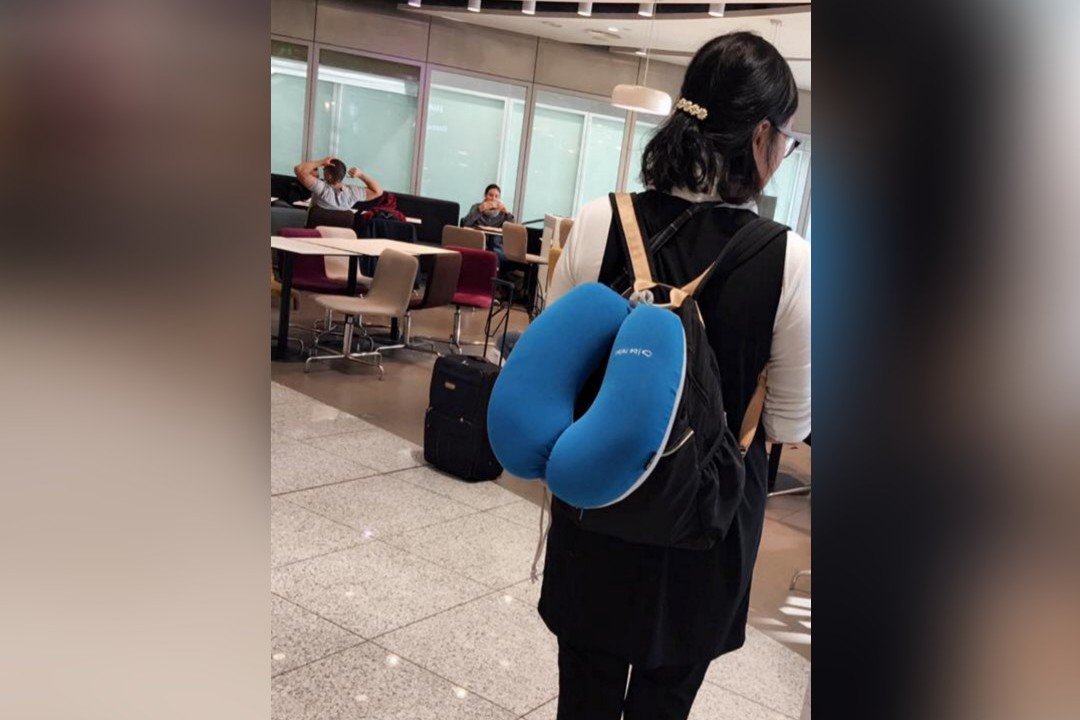
I found an old airport photo of myself with a neck pillow hanging from my backpack.
It reminded me of a problem that only journalists truly understand – in an election year, even a holiday plan can become a political gamble.
After more than 40 years in journalism, I still find myself asking the same question whenever political speculation starts to rise: can I book my flight or a tour, or should I wait?
Can I plan a trip, or will Parliament be dissolved the moment I pay for my hotel?
Can I go somewhere peaceful, or will nomination day be announced while I am halfway up a mountain, beside a lake, or worse, already committed to a non-refundable ticket?
In Malaysia, election dates are treated almost like national secrets.
We know many things.
We know when school holidays are. We know when public holidays are, even if some depend on moon sightings.
We know when football tournaments are played.
We know when major concerts are coming, sometimes one year in advance.
But election dates? That one is like waiting for smoke signals from Putrajaya or Kompleks Satria Pertiwi.
Technically, of course, there are constitutional timelines.
The current Parliament first sat in December 2022, and the next general election is not due until early 2028 if the term runs its full course.
Sarawak’s next state election must also be held by April 2027, unless the State Legislative Assembly (DUN) is dissolved earlier.
So we are not completely in the dark.
We are only in the usual Malaysian half-darkness – enough to bump into furniture, not enough to know whether to buy travel insurance.
Now, talk of an early general election has surfaced again after Prime Minister Datuk Seri Anwar Ibrahim’s remarks that he may consider calling early polls if instability persists.
Reuters has reported that while the general election is not due until 2028, early polls are being discussed amid political pressure and the possibility of aligning national elections with upcoming state polls in some states.
For politicians, this may be a strategy.
For journalists, civil servants, political workers, businesses, event organisers, and ordinary people who like to plan their lives, it is another season of uncertainty.
I have always wondered why election dates must be kept so mysterious.
In mature democracies, fixed-term elections are not unusual.
People know when they will vote.
Political parties prepare. The civil service prepares. Businesses prepare.
Schools and communities prepare.
Voters prepare.
In Malaysia, by contrast, the date itself becomes part of the political game.
Those in power hold the advantage. They know when the ground feels favourable.
They can read the signals, study the polls, watch the opposition, feel the mood of the people, and decide when to strike.
Everyone else must guess.
Of course, there are arguments for flexibility.
A government may lose its majority. A crisis may happen. Political stability may require a fresh mandate.
No one is saying that elections must be impossible before the end of a term.
But surely, there is a difference between necessary flexibility and endless suspense.
The problem with constant election speculation is that the country begins to live in campaign mode.
Every policy announcement is read as a signal.
Every allocation is analysed for political meaning.
Every handshake becomes a clue.
Every visit to the Palace becomes a national guessing game.
In Sarawak, the suspense has an added layer this time.
The proposed expansion of the DUN from 82 to 99 seats means that the next state election is not just about timing, but also about boundaries, new constituencies, new candidates, and new political calculations.
Until the delineation process is completed and gazetted, everyone waits: politicians, parties, voters, newsrooms, and apparently, people foolish enough to plan overseas holidays in November.
The people become amateur astrologers of politics.
In fact, for ordinary Malaysians, the concerns are simpler.
They want to know whether the cost of living will ease.
They want schools to function. They want clinics to have enough doctors.
They want roads repaired. They want jobs, wages, safety and certainty.
They may enjoy political drama for a while, but eventually, drama becomes tiring.
A country cannot live permanently as if nomination day is around the corner.
There is also a deeper democratic issue here.
Elections belong to the people, not only to those who decide the timing.
Voters should not be treated like guests who are told to be ready, but not told when dinner will be served.
If we want people to take democracy seriously, then democracy itself must respect people’s time, planning and participation.
Fixed or more predictable election dates would not solve all our political problems.
They would not make campaigns cleaner. They would not guarantee better candidates.
They would not stop politicians from promising the moon, the stars, and perhaps a new bridge to reach both.
But predictability would help reduce the sense that the election date is a tactical weapon.
It would make politics a little less about surprise, and a little more about readiness.
It would allow citizens to plan. It would allow institutions to prepare.
It would allow journalists, too, to book a holiday without feeling like they are committing an act of professional betrayal.
Perhaps I am asking for too much.
After all, in Malaysia, election rumours are part of our national soundtrack.
Some people hear birds in the morning – journalists hear whispers of dissolution.
Still, after more than four decades in this profession, I continue to dream of a day when election dates are not treated like state secrets.
Until then, I shall do what journalists have always done – keep one eye on the news, one eye on the calendar, and one hesitant finger over the ‘confirm booking’ button.
‘Selamat Kaamatan’ and Gawai Dayak to all who celebrate.
The newspaper may stop printing for three days, but news itself never takes leave anymore.
So, please do log on to our news portal theborneopost.com for latest news and leisure reading too.