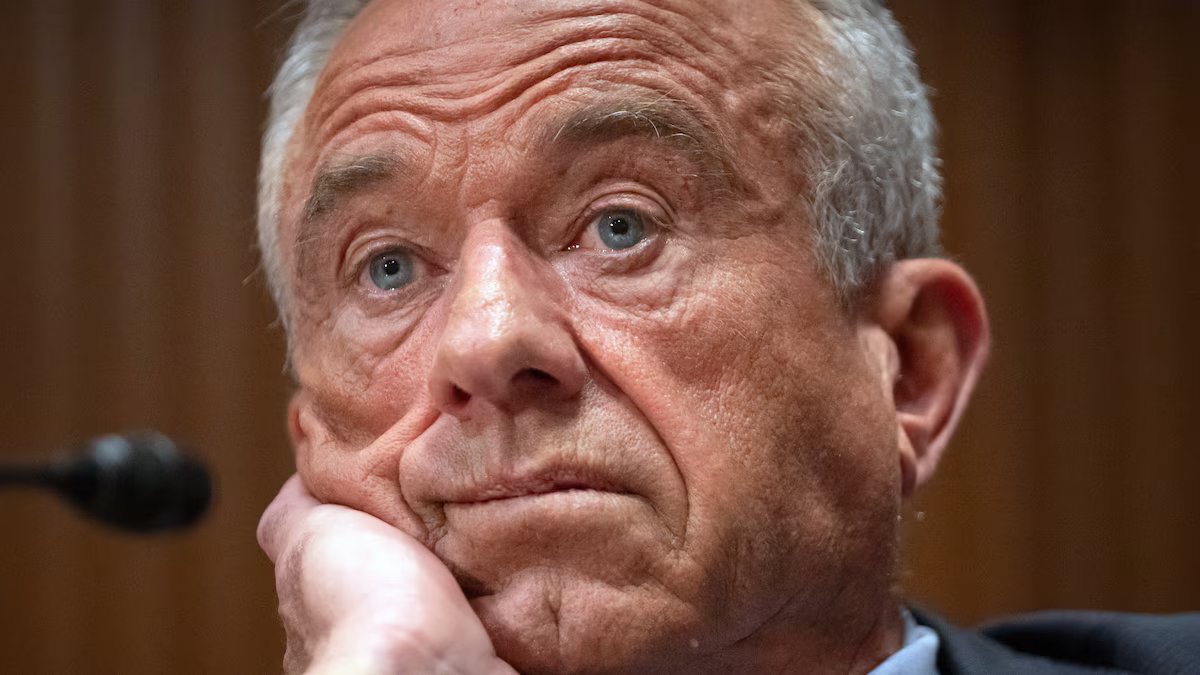
Fourteen years after suicide of Mary Richardson Kennedysecond wife of Robert F. Kennedy Jr.a new biography on the life of the political leader reopens questions about one of the most tragic episodes that the family went through. In addition, it exposes intimate aspects linked to the personal history of the heir, such as his addictions, his relationships with different women and the content of his private diaries.
The magazine People shared a preview of the book RFK Jr.: Rise and fallwritten by investigative journalist Isabel Vincent, which reconstructs Kennedy’s struggle with heroin, his extramarital affairs, and the impact of a life plagued by excess on his family.
The publication takes up the last years of Mary Richardson Kennedy, who in 2012 was found hanged in the barn of her home in Bedford, New York. The book describes the process of personal and marital deterioration crossed by financial conflicts, custody disputes over his four children, and the beginning of Kennedy’s relationship with actress Cheryl Hines, whom he would later marry.
In addition, the pages give an account of the politician’s persistent pain over the assassination of his father, Attorney General Bobby Kennedy, in 1968; the weight of the family legacy; his heroin addiction and his fight against what he called his own “demons of lust.”
One of the central axes of the biography are Kennedy’s personal diaries, to which the author had access from materials that his late wife had preserved.
In these texts, the lawyer also leaves a record of a constant search for personal satisfaction that, according to the book, marked his behavior for years. “I have been given everything a person could want: a beautiful wife, children, a family that loves me, wealth, education, good health and a job I am passionate about. And yet, I am always looking for something I don’t have to ruin everything. No matter how much I have, I want more,” he wrote.
The author maintains that this dynamic functioned as a determining factor in her personal life and the deterioration of her marriage. The relationship with Mary had begun in 1993, shortly after Kennedy’s separation from his first wife, Emily Black. After a pregnancy, the couple quickly formalized their previous divorce and married in April 1994.
During those years, while Mary was in charge of her children, Kennedy alternated his activity as a lawyer with frequent trips, while facing his ghosts: “I managed to get through a difficult week without losing control. I am proud of myself because the mermaids were on every rock,” he said.
According to the biography, he had occasional sexual encounters that he himself recorded in his writings. This behavior, according to testimonies from close people, would have had a strong impact on Mary’s emotional stability.
In parallel, the biography describes the deterioration of the marital bond. “Our bed is a hostile place,” he wrote in one of his diaries. “She hates me sleeping with her and never wants to have sex at night. She almost never talks to me about anything other than family planning.”
According to the same sources, Mary Richardson was experiencing depression and alcohol problems, a situation aggravated by her husband’s infidelities. Close people maintain that the atmosphere between the couple was increasingly tense. “Without a doubt, he manipulated her psychologically and told her that she was crazy and that her accusations about other women were fantasies,” they mention.
Tensions intensified in the months before the separation, amid the renovation of the family home and constant exposure, and the breaking point came in 2010, when Kennedy told Mary of his decision to divorce. In the following days, police interventions at the home and episodes linked to alcohol consumption were recorded. A few days later, Mary was arrested for drunk driving, a fact that was used against her by the father of her children in the context of the legal dispute.
Mary then began going through her husband’s journals, while attending Alcoholics Anonymous meetings and facing the possibility of losing custody of her children.
Testimonies collected by the author also report situations of verbal abuse: “Bobby was cruel when referring to her weight, telling her that she had wasted her beauty. He hugged her and criticized her. It was horrible.”
On May 16, 2012, Mary Richardson was found dead in the barn of her home. He had a rope around his neck. According to the report, when emergency services arrived he showed signs of having died hours before. It was Kennedy who found her, alerted by the house staff.
After his death, a confrontation occurred between members of both families. According to the book, one of Mary’s sisters directly accused the Kennedys: “You killed my sister.” The forensic report indicated that, at the time she was found, her fingers were trapped between the rope and her neck, a detail that was interpreted by her doctor as a possible indication that “perhaps she really did not want to die.”
Mary’s family did not attend the official funeral and arranged a private ceremony. Subsequently, the Richardsons launched a private investigation to clarify aspects of the death, including the origin of the rope and the circumstances prior to the event. However, no conclusive results were obtained.
According to testimonies collected in the biography, the event had a lasting impact on Kennedy. “I know Bobby well enough to know that Mary’s suicide is a burden he will carry with him for the rest of his life. That will torment him,” said a close friend.