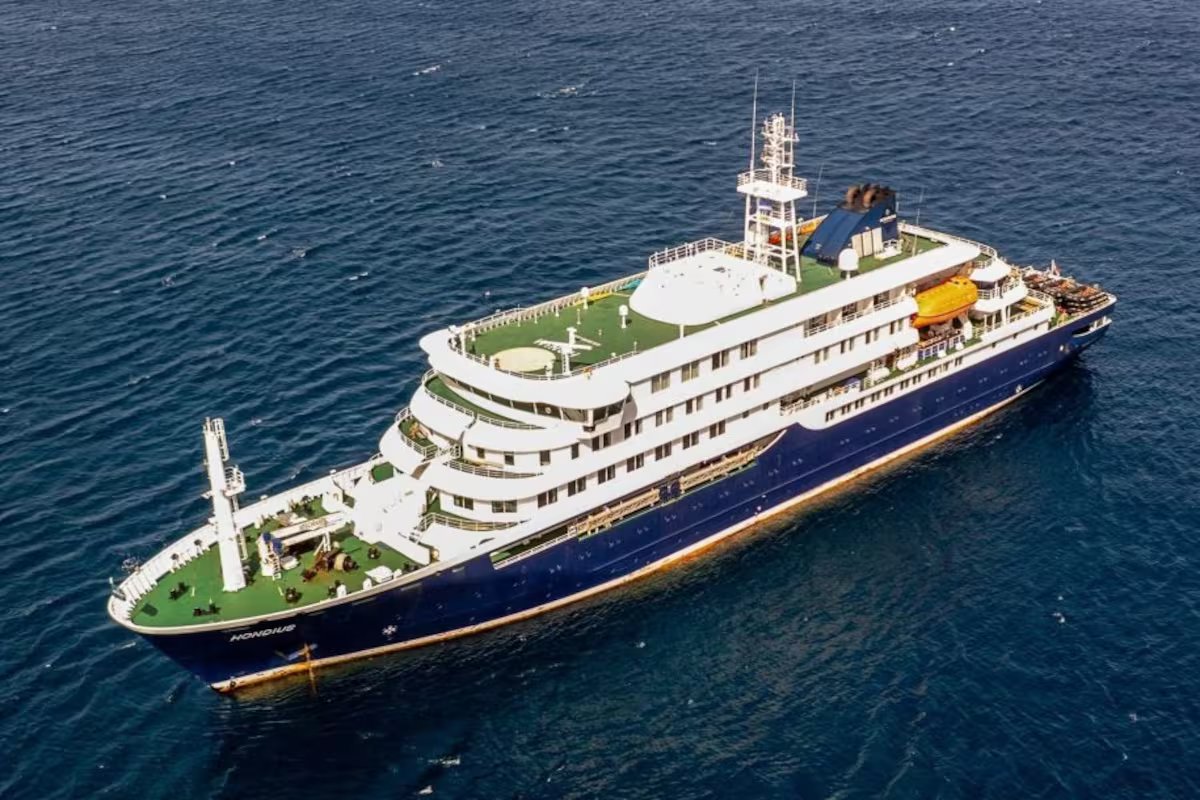
GENEVA.- The World Health Organization (WHO) reported on Sunday about three deaths related to a possible outbreak of hantaviruswhich is transmitted through rodents, aboard an Atlantic cruise ship that departed from UshuaiaTierra del Fuego, on March 20. A health alert has been in force in Argentina for several weeks due to the increase in cases and deaths.
“The WHO was informed of a public health event related to a cruise ship in the Atlantic and is providing support. So far, one case of hantavirus infection has been laboratory confirmed and there are five other suspects. Of the six people affected, three have died and one remains in intensive care in South Africa,” the agency said.
The outbreak would have originated on board the MV Hondius cruise ship that departed, according to BBC, on March 20 from the port terminal of Ushuaia bound for Cape Verde on May 4. According to the spokesperson for the South African Ministry of Health, Foster Mohalea 70-year-old passenger was the first to present symptoms. He died on the ship and his body was taken to Saint Helena, a British territory in the South Atlantic.
His wife, 69, also fell ill during the trip, was evacuated to South Africa and died in a Johannesburg hospital. Sources linked to the case indicated that both are natives of the Netherlands. The third fatal victim, meanwhile, would still be on board the ship.
Another confirmed case, a 69-year-old British citizen, was also evacuated to Johannesburg and is admitted to intensive care. The other two active cases continue on the cruise.
In this regard, the UK Foreign Office stated: “We are closely monitoring reports of a possible hantavirus outbreak on the Hondius cruise ship and are prepared to provide support to British citizens if necessary. We remain in contact with the cruise company and local authorities.”
According to sources close to the situation, The transfer of the two remaining patients to a hospital in Cape Verde is being evaluated, where they would be isolated. If completed, the ship could resume its route to the Spanish archipelago of the Canary Islands, two or three days away.
For its part, The WHO noted that it is “facilitating coordination” between the countries involved and the ship operators to organize medical evacuations.and highlighted “the speed of the measures adopted and the cooperation between the parties.”
The director general of the WHO, Tedros Adhanom Ghebreyesusreleased the agency’s statement and reinforced that “it is working closely with Member States and ship operators in response to suspected cases of hantavirus detected on board a cruise ship.”
“WHO is facilitating the medical evacuation of two symptomatic passengers, conducting a full risk assessment and supporting affected people on board. Rapid and coordinated action is essential to contain risks and protect public health,” he stressed.
He MV Hondius is a polar cruise operated by the Dutch company Oceanwide Expeditions. Among its itineraries is one that departs from Ushuaia towards Cape Verde, with stops in the South Georgia and Saint Helena islands.
Hours after learning of the outbreak, the company Ocean Expeditions issued a statement and said: “We are facing complex challenges”.
Through a statement spread online, the company stressed that it is working to accelerate medical assistance. The firm also assured that the relatives of the affected people have already been notified.
“The health and safety of all passengers and crew are our top priority”they expressed and affirmed that the company is collaborating with “local and international authorities, including the WHO, the RIVM, relevant embassies and the Ministry of Foreign Affairs of the Netherlands” to address this situation.
According to several ship monitoring pages, andhe MV Hondius was on Sunday in front of the port of Praia, capital of Cape Verde. The ship has capacity for about 170 passengers and a crew of about 70 members.
The cruise ship is a frequent visitor to the port of Ushuaia during the austral summer season (October-April), mainly used for expeditions to Antarctica. At the local level, both from the Municipality of Ushuaia and from the private health sector It was ruled out that there have been reports of hantavirus infections in recent months; Nor does any record appear in the epidemiology reports prepared by the Ministry of Health of Tierra del Fuego.
“You have to see the subsequent stops that the ship made, and where the passengers came from when they boarded in Ushuaia. If the cases had been registered or infected in Ushuaia, there would already be other cases or at least some type of alert, something that has not happened so far,” they highlighted in dialogue with THE NATION local health sources.
The fact that the cruise ship began its itinerary in Ushuaia puts the focus of epidemiological research on the Patagonian regionwhere hantavirus is a zoonotic disease transmitted primarily by the long-tailed rodent (Oligoryzomys longicaudatus).
In the south of Argentina and Chile, the Andes strain predominates, which has a unique and worrying characteristic unlike other variants of the virus: the ability to transmit from person to person.
The authorities are investigating whether the initial contagion occurred through environmental contact with rodents in rural areas before shipment, or if there was a source of contagion within the ship’s logistics.
“The specific thing is that the mouse that can transmit the disease is not a species that is found on the island. They have to tell us information about whether people were taking tourist tours in an area of Patagonia where it is found, or if it was previously on the boat,” added sources from the provincial Epidemiology area.
As a consequence of the intervention of the port by the Nation in January of this year, “the province of Tierra del Fuego today has no control or access to the port of Ushuaia, we cannot even enter the dock,” explained Roberto Murcia, president of the Provincial Directorate of Ports. “It is a cruise that always has a season here, but unfortunately with the national intervention we do not have any control nor do we know about the replacement of passengers and logistics personnel,” he explained to THE NATION.
In the midst of the investigation, the Fuegian Health Ministry issued a letter in which it stressed that there are no confirmed cases of hantavirus in the district since there are records, and that to date it has not received any notification from the Ministry of Health of the Nation linked to this episode.
Along these lines, the authorities stressed that The hantavirus endemic zone in southern Argentina is located mainly in the mountain areas of Neuquén, Río Negro and Chubut, Therefore, Tierra del Fuego is not part of the territories where the virus usually circulates. Furthermore, they indicated that there is no conclusive evidence about the presence of reservoirs—such as the long-tailed rodent—with transmission capacity in the province.
The statement also emphasized that, so far, there is no epidemiological link connecting Tierra del Fuego with the cases reported on the cruise ship.
Despite this scenario, the Fuegian Ministry of Health indicated that it maintains active monitoring of the situation and remains awaiting official information from national and international health authorities, in a context of permanent monitoring against events of possible impact on public health.
Hantavirus is transmitted by rodents, particularly through contact with their urine, feces and saliva, according to the US Centers for Disease Control and Prevention.
“Although rare, hantavirus can be transmitted from one person to another and cause serious respiratory illnesses”indicated the WHO.
“In-depth investigations are being carried out, especially additional laboratory analyzes and epidemiological investigations. The passengers and tribulation are receiving medical attention. Sequencing of the virus is also being carried out,” he added.
In Argentina, different variants of the virus circulate. The AndesAs mentioned, they can be transmitted from person to person, although the most frequent mechanism continues to be environmental.
Initial symptoms are usually nonspecific and can be confused with the flu.. They include fever above 38 degrees, muscle pain, headache, nausea, vomiting and general malaise. In a second stage, the disease can evolve abruptly towards a cardiopulmonary syndromewith respiratory difficulty and hemodynamic compromise.
Specialists emphasize that the early medical consultation It is key to improving the prognosis, especially in people who were in rural areas or with possible exposure to rodents in the previous weeks.
With information from AFP and Sol Agusti (Ushuaia)