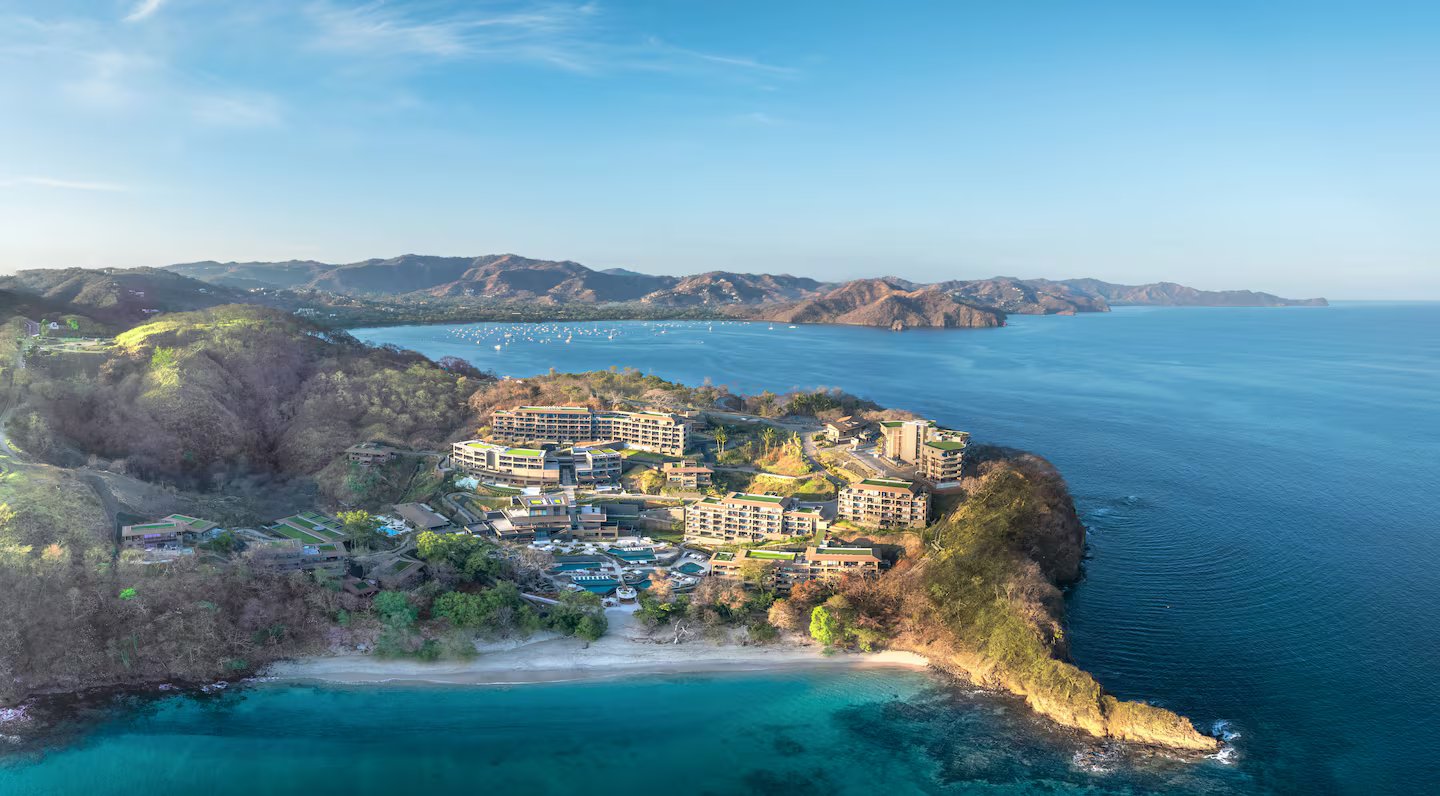
A province is consolidated as the great magnet of the investment tourism in Costa Rica: the largest projects, the largest capital bets and almost half of the new hotel rooms are developed there.
By 2026, the Costa Rican Tourism Institute (ICT) registers 17 tourism projects in the country that together add up $391.8 million.
These initiatives correspond mainly to investments in accommodation and include both multinational hotel chains and smaller-scale developments.
The data shows that 6 of the 17 projects were installed in the North Pacific province. Overall, developments in this region concentrate 719 rooms of a total of 1,493that is, the 48% of the projected supply.
Guanacaste also led the attraction of investments in 2024. That year, the ICT registered 26 new hotels, of which 9 were installed in that province.
Other provinces that stood out in both years were Alajuela, Puntarenas, Heredia and San José.
Among the projects planned for 2026 are the JW Marriott All Inclusive Costa Elenain Guanacaste, with 415 rooms and whose opening is projected for May 2027; and the Moxy Hotel AIJSin Alajuela, with 173 rooms and its estimated opening for April 2027.
They also highlight the Hotel AC Marriott Liberiain Guanacaste, with 140 rooms and scheduled to begin operations next November, as well as the Hotel Nayara Manuel Antonioin Puntarenas, with 62 rooms.
The ICT explained that these data correspond only to hotel projects with a Tourism Declaration, a voluntary requirement for investors. For this reason, the figures do not reflect the entire tourist offer or all the investments in progress.
Why Guanacaste?
Foreign direct investment (FDI) in the tourism sector in Costa Rica is highly concentrated in real estate development, particularly in the hotel segment, specialists pointed out.
Investments continue to focus on destinations of high tourist value such as Guanacaste and the central Pacific, where there is a strong alignment with luxury, wellness and experience segments, explains Lisette Acosta Álvarez, advisor on investment and development of tourism projects.
The National Chamber of Tourism (Canatur) explained that it is intensive investmentslinked mainly to the construction of new hotels.
Martí Jiménez, president of Canatur, pointed out that Guanacaste remains the main attractionwith a growing offer of high-end hotels and complementary services.
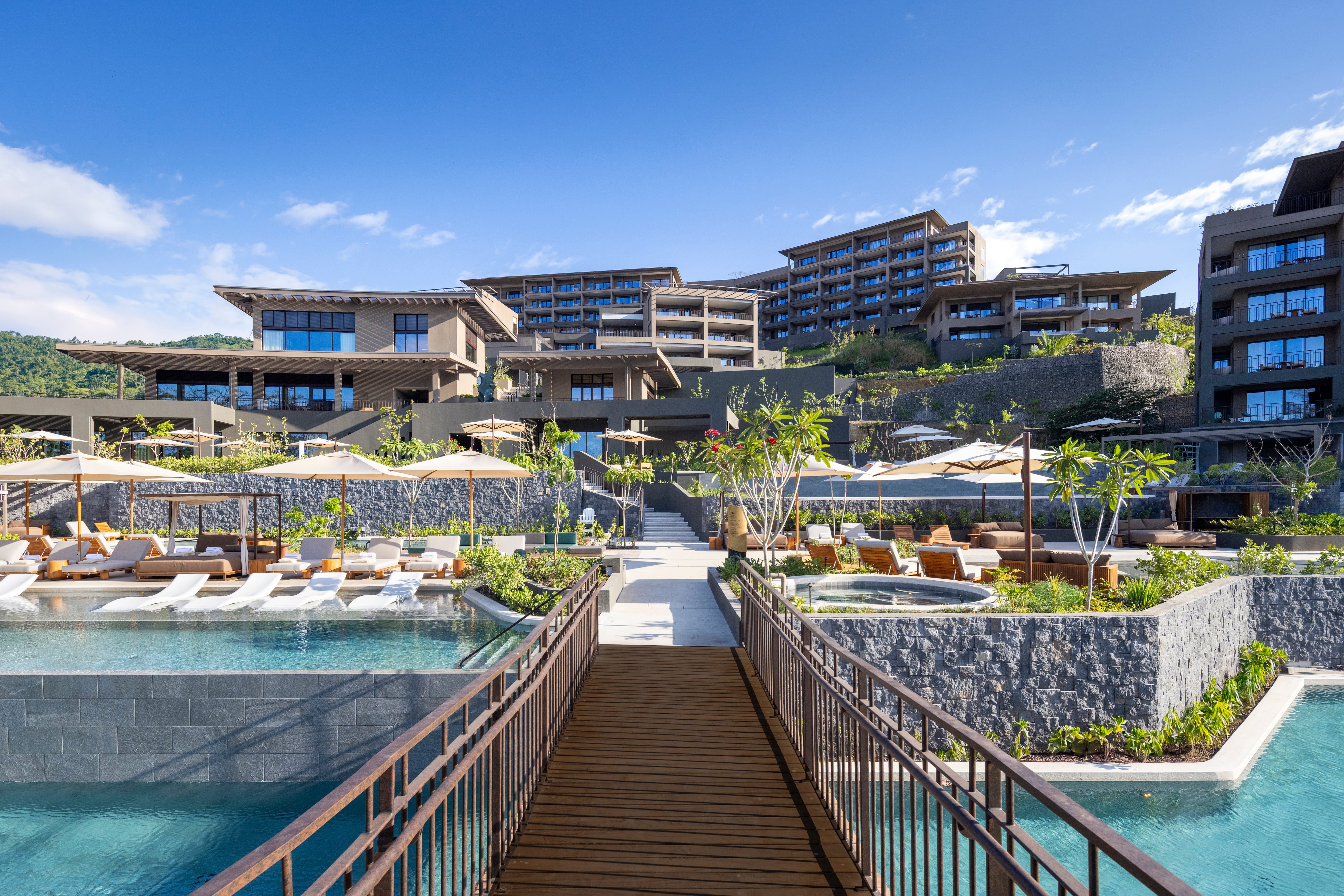
Among the factors that motivate this concentration are Costa Rica’s international positioning as a high-value destination, with high standards of service and sustainability.
In addition, the sustained growth in tourism demand—especially in higher spending segments—drives larger-scale investments, particularly in luxury hotels, Jiménez points out.
The spokesperson also highlights the increase in tourist arrivals through Guanacaste Airport (Daniel Oduber)which has favored the formation of a high-value tourism cluster.
Gustavo Alvarado, director of Competitiveness and Tourism Sustainability of the ICT, indicated that the Guanacaste province has an international airport that facilitates the arrival of high-level tourists, in addition to the presence of large hotel chains.
He also highlighted the natural attractions of the region. For Alvarado, all these factors work as a “fundamental anchor” to attract new investments.
The Foreign Trade Promoter (Procomer) confirms that FDI projects in tourism infrastructure during 2025 were driven by megaprojects that entered the country, especially in Guanacaste.
These projects cover the boutique and luxury hotel segment, with large investments and high quality in infrastructure and services.
FDI exceeds $380 million
According to the Central Bank of Costa Rica (BCCR), at the end of 2025 the flow of FDI in tourism reached $385.6 million. This is the second highest figure in the last eight years, only below the $602.9 million registered in 2024.
In addition, it is the third highest amount since 2000.
The former Minister of Tourism, Rodrigo Castro, commented that these flows do not respond only to recent decisions, but to long-term processes that include planning, construction and expansion stages.
Therefore, the rebound in 2024 was the result of the combination of several factors such as the maturation of projects started years ago and the execution of business decisions already underway.
Castro, current executive director of the Association of Concessionaires of the Gulf of Papagayo Tourist Complex (Asopapagayo), mentioned luxury hotels as examples Ritz Carlton Nekajui Papagayo Peninsula and the Waldorf Astoria Punta Cacique.
For his part, Gustavo Alvarado, from the ICT, attributed the dynamism to “rebound effect” following the Covid-19 pandemic, which boosted both global tourism and interest in new investments.
He also highlighted the development of large projects by international hotel chains.
Lisette Acosta, advisor on investment and development of tourism projects, added that investments are growing in areas near airports and corporate centers, driven by business tourism and extended stays.
Procomer agreed that last year was especially dynamic thanks to the announcement of tourism megaprojects, especially in Guanacaste.
Seeing outside the GAM
Last year, the ICT launched the Department of Connectivity and Investment Attraction which, among other points, seeks to diversify the destination of investments.
Alvarado commented that the institution expanded access to the tax benefits of Law No. 6990, Law of Incentives for Tourism Development, which allows the incorporation of more projects, including small hotels.
The objective is diversify investment towards other areas with high potentiallike the South Pacific and Limón, he highlighted.
The particularities of FDI in tourism
Attracting foreign investment in tourism has its own characteristics. It is a long term processhighly relational and dependent on knowledge of the destination, commented Lisette Acosta, also a specialist in FDI in hospitality.
Rodrigo Castro added that these investments are capital intensive, are linked to the territory and cannot be easily transferred once executed.
Unlike sectors such as manufacturing or services, where economic incentives weigh more, in tourism investors prioritize the quality of the destination, stability and clarity of the rules.
Factors like the legal certainty, regulation, processing times, air connectivity and competitiveness of the country are decisive.
“Therefore, tourism investment is particularly sensitive to trust“It does not respond to temporary opportunities, but to the certainty that the projects will be able to develop and operate in stable and predictable conditions over time,” Castro highlighted.
In 2023, Procomer, the ICT and the Ministry of Foreign Trade (Comex) signed an alliance to strengthen the attraction of FDI.
Laura López, general manager of Procomer, noted that the focus is on tourism infrastructure projects, especially boutique and luxury hotels.
This work includes identifying investment opportunities, organizing agendas with investors and positioning the country in international fairs.