Iranian President Masoud Pezeshkianhe informed his Russian counterpart, Vladimir Putinon the results of recent negotiations with the United States, which ended without an agreement after more than 20 hours of intense talks in Islamabad.
The contact between both leaders occurs at a critical moment, marked by increased tension in the Middle East and military movements that raise international concern.
Negotiations without agreement and with key points unresolved
The talks between Washington and Tehran, considered historic because they were at a high level after decades without direct dialogue, ended without consensus.
Among the main disagreements were the Iranian nuclear program, the lifting of sanctions and control of the strategic Strait of Hormuz, a key point for the global oil trade.
Both sides blamed each other for the failure. The United States insists on greater guarantees on nuclear development, while Iran considers the demands raised excessive.
Despite the result, it is not ruled out that the dialogue continues, although under a climate of growing distrust.
Russia enters the game after diplomatic failure
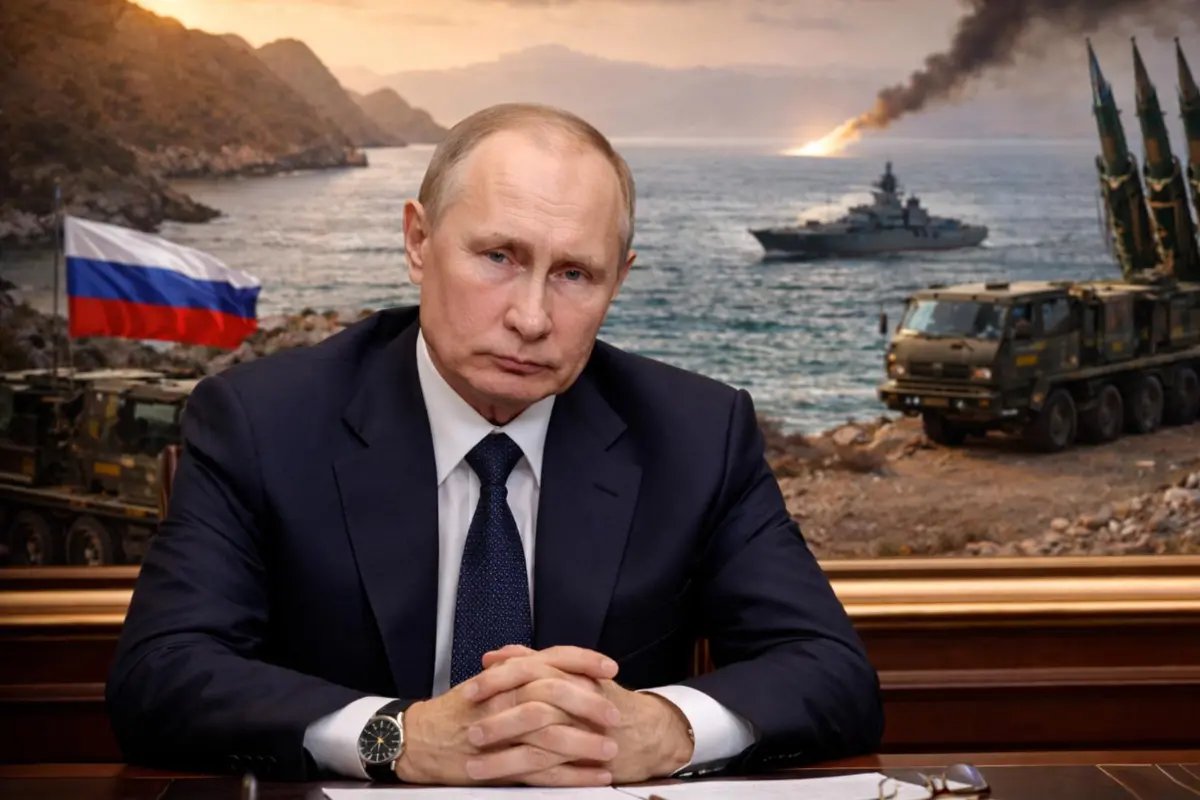
After the closure without agreement, Pezeshkian contacted Putin to inform him directly about what happened.
Russia has shown interest in assuming a mediating role in the conflict, which reinforces its position as a key actor in current geopolitics, especially in a scenario where tensions continue to escalate.
This rapprochement also shows the strengthening of the relationship between Moscow and Tehran in the midst of the conflict.
US ships in Hormuz: military pressure increases
In parallel to the diplomatic channel, the tension also moves to the military field.
The United States sent warships to the Strait of Hormuz with the aim of beginning demining efforts and guaranteeing the security of the maritime passage, one of the most important routes in the world for the transportation of energy.
This movement seeks to give confidence to commercial ships amid the risks in the area, after maritime traffic was seriously affected by the conflict.
The strait, through which nearly 20% of the world’s oil passes, has been one of the main sources of tension between both countries.
Furthermore, recent warnings from Iran have raised the risk of direct confrontations in the area, which could escalate the conflict further.
An uncertain scenario with risk of escalation
The failure of the negotiations leaves the future of the truce in the air and increases uncertainty about a possible military escalation.
While the United States hardens its posture and reinforces its presence in strategic points, Iran maintains its firm position and close ties with Russia.
The combination of failed diplomacy and military movements in key areas like Hormuz paints a complex picture, where any decision could have a global impact.
For now, the conflict continues without a clear solution… and with the world attentive to what happens in the coming hours.