The prime minister appointed by President Nicusor Dan, Eugen Tomac, began consultations with the main political formations in the former governing coalition in order to obtain the necessary votes to inaugurate a technical executive. The first reactions to his appointment do not indicate the existence of an already defined majority, although the president justified his decision precisely by the lack of a political alternative. Although he was not involved in any open conflict with the leaders of the major parties, obtaining the necessary 233 votes in Parliament will be decided at the level of each deputy and senator, experts believe.
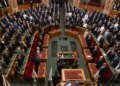
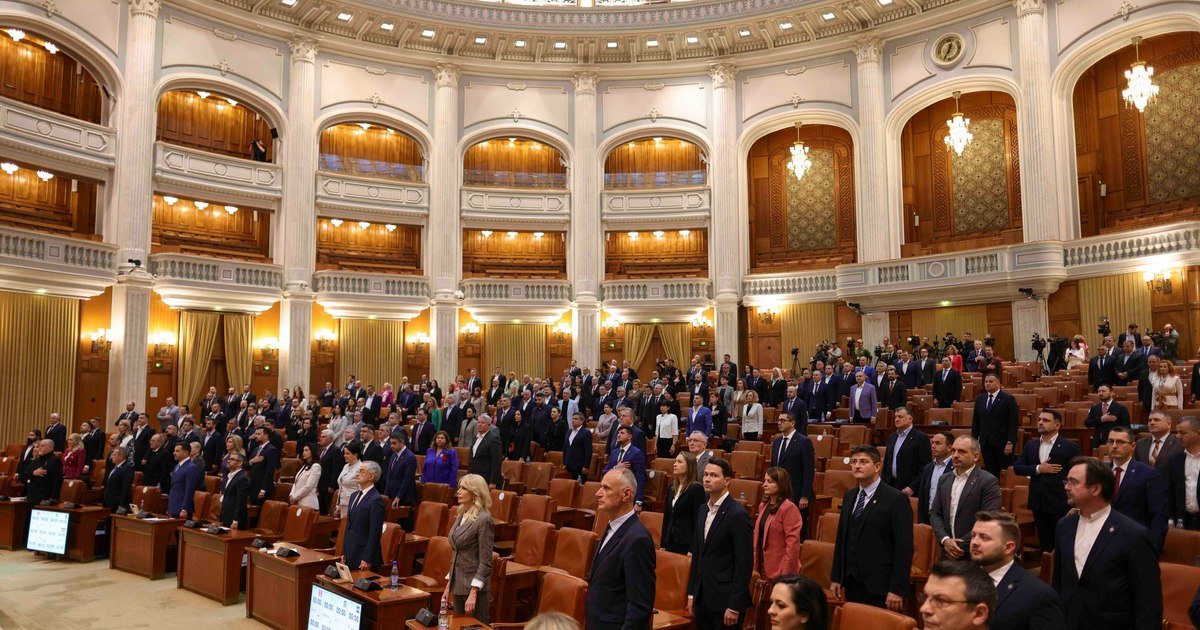
The assembled chambers of the Parliament Photo: Octav Ganea/Inquam Photos
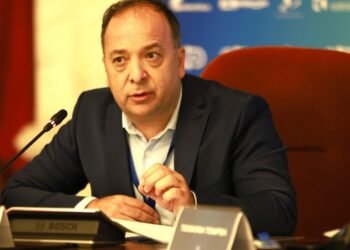
Political analyst Costin Ciobanu explained for “Adevărul” what will be the main directions of negotiation for Eugen Tomac in the coming days. According to him, PNL and USR will be in the center of attention, given that AUR has publicly announced that it will not vote for this Government.
“I think the main question is what will happen with the PNL and the USR. That’s where we’re waiting for the main movements, because that’s actually the most direct form of pressure, given what we’ve seen in recent weeks.
So far we have discussed the scenarios, but now we have a designated prime minister, who will try to build a majority. The greatest attention will be focused there and, probably, what will happen to the other groups in the Parliament will take a back seat. AUR said he was not voting. We are also looking at the other groups made up of parliamentarians who have changed their party. I also saw the movement of Victor Ponta, who moved to another group (No. “United for Romania”). The subject will not necessarily be what the sovereignists and other parliamentarians will do, but what the liberals and those from USR will do.
This debate favors the president Nicusor Dan, who spoke about a red line. We will see how strong the word of the president is in USR and how much Ilie Bolojan controls the party”says the analyst.
Why won’t AUR vote for the new Government?
The connections between George Simion and Eugen Tomac were not always so cold. Before the establishment of AUR, Tomac supported the “Bessarabia e Romania” movement, founded by George Simion. The promotion of the sovereignist current by the AUR leader has, however, led, in recent years, to the deterioration of relations between the two.
“I think that Eugen Tomac quite openly supported Nicuşor Dan last year and he also had some rather harsh statements, if we recall, to George Simion. Besides, the main characteristic of Eugen Tomac is that he didn’t really upset anyone. That’s why he is also in this compromise situation, being the prime minister appointed by the president, in the context in which the other parties are unable to reach an agreement.
On the part of the political parties, there were no strong negative reactions to his address, except for some more blunt statements from the UDMR.
We are still in a different political reality and, beyond the personal relationships that may exist, I think that the AUR is very interested at this moment in having a unitary and coherent position. He said very clearly that he does not support this Government and that he will not vote for it. The party returned to the thesis of early elections, and any attempt to support Tomac would mean, practically, a loss of credibility”says Costin Ciobanu.
The appointment of Eugen Tomac as prime minister Photo: Inquam Photos
The fact that the president proposed the alternative of a technical government gives the opportunity AUR to reaffirm its anti-system position:
“AUR is trying to take advantage in this way, precisely by coming and saying “we are the alternative, we are a serious party, we want to govern and we know what should be done”. Probably any defection or hesitant attitude should only discredit them. I expect, considering what happened with the censure motion and in the last year, that AUR will not follow this scenario. It was very disciplined, unlike the last legislature, in which we had all kinds of groups formed, now they rather come from SOS and POT.
I think that the parliamentarians there are making all kinds of calculations, considering that AUR has as much as it has in the polls, 35-40%, they rather think about what happens in 2028. Rather than trying all kinds of adventures with parties or with political combinations that have no electoral traction”.
How will the rest of the sovereignist parties vote
As with the censure motion that led to the fall of the Bolojan Government, when the SOS group decided on the morning of the vote to change the voting option, the other sovereignist formations do not represent a calculation that Eugen Tomac can count on:
“I think that nobody understands what happens in those parties, in the morning they have an opinion, in the evening they don’t agree with that opinion, it’s basically part of the tumultuous elections in 2024 that we had. Some people who woke up in Parliament without expecting to get there. It can be negotiated piecemeal, as they say.”
Chances like Tomac Government to pass the Parliament’s vote of confidence are very high:
“I think there are two battles, it’s the battle of image, which is being waged around the PNL-USR. The battle for votes is being waged much more prosaically and grassroots with every deputy and senator who could vote. But in the end, considering the exit of the president, the risk he took, and what the PSD also said before this moment, that it would have the votes, I still expect that there will not be such big problems in passing Tomac Government.
It’s more interesting what happens after, how this Government will look and where the weekly blackmail from the parties will come from. Now it seems that everyone is ready to move past this political moment”says the analyst.
The support granted to Eugen Tomac does not come without conditions, PSD wants the reduction of VAT for food and medicines, the elimination of CASS for mothers on parental leave and war veterans or the raising of the ceiling for which pensioners pay health contributions from 3000 to 4000 lei to be included in the future government program.