On the one hand, it appears “the introduction of discounts granted by banks, through their credit cards”and on the other “the acceleration of changes at the level of electronic commerce due to the pandemic.”
“In the first case, although the RRP is respected, the possibility of a bookstore accessing the discount of a card depends on its size and the financial capacity to assume a loss of income, which in reality results in a greater concentration of consumption in large stores or chains,” the text points out.
“Secondly, the consolidation and growth of platforms such as Mercado Libre alter the dynamics of the sector’s operation, while generating a kind of parallel market in which individuals or sole proprietorships began to sell books without having a physical store, to which many bookstores also joined. In this totally deregulated space, the imposed dynamic is to compete based on prices that are often well below the RRP offered in bookstores.”
In this context, independent bookstores in the capital (and the interior) accuse a situation of “suffocating” and warn: If this is not reversed, if the idea does not become law, the chain will end up going bankrupt and the map of bookstores in the country will change radically.
Martín Seoane, owner and bookseller of the Amazonia bookstore, has been one of the main promoters of this initiative. Although the idea has been around the sector for a long time, Seoane began to visit Tristán Narvaja and other “bookish” spots in the city to understand what was happening with his colleagues. He discovered that they were chewing the same worry as him.
Seoane collected more than thirty signatures and with them raised the issue with the Book Chamber. There they took it, they understood that the situation for the sector was alarming and a commission was set up to work on the issue. The first attempt to bring the text to the political spectrum ended in nothing: Senator Blanca Rodríguez took up the issue, raised it to the Ministry of Economy and Finance and found no response. The idea of a single price law remained dormant.
“We released the statement for that. When we found out that it had been left there, in nothingness, we had to come out and say what is happening, because we are going to die without even saying woe. We didn’t want to start turning off the lights without trying,” Seoane tells The Observer, which reiterates that the situation for small bookstores is worrying.
bookstores.jpg
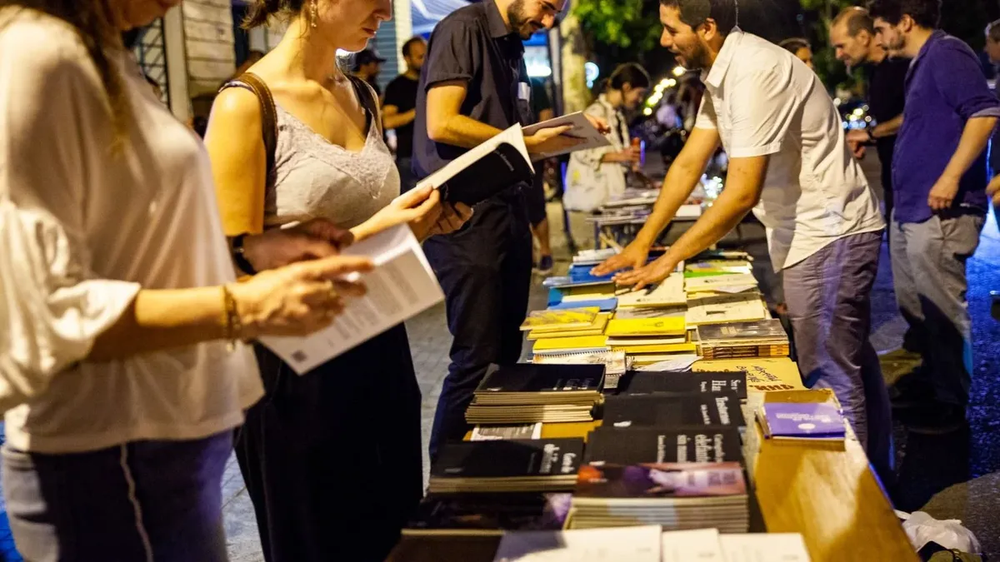
“Something has to be done because we are drowning, we are really up to our necks in water. Every time we have to sell the books cheaper to be able to compete. Here it is not that sales have decreased. Sales, more or less, month after month, are maintained. The issue is that you have to lower them because today you compete unequally with the cards, with Mercado Libre. I am worried, and so are all the booksellers.”
But there is some optimism, anyway, because the media noise generated by the bookstores’ statement in recent days revived the conversations: Seoane says that on Monday they have two meetings scheduled with parliamentarians and the Minister of Education and Culture, José Carlos Mahía, agreed to meet with representatives of the Book Chamber in the coming days.
What exactly does the Single Price Bill for books propose? For a start, that the price set by the publishers or the distributor is maintained during the first 18 months of the book’s existence, and that discounts are capped at 10%, whether sold in bookstores or on an online commerce platform. This amount is also a discount that is in line with the “historical” one that was frequently made in various Uruguayan bookstores. Those responsible for the text, on the other hand, They want to make it clear that the implementation of this eventual law does not mean that book prices will rise. And, above all, they show “Monday’s newspaper.” That which shows what happened to the book sector in countries that have a law of this type, and what happened to those that do not.
The great threat
Álvaro Risso, president of the Book Chamber, refers to several foreign examples and assures that if the situation is not regulated and legislated, then “tears will fall” because “bookstores will not survive.” The text of the document they prepared, in fact, is based on the law that currently governs Argentina.
“Monday’s newspaper indicates why countries with book markets as important, as fundamental as Spain, Germany, Italy, France, Argentina, Mexico, have the book law. I don’t think Amazon will be installed in Uruguay, but we already have other platforms. In Brazil, for example, Amazon moved in and knocked down all the bookstores because they sold books at cost.he didn’t care about anything, because he earned with shoes, perfumes, watches, and ended up knocking down even the large bookstore chains. What we have already seen happen in other countries can happen here on a different scale, because even our misfortunes happen at a different pace.”
Seoane also cites the case of Chile, where the presence of Buscalibre, a platform that sells books from all over the world at cheaper prices, is piercing the bookstore ecosystem.
“This is not a whim of Uruguayan booksellers, it is a phenomenon that happened in all countries. Some found this solution of the single price law, which does not guarantee you anything but at least evens the field. Today the competition is unfair. Today the bestsellers and you see them on e-commerce platforms the same day they came out at very low prices, because they don’t care about earning minimum margins. This kind of fight over who sells it cheaper means that it doesn’t end up serving anyone, or that it ends up serving only those who have it on their back to support it,” says Seoane, who also believes that the sector’s chain “is already broken” and that this would be the only thing that, with time, could fix it.
In what is called bibliodiversity, both Seoane and Risso and everyone involved repeat that independent bookstores are essential. In these spaces, small publishers and authors who do not sell thousands of copies have the possibility of showing their work, while the cultural proposals and the catalog collection usually have their own identity. In a time where third spaces are losing their footing in people’s lives, they defend that existence.
“Booksellers work in bookstores. If books start leaving warehouses for two bucks, where are they going to work? The figure of the bookstore is also lost, which has been the generator of everything that surrounds books, knowledge, education in reading, recommendation,” says the bookseller from Amazonia.
“We understand that bibliodiversity is extremely important,” adds Risso. “Books safeguard the cultural diversity of communities, languages, and diverse identities. As a bookseller friend says, Books serve to avoid the monoculture of the mind. So, biodiversity gives you the ability, precisely, to think differently, to think differently, biodiversity gives you the opportunity for literary experimentation, to reach out to authors who may sell little, but who end up being very influential over time. But where are those new, talented, young authors who publish in small publishing houses going to come from? underthat many times they don’t get any windows? The horizon has to be broader. You can’t just look at the price. You have to look at the book as a whole. You have to think about how proud we Montevideans are of the number of bookstores there are. You have to think that these bookstores offer different characteristics, not all are the same, and that runs the risk.”
The “battle” for a single book price has, among its main enemies, a question that arises almost immediately when talking about capping discounts and limiting competition: What about market freedom? Doesn’t this bill go against that?
Risso, on behalf of the Chamber, is clear that not: “The freedom of the market is good and I think it works in 99% of the areas, but the freedom of the market for the book must be understood within the framework of the complexity of a fragile cultural asset. You have to take care of the book, the book has particularities that are not the particularities of gastronomy, for example, that it offers a discount with a credit card and you eat worse or better than elsewhere, and that is within the laws of the game. The book is the same everywhere. Isabel Allende’s new book is the same in all bookstores. It doesn’t have a different taste, it doesn’t have a different flavor, it doesn’t have a different quality. It’s the same one that I sell and that the bookstore across the street sells. But if the one across the street manages, due to certain situations, to get a discount, what it is going to do is kill my bookstore. And suddenly, those bookstores, which are generally small, are the ones that best achieve the aforementioned bibliodiversity. It must be understood that this is a cultural asset and that the book chain is being harmed. In the long run, this is a problem that can end in something serious, and I am optimistic that parliamentarians and authorities understand that it is an issue that is difficult to compare with others.”