As expected, the commitments contained in article 15 of the 2026 finance law have just been fulfilled with the official announcement and publication in the Official Journal of the Tunisian Republic on Thursday, April 30, 2026, of government decrees relating to the increase in salaries in the public service and sector for the years 2026, 2027 and 2028.
Indeed, the concretization of these salary increases with the various implementing texts and announced during the celebration of Labor Day, May 1, constitutes one of the fundamental pillars of the State’s social policy in the sense that spread over three years, it allows citizens to be in tune with the evolution of the standard of living in the country.
Moreover, the Minister of Social Affairs affirms that this increase is considered satisfactory, especially if we know that it is accompanied by a stabilization of the inflation rate around 5% without forgetting the conditions of decent work guaranteed to the majority of Tunisians and the improvements for poor families as well as the guarantee of rights assured to the elderly after their retirement.
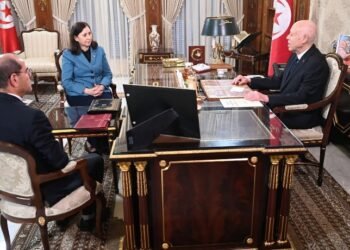
It should be remembered that the Head of State supervised, in person, the various events leading to this decision on increases, expected by all social categories. We particularly mention the major meeting held on March 23, under the presidency of the Head of State and in the presence of the Head of Government, several ministers, including those of Finance, Economy and Social Affairs.
This meeting also made it possible to emphasize the economic and social challenges facing Tunisia, in this case a “heavy legacy”, due to past choices and of which the people continue to bear the weight and pay the costs.
It goes without saying that these increases respond to strong, understandable expectations of employees and retirees, but the atmosphere remains marked by a fairly delicate macroeconomic situation since growth remains moderate, while budgetary room for maneuver remains limited.
In any case, these salary increases still represent an important step on the path to revaluations, while reflecting the firm determination of the State to preserve social cohesion, which is in line with the logic of economic stabilization through support for internal demand, perceived as a factor of resilience.