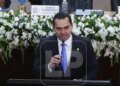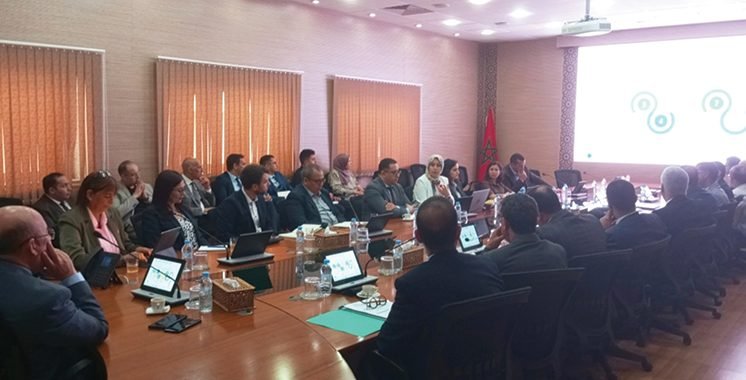
This strategic meeting constituted a major step in evaluating the progress made and analyzing the results obtained.
Meeting : One year from its completion, the GREEN Jobs II project supported 70 collective economy structures. Nearly half recorded an average increase in their turnover of around 20%. Nearly 1,170 direct jobs were created, while 1,180 beneficiaries improved their income by 20%.
The National Water and Forests Agency held the 3rd meeting of the Steering Committee of the Green Jobs II project “Promotion of green jobs through sustainable value chains in rural and mountain areas” on April 29 in Rabat. This meeting was chaired by the Director General of ANEF, Abderrahim Houmy in the presence of Oumnia Aboukorah-Voigt, Director of the Energy, Environment and Governance Pole of GIZ Morocco, as well as the project implementation teams. This strategic meeting constituted a major step in evaluating the progress made, analyzing the results obtained and preparing the post-project phase, with a view to consolidating acquired knowledge and reflecting on the conditions for their sustainability and scaling up. Funded by the German Federal Ministry for Economic Cooperation and Development (BMZ) to the tune of 5.5 million euros, and implemented by the German Agency for International Cooperation (GIZ), the Green Jobs II project supports the “Forests of Morocco 2020-2030” strategy.
It supports collective rural and forestry economic structures by strengthening their technical, managerial and commercial capacities, while promoting sustainable management of natural resources in four regions with high potential, namely Tangier-Tétouan-Al Hoceima, Fès-Meknès, Béni Mellal-Khénifra and Rabat-Salé-Kénitra. One year from its completion, the project is showing particularly convincing results: 70 collective economy structures have been supported. Nearly half recorded an average increase in their turnover of around 20%. It should be noted that around 1,170 direct jobs were created, while 1,180 beneficiaries improved their income by 20%. In addition, more than 1,700 people have benefited from specialized training, sustainably strengthening local skills. Among these structures, nine “champion” cooperatives stand out today for their advanced level of maturity, their ability to access new markets and their growing role in supporting other local initiatives, thus contributing to the emergence of a structured and supportive forestry cooperative ecosystem. During this meeting, the CEO of ANEF indicated that this project concretely illustrates the capacity of strategic partnerships to sustainably transform rural and mountainous territories. He reaffirmed ANEF’s commitment to consolidating and promoting the project’s achievements, for the benefit of local communities, through an integrated approach placing the green economy, social inclusion and sustainability at the heart of territorial development.
Mr. Houmy also highlighted the structuring role of this initiative in promoting rural forestry entrepreneurship, the economic integration of young people and the empowerment of women, by contributing to the emergence of more resilient and competitive local economic models. For her part, Oumnia Aboukorah-Voigt stressed that this third meeting comes at a pivotal moment, marked by the transition from an experimental phase to a stage of maturity where the impacts of the project are now visible and measurable on the ground. She insisted on the need to capitalize on the achievements obtained and to collectively reflect on the levers allowing their deployment on a larger scale, in order to sustainably integrate this dynamic into territorial economic development policies. The Green Jobs II project constitutes a strategic lever for sustainable socio-economic transformation, serving rural and mountainous areas, the responsible development of natural resources and the construction of an inclusive green economy.