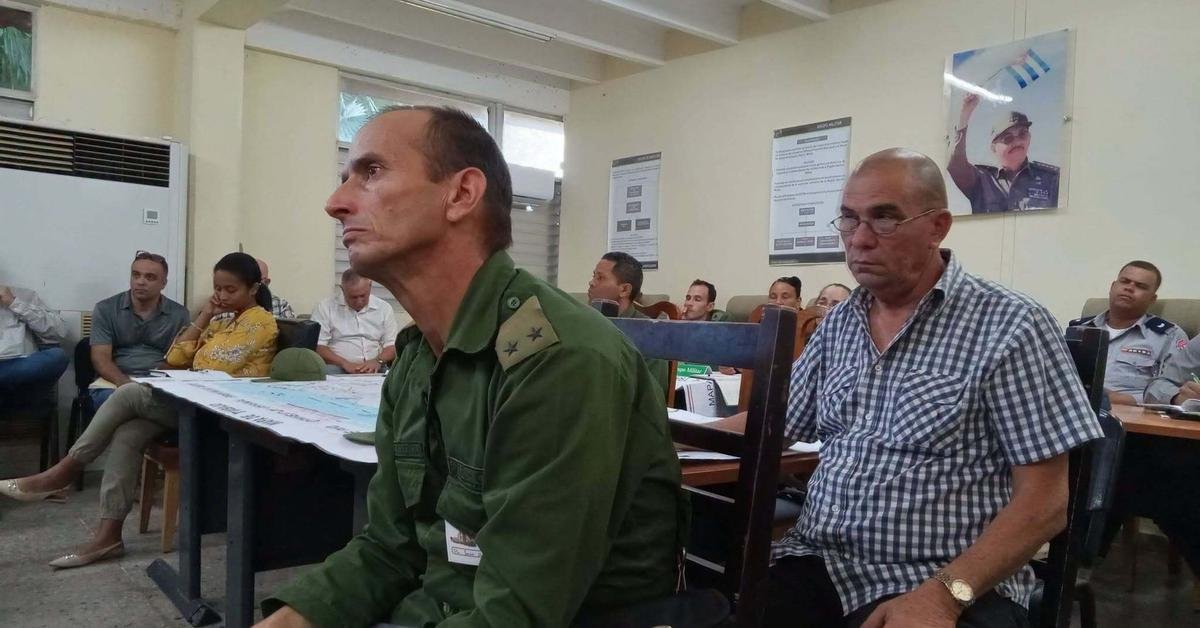
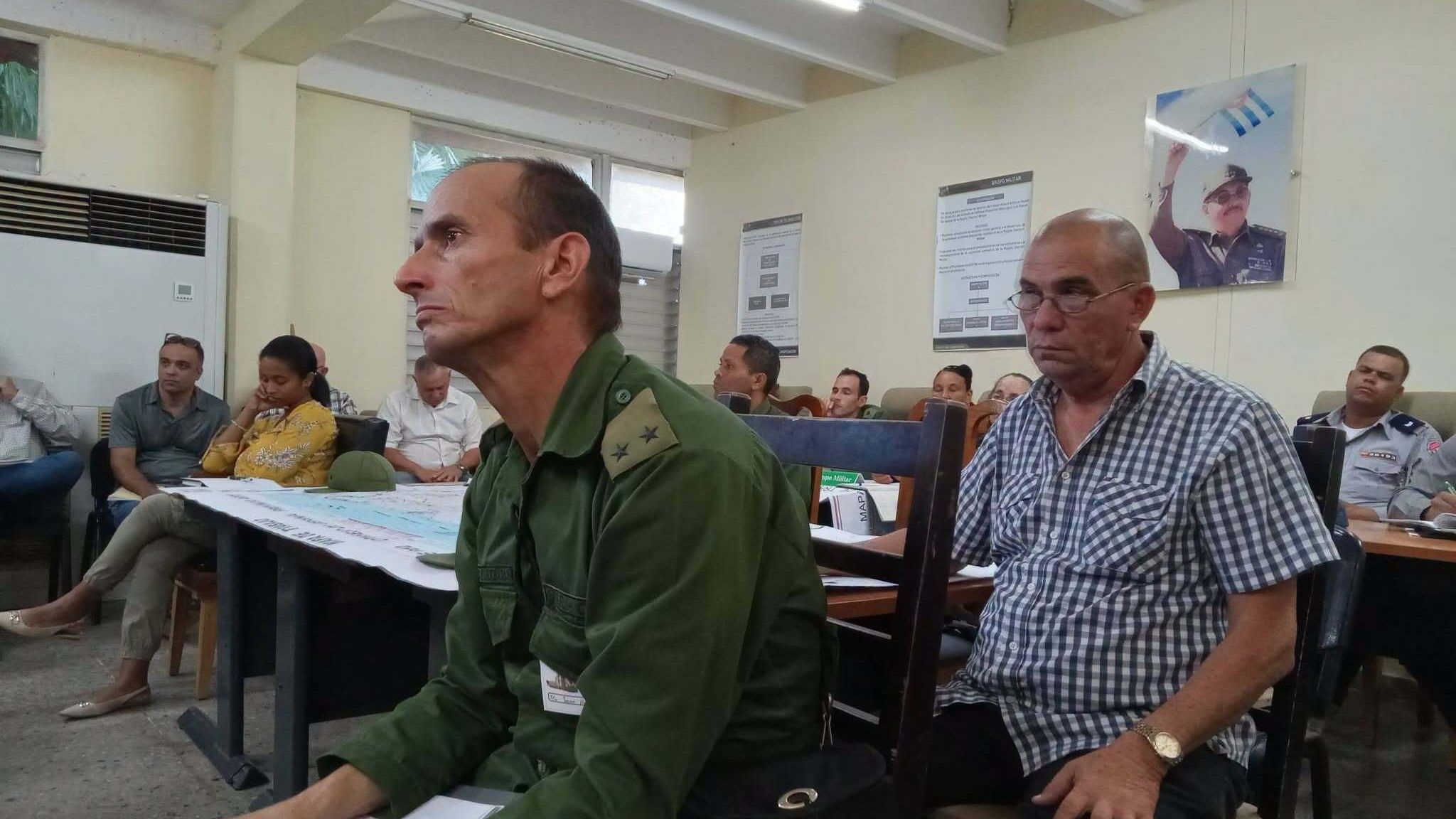
Havana/In the images broadcast on national television about the Moncada 2026 strategic exercise, elderly officers predominate sitting around long tables, in rooms presided over by photographs of Fidel and Raúl Castro. There are not many combat scenes or weapons demonstrations. The war that the Cuban regime claims to be preparing seems to be fought, for now, between videoconferences, papers and speeches about the need to defend the Revolution.
This Wednesday, the Government launched military maneuvers that will last until Thursday throughout the national territory and will culminate on Friday, November 6, with National Defense Day. According to the authorities, the objective is to raise the preparation of the commanders, troops, territorial structures and the economy to face a possible foreign aggression, at a time of high tensions with the United States.
However, the official reports themselves reveal that the exercises are not limited to rehearsing a response to a hypothetical invasion. They also include scenarios of internal destabilization and loss of governability, an especially significant concern in a country hit by blackouts, food shortages, inflation, deteriorating public services and discontent.
The press reported on exercises aimed at confronting situations that affect internal order, including growing social complaints, acts of vandalism and possible attacks against photovoltaic parks and other strategic installations.
In Ciego de Ávila, for example, participants simulated a sociopolitical situation aggravated by the actions of a supposed enemy with the purpose of provoking “social ungovernability,” according to a report by the Cuban News Channel. From this scenario, the authorities established strategic objectives and missions for the defense of the territory.
In Artemis, the preparation was even more explicit. The provincial press reported of exercises aimed at facing situations that affect internal order, including growing social complaints, acts of vandalism and possible attacks against photovoltaic parks and other strategic installations. The actions of the Rapid Response detachments, surveillance groups and the so-called “cyber combatants” were also addressed.
The inclusion of these situations in maneuvers presented as a response to a US military threat reveals the extent to which the regime’s defensive doctrine mixes the protection of territory with the maintenance of political and social control by force, even if a good part of the very people it claims to defend become the true enemy.
In parallel, some official Facebook pages have begun to use artificial-looking or heavily retouched images to illustrate military content.
In the Central Army, the start of Moncada 2026 was led by the vice minister of the Revolutionary Armed Forces, Army Corps General Joaquín Quintas Solá, and the head of that army, Major General Raúl Villar Kessel. A videoconference served to insist on the need to strengthen management and response capabilities in complex situations.
In Matanzas, the president of the Provincial Defense Council, Mario Sabines Lorenzo, examined the main problems that affect the population and the operation of the defense zones. In Las Tunas, the activities were focused on preparing the transition to “complete readiness for defense”, through the coordination of the management bodies and working groups.
In parallel, some official Facebook pages have begun to use artificial-looking or heavily retouched images to illustrate military content. This trend is striking after the criticism and memes that have been provoked by previous publications on defense preparation, which featured decades-old weapons, outdated training methods, and participants whose physical condition is far from the image of an army prepared to fight. Already in January, this newspaper had pointed out the contrast between the triumphalist speech of Díaz-Canel and the obsolete weapons displayed on national television.
The population has to face daily problems that are much more immediate than a hypothetical war.
The Moncada exercise is part of the “War of All the People” doctrine, promoted by Fidel Castro during the 1980s. Its strategy consists of involving military, political, economic and civil structures in resistance to a possible invasion, with the purpose of raising the cost of a foreign occupation.
This year’s call comes amid a tightening of relations between Havana and Washington. On October 23, US President Donald Trump stated during an event in Florida that, once the operations against Iran are concluded, ships from his country could approach the Cuban coast. He also mentioned the Secretary of State, Marco Rubio, as in charge of negotiating a solution to the situation on the Island.
For Cubans, accustomed to hearing warnings about a US invasion for almost seven decades, the new maneuvers come at a particularly critical moment. The population has to face daily problems that are much more immediate than a hypothetical war: getting food, finding medicine, having water and surviving blackouts.