Madrid/Meliá improved its accounts at the end of September after having completely divested itself of its business in Cuba. The losses due to “interrupted activities”, as the company calls its hotel management on the Island, were declared in Junefor a value of 79,399,000, which sank its profit by 95%. Now, the losses so far this year in this section reach 79,821,000 euros, which represents 422,000 euros that the company attributes to the last consequences of its Cuban exit.
“The impact of the interrupted activities corresponds to the accounting for impairments in operational activity and associated with the import activity of the business in Cuba, which to date has been completely completed,” the report indicates.
In July, the losses were recorded in impairments associated with the management activity (15.5 million euros), the import activity (20.6) and the tour operation (1.6). More than half, 41.3 million, were attributed to the remaining amount of participation in Homasi SA, the company through which Meliá channeled rights in investments in Cuba and which, when dissolved, left its book value at zero. At that time, the president and CEO of Meliá, Gabriel Escarrer, indicated that the 79.4 million had been provisioned and that he was confident that “the positive evolution of the business” indicated that it would be “a punctual impact and without affecting cash.”
Now, is checked that the Mallorcan hotel company has managed, with an extraordinary summer, to absorb the blow and clean up its accounts. While at the end of June the group’s profits reflected a 95% decline compared to last year, now it is only 55%.
While at the end of June the group’s profits reflected a 95% decline compared to last year, now it is only 55%
In this third quarter, the company obtained revenues of 659.6 million euros, the company’s all-time high for that period and 7.7% compared to the same quarter in 2025. In addition, so far this year, the Balearic hotel company has earned 1,707 million euros, a growth of 7.3%, which is also a record.
These historic figures, supported above all by the excellent tourist summer in Spain, leave the net result at 67.1 million euros, 55.5% less than the 150.9 million earned in the same period last year.
“The evolution of Meliá during the first nine months of the year confirms the strength of our business and the success of the strategic transformation undertaken by the company. We have closed a positive summer season, with solid demand both national and international and with Spanish destinations once again leading growth,” Escarrer said in a statement released by the company.
In the current report – which the company presents by legal obligation, as it is listed on the stock exchange, to the National Commission of Markets and Securities – the annual data corresponding to room occupancy, price and RevPAR (average income per available room) in Cuba logically remains unchanged, but the Island has left the tables corresponding exclusively to the third quarter.
Furthermore, in the first semester document you could see the disaffiliation of 15 hotels in Cuba that had a total of 6,777 rooms.
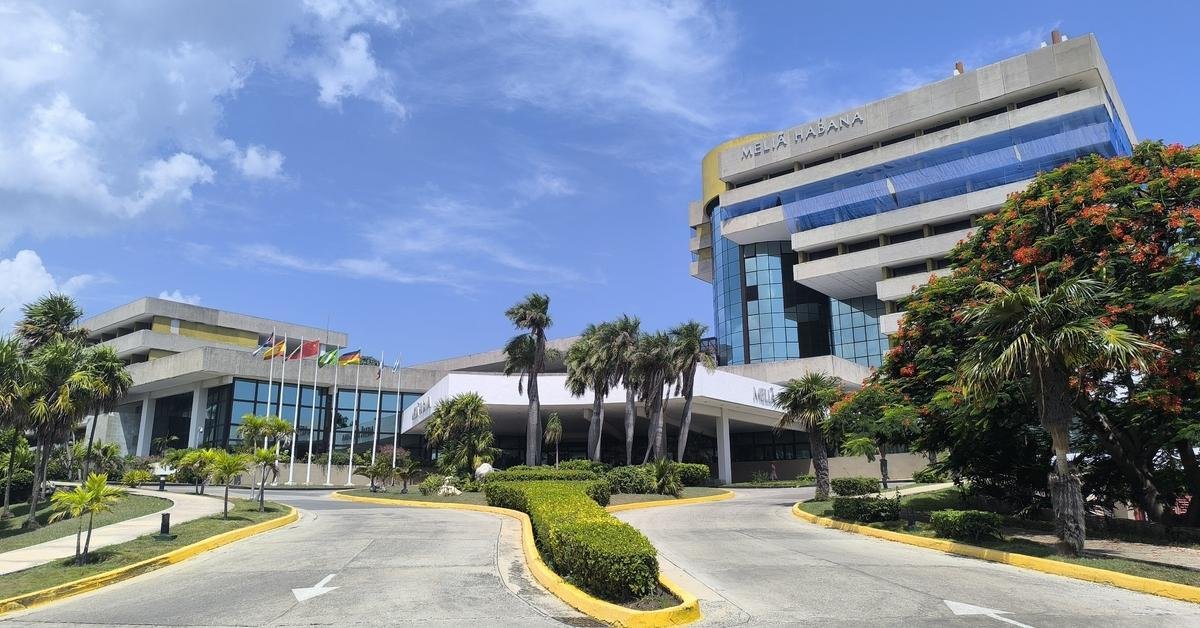
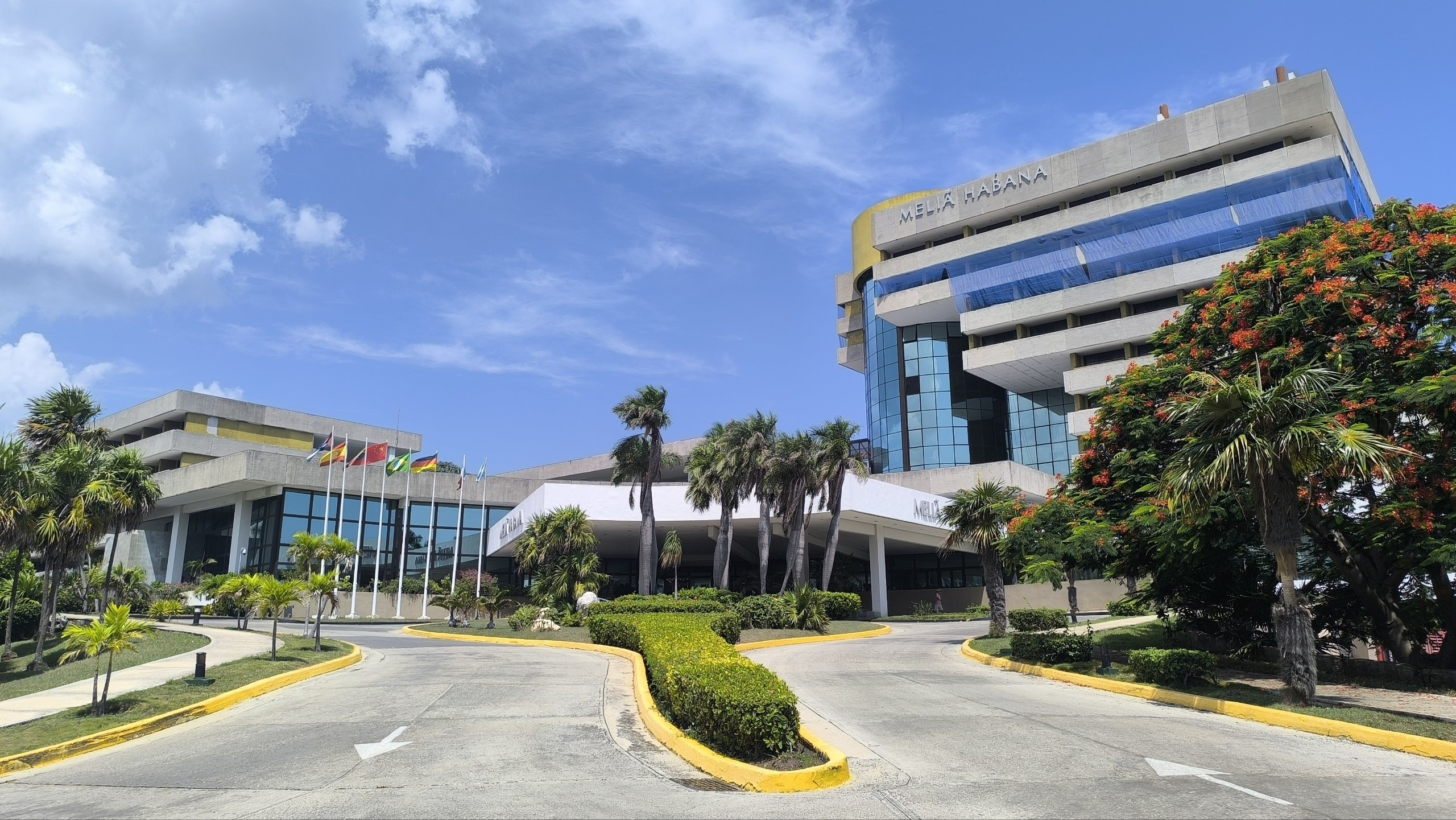
Furthermore, in the first semester document you could see the disaffiliation of 15 hotels in Cuba that had a total of 6,777 rooms. Now, in the third quarter, the complete list of 33 “disaffiliated” establishments is seen, 18 more, with their 7,007 rooms. This final auction includes names that were as emblematic as the Meliá Cohiba, the Habana Libre in the capital, the San Carlos in Cienfuegos and the symbolic Sol Palmeras in Varadero, with which the hotel company began its journey on the Island in 1990.
The business, in constant growth, had very good evolution for years: between 2015 and 2017, the good times of the best moment of Cuban tourism were clearly reflected in the company’s accounts, accounting for around 25% of Meliá’s income and more than 25% of its gross profit. In 2025 it was barely 2%, but Escarrer Jr.’s faith in the Island – his father, Gabriel Escarrer Juliá, struck up a great friendship with Fidel Castro – was still intact. The CEO argued on more than one occasion, and with international flights suspended in Cuba and sanctions on foreign companies associated with Gaesa in force, that his intention was to remain on the Island.
However, everything changed abruptly between June and July, when he announced his departure, first from the Gaviota establishments and then those he managed belonging to Cubanacán and Gran Caribe. The measure was taken “from a deep sense of business responsibility, and responds to and is a consequence of a combination of unforeseen circumstances beyond the management or performance capacity of Ilha Bela,” said the closing statement, referring to the Portuguese company that managed Meliá’s businesses in Cuba.