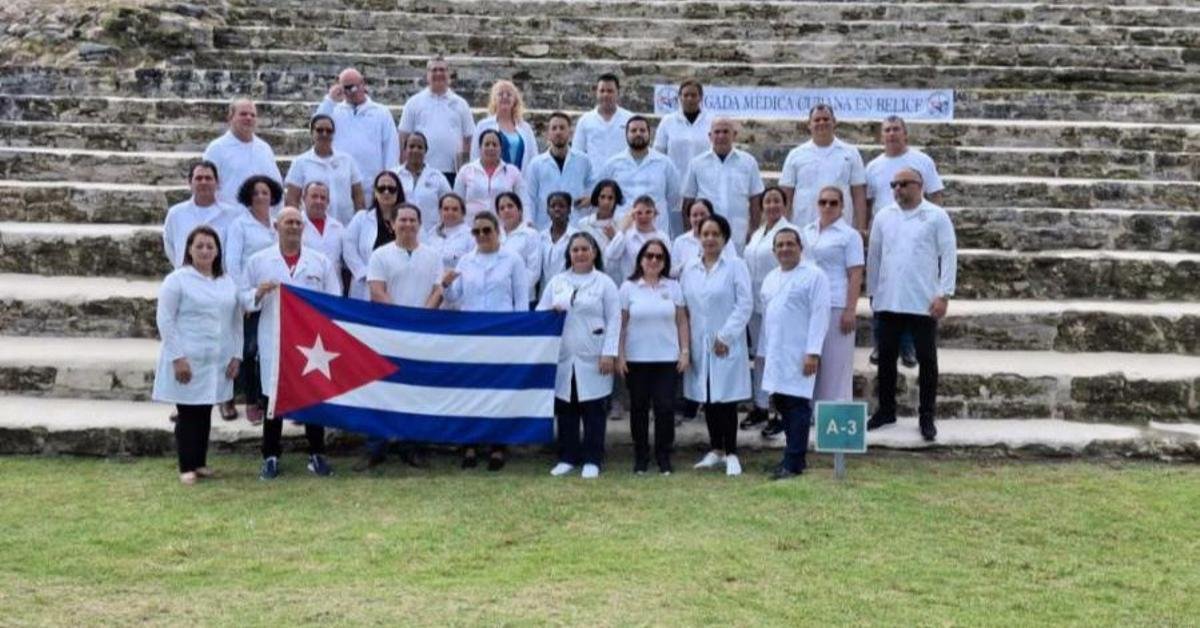
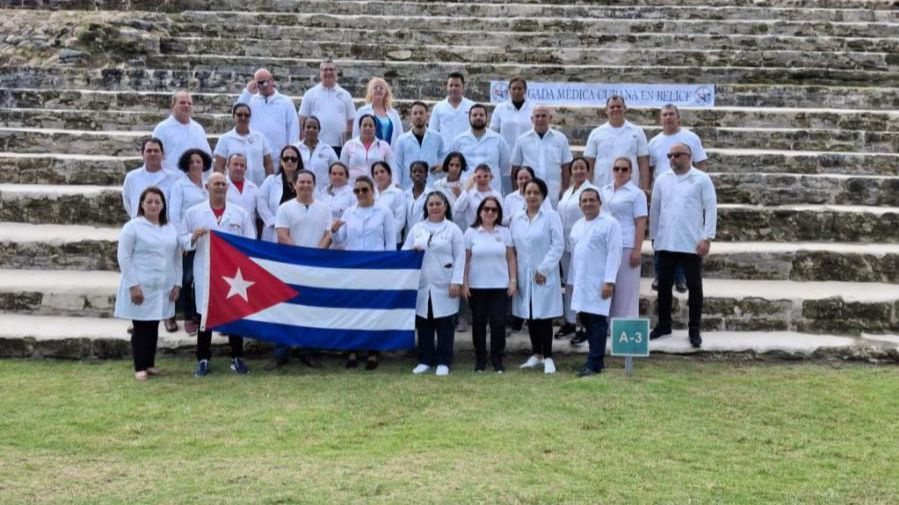
Madrid/Belize will not renew the medical cooperation agreement it has had with Cuba since 1990, but it also does not want to lose the Island’s professionals who work in its health system. The Government announced this Tuesday that, “to guarantee the continuity of medical services,” it will sign “individual work contracts with each Cuban professional that will allow them to stay and work” in the country, according to a report. statement from the Ministry of Foreign Affairs spread by the Belizean press.
The decision comes after months of negotiations with Havana and under pressure from the United States, which considers official Cuban medical mission programs a form of forced labor. Belizean Prime Minister John Briceño explained in May that he was looking for a formula that would allow Washington to recognize that health workers “are here working of their own free will.” according to his statements on May 27.
The Belizean prime minister explained in May that he was looking for a formula that would allow Washington to recognize that health workers “are here working of their own free will.”
This Tuesday’s announcement does not clarify when the new contracts will be signed or what the salary conditions will be.
A similar situation arose on the other side of the Atlantic, in Calabria, southern Italy, where Cuban doctors have been hired since 2022. Although the conditions were later modified so that they would be paid directly into Italian bank accounts, some professionals acknowledged that they were still giving up to half of their salaries to the Cuban Government.
One of the antecedents of these agreements in Europe is that of Calabria, in southern Italy, which began to hire Cuban doctors in 2022. Although the conditions were later modified so that the professionals could be paid directly into Italian bank accounts, some recognized that they continued to deliver up to half of their salaries to the Cuban Government, as published 14ymedio.
As confirmed by the Minister of Foreign Affairs of Belize, Francis Fonseca, in April, and the Minister of Health, Kevin Bernard, in September, the brigade had some 92 health professionals, including 45 doctors, assigned to hospitals and rural communities in the country.
Among them are specialists who provide services at Karl Heusner Memorial Hospital, the main hospital center in the country. Bernard had also mentioned the presence of nephrologists, paediatricians, psychiatrists, gynecologists and specialists in neonatal care, as well as nurses assigned to locations far from cities.
Dependency on Cubans is especially high in Toledo, one of the southernmost districts of Belize. There, eight of the 16 doctors are from the Island. “We already have difficulties finding doctors, or even local professionals, willing to work in the south and in those communities,” Bernard warned in September.
Dependency on Cubans is especially high in Toledo, one of the southernmost districts of Belize, where eight of the 16 doctors are from the Island
Belize has also sought alternatives in other countries to meet its personnel needs. The prime minister explained on the same date that the Government was studying hiring doctors and nurses from the Philippines, El Salvador, Honduras and Nicaragua. Foreign Minister Francis Fonseca had already recognized in April that the country needed more nurses even if it managed to keep all the members of the Cuban brigade.
Belizean authorities had been studying since April how to retain health workers after the expiration of the bilateral agreement. In September, Bernard confirmed that they had sent a proposal to the Cuban Embassy to hire them individually, but acknowledged that they needed Havana’s acceptance.
In May, the prime minister defended the continuity of the brigade and assured that Belize already paid the doctors directly, instead of giving the money to the Cuban Government. “From the beginning we have been paying the doctors directly and not the Government,” declared Briceno.
The solution announced now is similar to that adopted by Jamaica, which suspended its agreement with Cuba in March after both governments failed to agree on new conditions. Havana then withdrew a good part of its professionals, but Kingston began to reinstate them through individual contracts.
In October, the Jamaican Minister of Health, Christopher Tufton, confirmed that 157 health workers had returned under this modality and joined another 43 who remained in the country. In total, Jamaica had recovered 200 Cuban workerscompared to the approximately 300 it had before the breakup.
In Guyana, where medical cooperation with Cuba lasted almost five decades, authorities denounced that Havana withdrew its brigades in Februarydespite the fact that the conversations continued. Health Minister Frank Anthony later explained that some Cuban professionals had decided to stay and work directly for the Guyanese government.
Other Caribbean countries have also reviewed their health relationship with the Island. Antigua and Barbuda announced the replacement of 72 Cuban doctors by Ghanaian personnel, while Dominica agreed with Havana modify the conditions of your program. Saint Vincent and the Grenadines is also among the countries that decided to abandon contracting through state agreements.