Tuesday, June 16, 2026
    The GeoStrategic Consensus
    No Result
    View All Result
    • Login
    • HOME
    • AMERICAS
      • Argentina
      • Brazil
      • Canada
      • Chile
      • Colombia
      • Costa Rica
      • Cuba
      • Dominican Republic
      • Ecuador
      • El Salvador
      • Greenland
      • Guatemala
      • Honduras
      • Mexico
      • Nicaragua
      • Panama
      • Paraguay
      • Peru
      • United States
      • Uruguay
      • Venezuela
    • ASIA-PACIFIC
      • Australia
      • Brunei Darussalam
      • Cambodia
      • China
      • Federated States of Micronesia
      • Fiji
      • Indonesia
      • Japan
      • Kiribati
      • Laos
      • Malaysia
      • Marshall Islands
      • Mongolia
      • Myanmar
      • Nauru
      • New Zealand
      • North Korea
      • Palau
      • Papua New Guinea
      • Philippines
      • Samoa
      • Singapore
      • Solomon Islands
      • South Korea
      • Taiwan
      • Thailand
      • Timor-Leste
      • Tonga
      • Tuvalu
      • Vanuatu
      • Vietnam
    • CARICOM
      • CARICOM – Non-English
        • Haiti
        • Suriname
      • CARICOM Associates
        • Anguilla
        • Bermuda
        • British-Virgin-Islands
        • Cayman-Islands
        • Curacao
        • Turks-and-Caicos
      • CARICOM English
        • Antigua and Barbuda
        • Barbados
        • Belize
        • Dominica
        • Grenada
        • Guyana
        • Jamaica
        • Montserrat
        • Saint Kitts and Nevis
        • Saint Lucia
        • Saint Vincent and the Grenadines
        • The Bahamas
        • Trinidad and Tobago
    • EURASIA
      • Armenia
      • Azerbaijan
      • Balarus
      • Georgia
      • Kazakhstan
      • Kyrgyzstan
      • Moldova
      • Russia
      • Tajikistan
      • Turkmenistan
      • Ukraine
      • Uzbekistan
    • EUROPE
      • Albania
      • Andorra
      • Austria
      • Bosnia and Herzegovina
      • Bulgaria
      • Croatia
      • Cyprus
      • Czech Republic
      • Denmark
      • Estonia
      • Finland
      • France
      • Germany
      • Greece
      • Holy See
      • Hungary
      • Iceland
      • Ireland
      • Italy
      • Kosovo
      • Latvia
      • Liechtenstein
      • Lithuania
      • Luxembourg
      • Malta
      • Monaco
      • Montenegro
      • Netherlands
      • North Macedonia
      • Norway
      • Poland
      • Portugal
      • Romania
      • San Marino
      • Serbia
      • Slovakia
      • Slovenia
      • Spain
      • Sweden
      • Switzerland
      • United Kingdom
    • MIDDLE EAST AND NORTH AFRICA
      • Algeria
      • Bahrain
      • Egypt
      • Iran
      • Iraq
      • Israel
      • Jordan
      • Kuwait
      • Lebanon
      • Lybia
      • Morocco
      • Oman
      • Palestinian Territories
      • Qatar
      • Saudi Arabia
      • Syria
      • Tunisia
      • Turkey
      • United Arab Emirates
      • Western Sahara
      • Yemen
    • SOUTH ASIA
      • Afghanistan
      • Bangladesh
      • Bhutan
      • India
      • Maldives
      • Nepal
      • Pakistan
      • Sri Lanka
    • SUB-SAHARAN AFRICA
      • Angola
      • Benin
      • Botswana
      • Burkina Faso
      • Burundi
      • Cabo Verde
      • Cameroon
      • Central African Republic
      • Chad
      • Comoros
      • Cote d’Ivoire
      • Democratic Republic of the Congo
      • Djibouti
      • Equatorial Guinea
      • Eritrea
      • Eswatini
      • Ethiopia
      • Gabon
      • Gambia
      • Ghana
      • Guinea
      • Guinea Bissau
      • Kenya
      • Lesotho
      • Liberia
      • Madagascar
      • Malawi
      • Mali
      • Mauritania
      • Mauritius
      • Mozambique
      • Namibia
      • Niger
      • Nigeria
      • Republic of the Congo
      • Rwanda
      • Sao Tome and Principe
      • Senegal
      • Seychelles
      • Sierra Leone
      • Somalia
      • South Africa
      • South Sudan
      • Sudan
      • Tanzania
      • Togo
      • Uganda
      • Zambia
      • Zimbabwe
    • HOME
    • AMERICAS
      • Argentina
      • Brazil
      • Canada
      • Chile
      • Colombia
      • Costa Rica
      • Cuba
      • Dominican Republic
      • Ecuador
      • El Salvador
      • Greenland
      • Guatemala
      • Honduras
      • Mexico
      • Nicaragua
      • Panama
      • Paraguay
      • Peru
      • United States
      • Uruguay
      • Venezuela
    • ASIA-PACIFIC
      • Australia
      • Brunei Darussalam
      • Cambodia
      • China
      • Federated States of Micronesia
      • Fiji
      • Indonesia
      • Japan
      • Kiribati
      • Laos
      • Malaysia
      • Marshall Islands
      • Mongolia
      • Myanmar
      • Nauru
      • New Zealand
      • North Korea
      • Palau
      • Papua New Guinea
      • Philippines
      • Samoa
      • Singapore
      • Solomon Islands
      • South Korea
      • Taiwan
      • Thailand
      • Timor-Leste
      • Tonga
      • Tuvalu
      • Vanuatu
      • Vietnam
    • CARICOM
      • CARICOM – Non-English
        • Haiti
        • Suriname
      • CARICOM Associates
        • Anguilla
        • Bermuda
        • British-Virgin-Islands
        • Cayman-Islands
        • Curacao
        • Turks-and-Caicos
      • CARICOM English
        • Antigua and Barbuda
        • Barbados
        • Belize
        • Dominica
        • Grenada
        • Guyana
        • Jamaica
        • Montserrat
        • Saint Kitts and Nevis
        • Saint Lucia
        • Saint Vincent and the Grenadines
        • The Bahamas
        • Trinidad and Tobago
    • EURASIA
      • Armenia
      • Azerbaijan
      • Balarus
      • Georgia
      • Kazakhstan
      • Kyrgyzstan
      • Moldova
      • Russia
      • Tajikistan
      • Turkmenistan
      • Ukraine
      • Uzbekistan
    • EUROPE
      • Albania
      • Andorra
      • Austria
      • Bosnia and Herzegovina
      • Bulgaria
      • Croatia
      • Cyprus
      • Czech Republic
      • Denmark
      • Estonia
      • Finland
      • France
      • Germany
      • Greece
      • Holy See
      • Hungary
      • Iceland
      • Ireland
      • Italy
      • Kosovo
      • Latvia
      • Liechtenstein
      • Lithuania
      • Luxembourg
      • Malta
      • Monaco
      • Montenegro
      • Netherlands
      • North Macedonia
      • Norway
      • Poland
      • Portugal
      • Romania
      • San Marino
      • Serbia
      • Slovakia
      • Slovenia
      • Spain
      • Sweden
      • Switzerland
      • United Kingdom
    • MIDDLE EAST AND NORTH AFRICA
      • Algeria
      • Bahrain
      • Egypt
      • Iran
      • Iraq
      • Israel
      • Jordan
      • Kuwait
      • Lebanon
      • Lybia
      • Morocco
      • Oman
      • Palestinian Territories
      • Qatar
      • Saudi Arabia
      • Syria
      • Tunisia
      • Turkey
      • United Arab Emirates
      • Western Sahara
      • Yemen
    • SOUTH ASIA
      • Afghanistan
      • Bangladesh
      • Bhutan
      • India
      • Maldives
      • Nepal
      • Pakistan
      • Sri Lanka
    • SUB-SAHARAN AFRICA
      • Angola
      • Benin
      • Botswana
      • Burkina Faso
      • Burundi
      • Cabo Verde
      • Cameroon
      • Central African Republic
      • Chad
      • Comoros
      • Cote d’Ivoire
      • Democratic Republic of the Congo
      • Djibouti
      • Equatorial Guinea
      • Eritrea
      • Eswatini
      • Ethiopia
      • Gabon
      • Gambia
      • Ghana
      • Guinea
      • Guinea Bissau
      • Kenya
      • Lesotho
      • Liberia
      • Madagascar
      • Malawi
      • Mali
      • Mauritania
      • Mauritius
      • Mozambique
      • Namibia
      • Niger
      • Nigeria
      • Republic of the Congo
      • Rwanda
      • Sao Tome and Principe
      • Senegal
      • Seychelles
      • Sierra Leone
      • Somalia
      • South Africa
      • South Sudan
      • Sudan
      • Tanzania
      • Togo
      • Uganda
      • Zambia
      • Zimbabwe
    No Result
    View All Result
    Agentially
    No Result
    View All Result
    Home MIDDLE EAST and NORTH AFRICA Morocco

    University reform: the government’s proposal deemed insufficient by the CSEFRS

    The Analyst by The Analyst
    June 16, 2026
    in Morocco
    University reform: the government’s proposal deemed insufficient by the CSEFRS


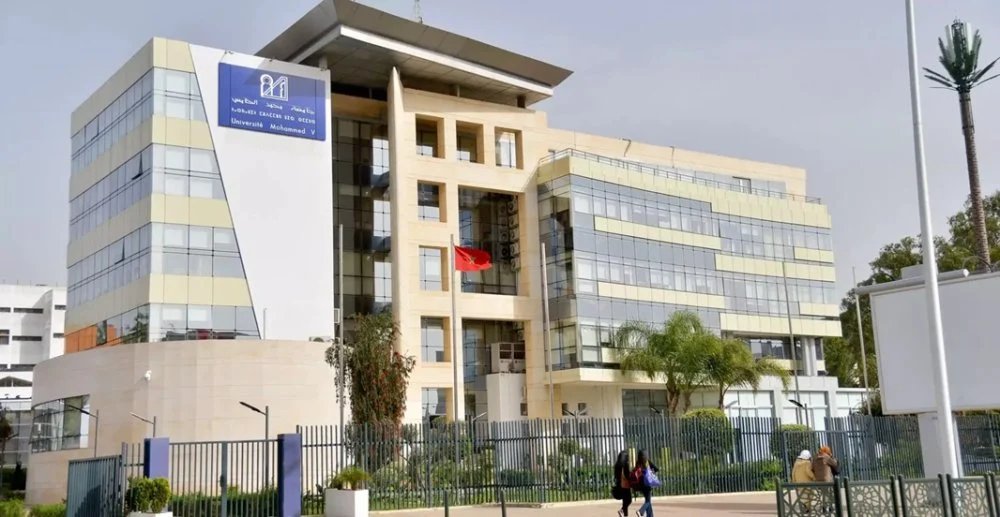
    Cut them out universities will not solve the problems alone. This is, in essence, the message that the Higher Council for Education, Training and Scientific Research (CSEFRS) addressed to the government.

    READ ALSO

    Social aid Morocco devotes 2% of its GDP to beneficiaries – Today Morocco

    HRH Princess Lalla Asmaa chairs the first Day of Patients Suffering from Deafness and the launch of the ‘hearing aid for all’ program

    The project to overhaul the university card public comes from a good intention: to relieve the congestion of large universities, to bring campus of the students and better distribute the training offer across the territory. But for the Council, the proposed remedy remains too light to cure a much deeper problem. The project plans to comprehensively review the current organization of public universities. Several large establishments would be divided into smaller entities. Ultimately, the Morocco would increase from 12 to 27 public universities. An important transformation on paper, but which, according to the Council, cannot be confused with a global reform of higher education.
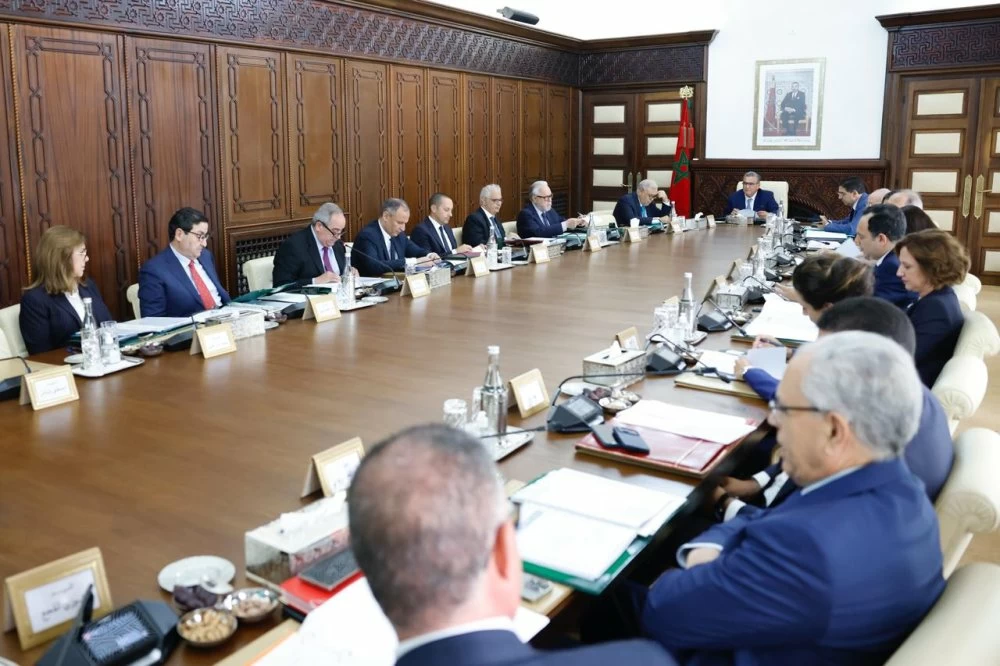
    Higher education: a new decree to reorganize open access universities in Morocco

    A useful reform, but not sufficient

    In its opinion issued in May 2026, the Council does not reject the principle of division. On the contrary, he recognizes that some universities have become too big, too busy and difficult to manage. Under these conditions, create universities more reasonably sized can help improve management, reduce clutter and bring thehigher education territories.

    The idea is simple: a university better anchored in its region can better understand local needs, dialogue with economic players and contribute to territorial development. On this point, the Council therefore validates the objective. But it immediately introduces a significant nuance: dividing a large university into several smaller universities does not automatically guarantee better courses, better professional integration or better scientific research.

    The risk of a “ruler and compass” reform

    The main criticism of the Council is the approach adopted. The project appears to address the university crisis like a map problem: too many students here, not enough establishments there, so we are redrawing the borders. However, for the Council, the difficulties ofMoroccan university are not just geographical. They also affect the quality of training, teaching methods, governance, research, innovation, student guidance and alignment with the job market. In other words, moving the lines on the map will not be enough if we do not also change what is happening inside universities.

    The right diagnosis, but too narrow an answer

    The government document identifies several well-known challenges: the congestion of establishments, the quality of trainingTHE stallL’employability graduates and the need to adapt the university to new professions. But the proposed response remains mainly institutional: dividing universities and creating new structures. It is precisely this discrepancy that the Council notes. The diagnosis is broad, but the treatment is limited. As if we noticed that the house has problemselectricityinsulation and foundations, before only proposing to repaint the walls.

    Territorial equity must not overshadow quality

    Bringing the university closer to students is an important objective, especially in a country where territorial inequalities still weigh heavily on school and university careers. The Council does not dispute this priority. But it alerts us to an essential point: a nearby university is of no use if it does not offer solid training, sufficient teachers, suitable equipment, librariesof the laboratoriesstudent services and a real university life. Proximity should therefore not become a substitute for quality. Creating new universities without guaranteeing their means would amount to multiplying brands without strengthening the content.

    Smaller universities, but will they have more power?

    Another important remark: the division will not produce the expected effects if the new universities remain locked into the same operating methods. The Council pleads for true autonomy of universities, on the administrative, educational and financial levels. Without this autonomy, new establishments risk becoming simple administrative divisions, with no real capacity to innovate, build their own project or respond to the needs of their territory. Clearly, it is not enough to create new universities. We still need to give them the means to decide, act and differentiate themselves.

    Be careful not to devalue open access courses

    Among the directions put forward in the project is a gradual evolution of the university system towards more training with regulated or selective access. The stated objective is to improve educational supervision, reduce pressure on certain busy sectors and raise the quality of the training offered. This orientation, however, gives rise to reservations from the Council. He believes that it should not lead to a devaluation of open access courses, which already suffer from an often negative image among part of public opinion. These training are sometimes perceived as a default choice for students who have not been able to integrate selective establishments.

    However, recalls the Council, open access sectors continue to play an essential role in the training of national skills and contribute significantly to the production of the country’s intellectual and scientific elites. Rather than opposing the two models, he recommends promoting all university courses, diversifying the training offer and allowing each student to find a path adapted to their abilities and their academic project.

    The heart of the disagreement: where is the master plan?

    This is undoubtedly the most fundamental criticism made by the Council. Behind the debate on the division of universities lies in reality a much broader question: which university does Morocco want to build for the coming decades? For the Council, the response should take the form of a real national master plan for higher education. A strategic document capable of setting an overall vision, anticipating the future needs of the country and coordinating all the necessary transformations of the university system.

    However, the project submitted by the government is considered too narrow to fulfill this function. Although it presents the revision of the university card as a structuring framework, it remains essentially centered on the territorial distribution of establishments. The Council thus considers that the very concept of a master plan is reduced to its geographical dimension, whereas it should embrace all of the challenges of thehigher education. In the mind of the Council, a real master plan should not only answer the question of where to locate universities. It should also define how to improve the quality of training, strengthen the scientific researchmodernize the governance of establishments, support innovation, respond to changes in labor market and support regional development. In other words, the division of universities should be a consequence of an overall strategic vision, and not the other way around.

    The Council also recalls that the framework law on education explicitly provides for a multi-year plan developed in consultation with the various players in the sector. In his eyes, the revision of the university map constitutes only one part of this much larger project. Presenting it as the heart of the reform would amount to confusing a tool with the transformation project itself.

    What the Council recommends

    The Council does not just criticize. He puts forward several conditions for the reform to have a chance of succeeding. First, he recommends supporting new universities, particularly those which do not yet have a sufficiently diversified training offer. Creating a university should not be limited to changing a plaque at the entrance to a building. We must build a real, credible and attractive university offer.

    Then, he insists on the need to develop the services that make up university life: university cities, sports areascultural facilities, places of hobbiessocial services and adapted infrastructure. A university is not just about classrooms. It is also a living environment, a space for fulfillment and an environment that can promote success. The Council also recommends going further in the resizing of certain very large universities, whose numbers still far exceed the threshold targeted in the project. In other words, if the objective is really to reduce the size of large university centers, it must be done consistently until the end.

    Furthermore, he calls for the reform to be legally secure. The project provides for gradual implementation between 2026 and 2028. To avoid it remaining at the intention stage or changing depending on circumstances, the Council recommends the adoption of legal texts necessary and a binding framework.



    Source link

    Related Posts

    Social aid Morocco devotes 2% of its GDP to beneficiaries – Today Morocco
    Morocco

    Social aid Morocco devotes 2% of its GDP to beneficiaries – Today Morocco

    June 16, 2026
    HRH Princess Lalla Asmaa chairs the first Day of Patients Suffering from Deafness and the launch of the ‘hearing aid for all’ program
    Morocco

    HRH Princess Lalla Asmaa chairs the first Day of Patients Suffering from Deafness and the launch of the ‘hearing aid for all’ program

    June 16, 2026
    800 parking spaces, coworking and amphitheater: Details of the future Technopark of Rabat-Salé-Kénitra – Today Morocco
    Morocco

    800 parking spaces, coworking and amphitheater: Details of the future Technopark of Rabat-Salé-Kénitra – Today Morocco

    June 16, 2026
    Agadir: Medical-surgical mission in ophthalmology at the Mohammed VI University Hospital – Morocco today
    Morocco

    Agadir: Medical-surgical mission in ophthalmology at the Mohammed VI University Hospital – Morocco today

    June 16, 2026
    2026 World Cup: Morocco and 12 federations denounce the comments of the UEFA president
    Morocco

    2026 World Cup: Morocco and 12 federations denounce the comments of the UEFA president

    June 16, 2026
    Governance, project management, innovation… Road safety: Narsa moves up a gear – Today Morocco
    Morocco

    Governance, project management, innovation… Road safety: Narsa moves up a gear – Today Morocco

    June 16, 2026
    Next Post
    HCS rapporteur criticises UN mission’s role in structured dialogue

    HCS rapporteur criticises UN mission’s role in structured dialogue

    POPULAR NEWS

    Japan reaches for rare earths under Greenland’s ice – DiePresse.com

    Japan reaches for rare earths under Greenland’s ice – DiePresse.com

    June 16, 2026
    Ten games that aren’t remembered much these days, but they deserve to be

    Ten games that aren’t remembered much these days, but they deserve to be

    June 16, 2026
    Accès restreint – Le Monde

    Accès restreint – Le Monde

    June 16, 2026
    Most beaches in Europe offer ‘excellent’ water quality, study says

    Most beaches in Europe offer ‘excellent’ water quality, study says

    June 16, 2026
    Ukraine: Time is now against Putin

    Ukraine: Time is now against Putin

    June 16, 2026

    EDITOR'S PICK

    Juana de la Rosa Delgado: “everyone has a blank notebook that, with effort, they can fill”

    Juana de la Rosa Delgado: “everyone has a blank notebook that, with effort, they can fill”

    June 16, 2026
    Queen Elizabeth Music Capella expands cooperation with Armenia

    Queen Elizabeth Music Capella expands cooperation with Armenia

    June 16, 2026
    A resident of Dnipro was convicted of sexual violence against 7- and 8-year-old girls

    A resident of Dnipro was convicted of sexual violence against 7- and 8-year-old girls

    June 16, 2026
    Minister says new Labor Code will guarantee rights

    Minister says new Labor Code will guarantee rights

    June 16, 2026

    Recent Posts

    • Japan reaches for rare earths under Greenland’s ice – DiePresse.com
    • Ten games that aren’t remembered much these days, but they deserve to be
    • Accès restreint – Le Monde
    • Most beaches in Europe offer ‘excellent’ water quality, study says

      © 2026 Agentially - Navigating shifting sovereignties and global risk .

      Welcome Back!

      Login to your account below

      Forgotten Password?

      Retrieve your password

      Please enter your username or email address to reset your password.

      Log In
      No Result
      View All Result

        © 2026 Agentially - Navigating shifting sovereignties and global risk .

        This website uses cookies. By continuing to use this website you are giving consent to cookies being used. Visit our Privacy and Cookie Policy.