At dawn, before most of Tripoli has fully woken, Mahmoud Khalifa Talha is already alert.
He says he no longer needs an alarm clock. Years at sea have trained his body to rise early. By 4:30 or five in the morning, he finds himself awake, ready to return to a life that began when he was still a child.
“I used to go out to sea with my father when I was nine,” he recalls.
Talha, 66, was born in Tripoli’s Old City. He is the son of the late captain Khalifa Talha, and comes from a family deeply connected to the sea. His uncles, on both his father’s and mother’s side, were fishermen known around Tripoli port.
In 1973, his family moved to the Shatt area, along the coast of the capital. Three years later, he got his own small fishing boat and began working.
For him, fishing was not just a job. It was a craft, passed down through families and learned through years of practice.
“The craft itself has different methods,” he says, explaining the difference between halqan nets and hook-and-line fishing. Some methods are used for tuna, while larger hooks require fishermen to set their lines overnight and return the next day to pull them in.
This rhythm shaped his life: the sea, the dawn, the weather, the waiting, and the uncertainty.
Today, tuna has become more visible in Libya’s local food culture, helped by social media, online recipes, and renewed interest in seasonal seafood. But Talha remembers a very different time.
In the late 1980s, he says, very few people in Libya worked with tuna. Back then, much of the tuna was imported and taken to factories such as Janzour and Al-Wafa for canning. Sardines, too, were collected from lampara boats and sent to factories by trucks belonging to the Maritime Fishing Company.
“Today, all the factories have stopped,” he says. “Now the whole process has become local distribution.”
The change has altered how people see tuna. What was once a hard sell has become a seasonal favourite.
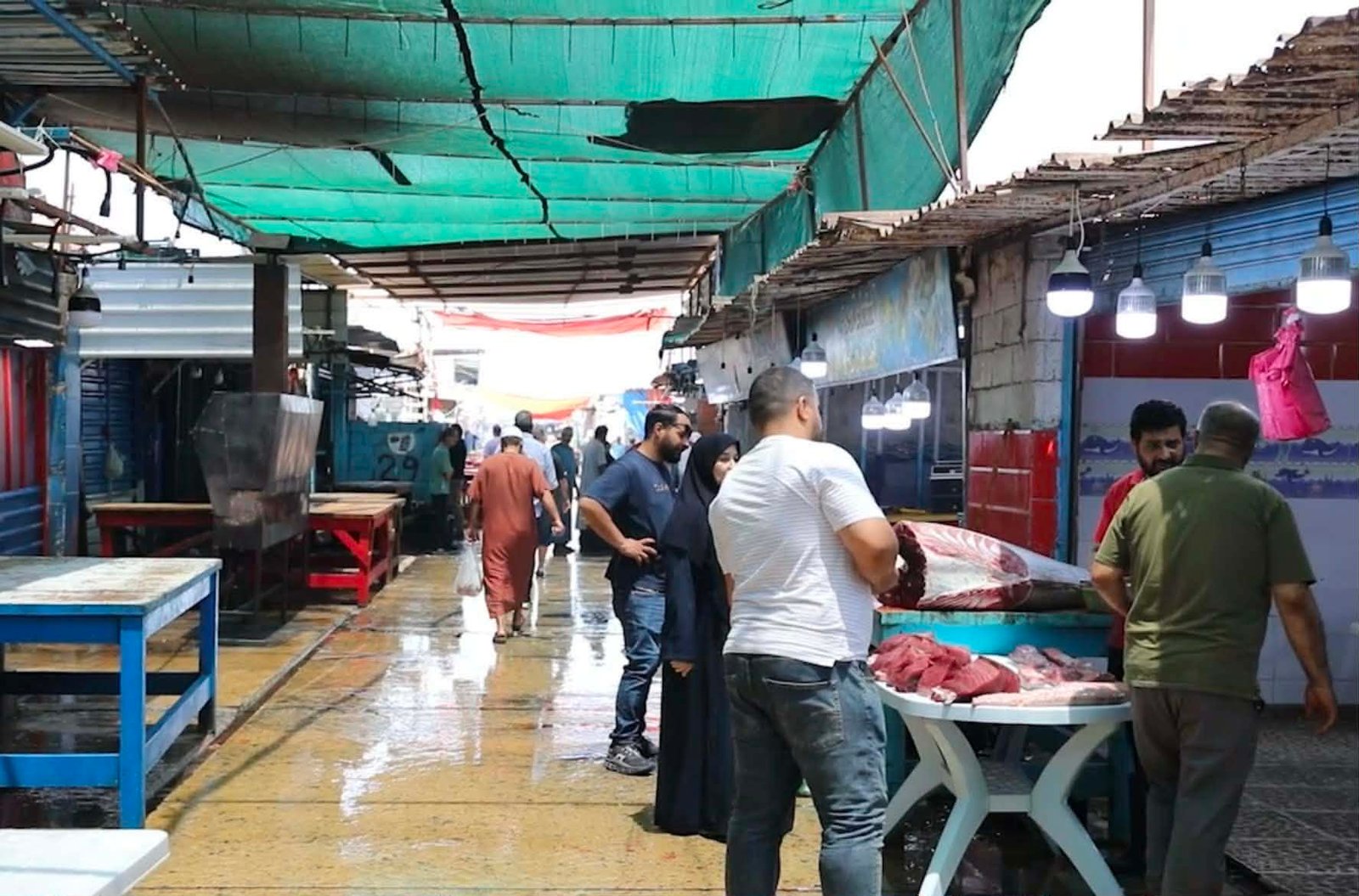
Talha remembers when tuna sold for just one and a quarter or one and a half dinars. Even then, he says, demand was weak. Fishermen would grill the fish by the roadside and invite passers-by to taste it.
“We would say, ‘Come, have a taste,’” he says.
Once people tried it, many were surprised by its flavour. Some bought it for grilling, while others prepared it as qallaya or kamounia, two dishes well known in Libyan kitchens.
At the time, fishermen also played the role of guides, telling customers which cut was suitable for which dish and how to prepare it. Now, Talha says, things are different.
“You do not even need to ask anymore,” he says. “Just open Google and search how to cook tuna, and it gives you all the information.”
For Talha, the tuna season usually begins in early April or around mid-April, depending on the year. The fish do not stay in one place for long. He describes them as passing fish, moving along the coast and continuing their route towards the ocean until the following season.
Experience helps him read the sea. Birds are one of the signs.
“When I see 20 or 30 birds gathered in one place, I know there is fish underneath,” he says.
Last year, he worked at a depth of around 190 fathoms, watching the birds and following the movement of the tuna. One day the fish may be near Souq al-Jumaa, the next near Gargaresh, and later further west towards Zawiya.
But behind the seasonal beauty of tuna fishing lies a more difficult story.
Talha says he is still working at 66 because he has little choice. After being transferred to social security, he says his pension became 900 dinars.
“What can you do with 900 dinars?” he asks.
His wife has been suffering from cancer for 11 years. He says he has taken her for treatment in Turkey, Jordan, and Egypt, spending the savings he had hoped would help build a future for his children.
“And with God, there is always goodness, God willing,” he says.
Still, he cannot hide the pain of working at an age when he believes he should have been able to rest.
“Instead of being comfortable at this age, I am still working here,” he says.
His story is not only about tuna, the sea, or a fading way of life. It is also about the people who continue to work quietly, often without enough support, carrying skills that took decades to learn.
For Talha, those in positions of responsibility should pay closer attention to people who are still working hard and give them the support they deserve.
On Tripoli’s shore, his life remains tied to the sea — to the early mornings, the passing tuna, and the craft he inherited from the generations before him.