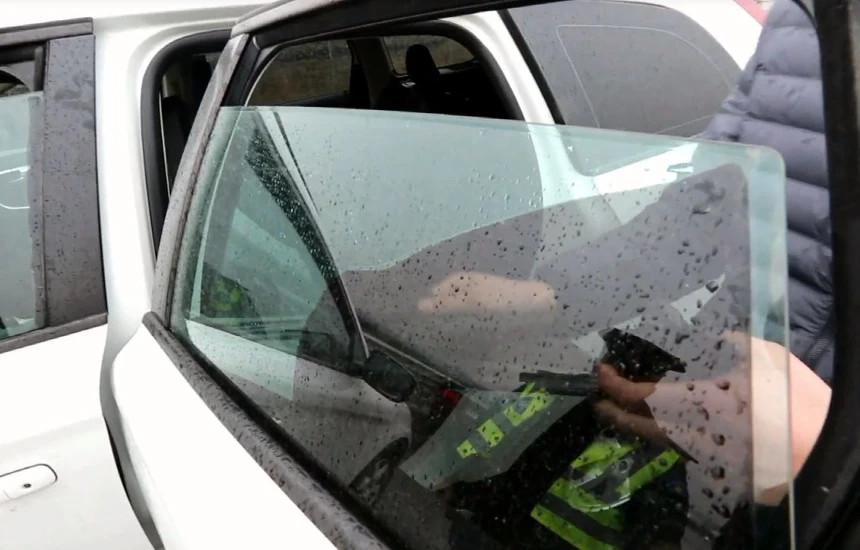
The Supreme Court of Kosovo has declared illegal and repealed some provisions of the Administrative Instruction of the Ministry of Internal Affairs that limited the use of tinted windows in vehicles.
The decision came after the lawsuit filed by the Non-Governmental Organization “Marakli t’Kerreve” and the “TriPika – Sport, Social, Economy” Institute, who requested the review of the legality of Article 7 of the Administrative Instruction for the registration of funds.
With a verdict, the Supreme Court abolished paragraphs 1, 3 and 4 of Article 7, while leaving paragraph 2 in force.
According to the Court, the legislation in force does not generally prohibit the placement of darkening materials or the replacement of vehicle windows with darkened windows. On the contrary, the laws allow such modifications, as long as they pass the technical verification and attestation procedures according to legal standards.
The court found that the repealed provisions imposed restrictions that were not provided for in the law. One of them allowed tinted windows only for vehicles that had them installed by the manufacturer, while another completely prohibited the placement of tinting foils on vehicle windows.
“According to the Court’s assessment, paragraph 1 of Article 7 established a limitation that is not found in the law, allowing dark windows only for vehicles that have them installed by the manufacturer, while paragraph 3 generally prohibited the installation of blackout foils on vehicle windows. The Court assessed that these provisions did not constitute mere application or concretization of the law, but created new material limitations that the legislator did not foresee. Likewise, the Court found that paragraph 4, which provided for the granting of exceptions by decision of the Minister of Internal Affairs, was closely related to the prohibition provided for in paragraph 3 and, therefore, could not remain in force since the basic prohibition itself proved illegal,” the court’s decision states.
According to the assessment of the Supreme Court, administrative bodies can issue by-laws only for the implementation of the law and not for the creation of new prohibitions or restrictions that are not based on clear legal authorization.
Also, the Court assessed that the repealed provisions created unequal treatment for vehicles in similar situations, without a sufficient legal basis.
Meanwhile, paragraph 2 of Article 7 remained in force, since according to the Court it has a technical and administrative character, regulating only the evidence of tinted windows in the vehicle registration documentation, without imposing additional restrictions.