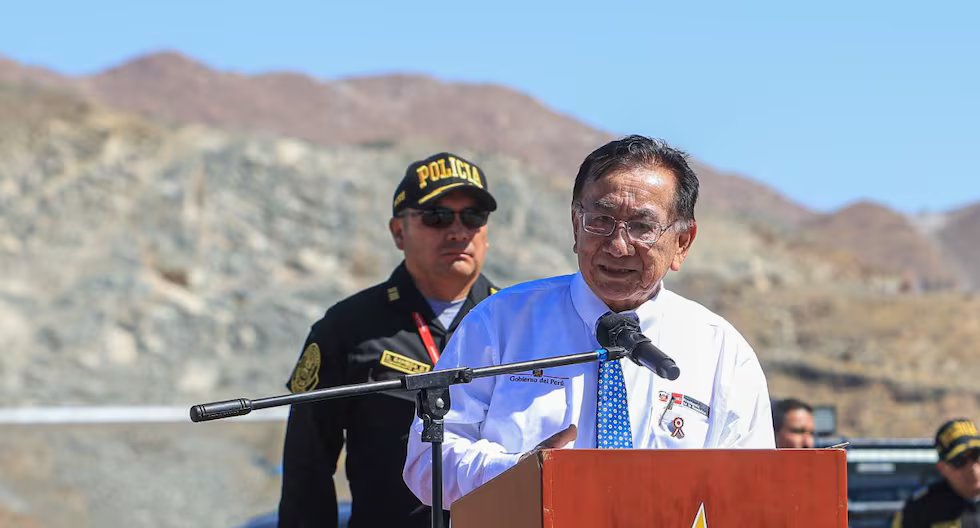

In a perverse act against himself, as if seeking political and civil suicide, José María Balcázar tries to put an end to the decent and dignified end that remains of his temporary presidential mandate, which he agreed to, involved in legal and constitutional turbulence, at a time of serious crisis in the country.
This perverse act does not begin or end in Balcázar. It is part of the premeditated internal and external political plan to cause profound damage to the Peruvian democratic system, by attempting to remove former president Pedro Castillo from his criminal judicial processes for rebellion and corruption, through rigged resources that distort and discredit the figures of pardon and common grace.
Castillo cannot apply to any of these figures, whether pardon or interruption of his judicial processes, unless there is a flagrant political, moral and legal deviation from presidential prerogatives.
To Castillo’s stubborn voluntarism to evade justice, against the law and the Constitution, is now added the scandalous “lobby” of a non-binding United Nations working group, arguing that Castillo’s failed coup d’état was nothing more than a declaration, because it did not have the signature or approval of the Council of Ministers.
There is an entire political orchestration to extreme the version that Castillo gave an innocent patriotic message (when half the world saw it in an open signal ordering the constitutional bankruptcy of the country on December 7, 2022) and to involve Balcázar himself in the responsibility of signing whatever a pardon or a common grace, like a meek and resigned hostage of Castillo’s followers who elevated him to power from Congress.
Balcázar has thus been dragged into two serious crimes: that of covering up the criminal charges of rebellion and corruption of which Castillo is accused and that of abuse of authority, if his current Minister of Justice or another later ends up endorsing the presidential decision to finally give in to the requests for pardon or common grace.
In its aggressive step of affecting the Peruvian judicial system and the presidential majesty, the perversity of the internal and external plan to free Castillo does not seem to measure medium or long-term consequences. President Claudia Sheinbaum continues to condition any possible possibility of normalization of diplomatic relations between Mexico and Peru on the release of Castillo and the granting of safe conduct in favor of Betssy Chávez, an accomplice in the failed coup d’état, currently sheltered in the embassy of that country in Lima.
It seems that Balcázar was also haunted by that other presidential syndrome that unfortunately, for better or worse, has become common in Peru: that of ending his days in the Barbadillo prison.
It would be very sad if, less than two weeks before the dignified and decent end of his mandate, Balcázar bets his head on Castillo, unnecessarily ruining his brief time in history.