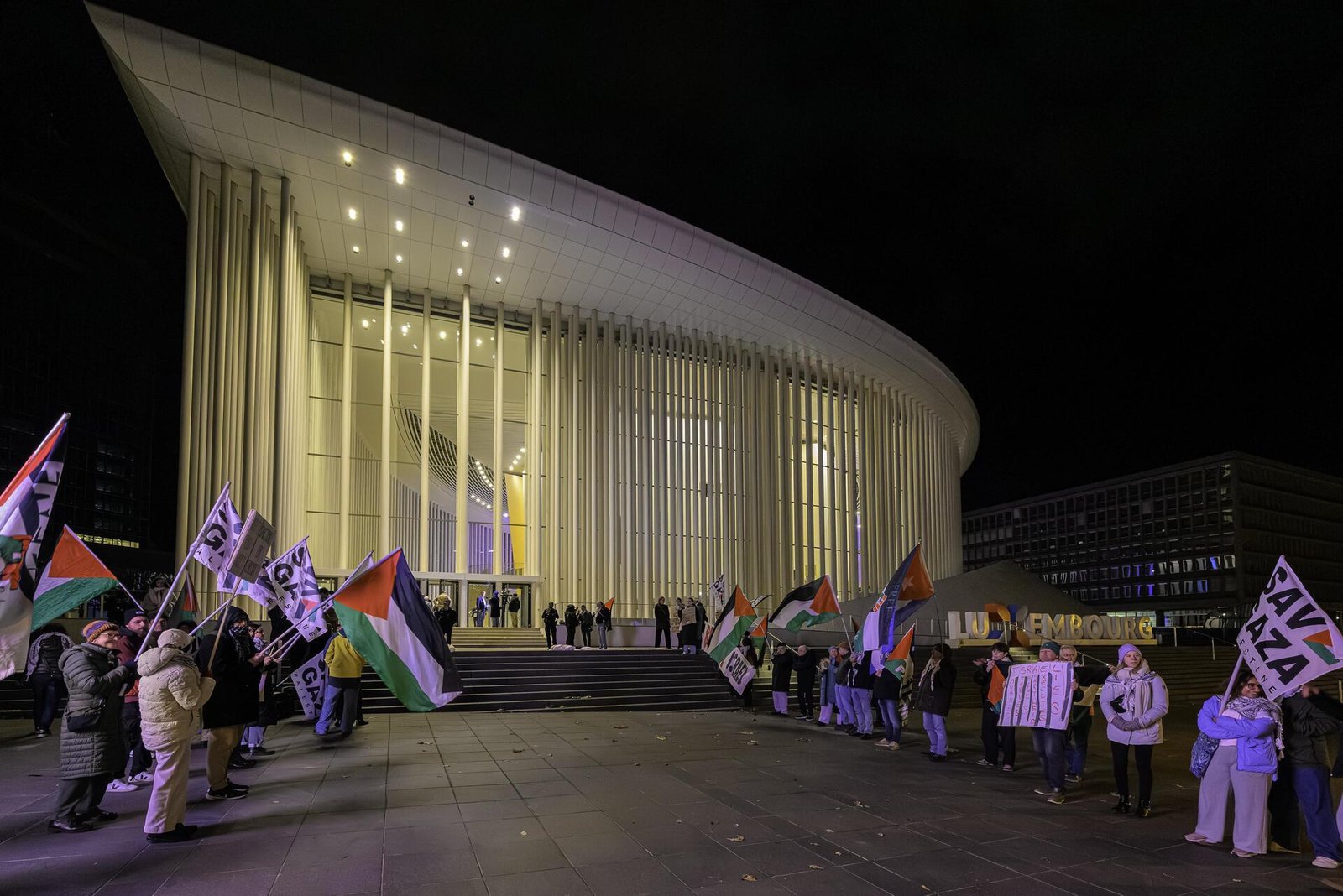
The Philharmonie is once again heating up emotions with its 2025/2026 program. In November 2025, pro-Palestinian groups demonstrated against the performance of the Israel Philharmonic Orchestra. Now the Ukrainian embassy in Luxembourg is concerned about the show by the Russian-Austrian opera singer Anna Netrebko.
Among other things, this supported the re-election of Vladimir Putin in 2012 through a petition. Two years later she was photographed with the pro-Russian separatist Oleh Zarjow. Although she now condemns the Russian war of aggression against Ukraine, this was hardly convincing: several opera houses abroad broke off their collaboration with Netrebko. She performed in front of a full audience at the Philharmonie on Monday. The real scandal, however, is not (only) the performances, but the way Luxembourg’s cultural policy deals with the current conflicts.
The Ministry of Culture is sending contradictory signals. Especially when it comes to Russia. At the 2022 Luxembourg City Film Festival, Russian films were removed from the program in consultation with the then Minister of Culture Sam Tanson (“déi gréng”). Later, her successor Eric Thill (DP) signed an open letter with 21 colleagues calling for the exclusion of Russia from this year’s Venice Art Biennale.
The controversial concerts in the Philharmonie are always followed by the same mantra from Thill’s side: The ministry does not interfere in the program; Art freedom and politics should be viewed separately. The impression is that boycotts are decided arbitrarily. This concerns the presence of Russian art in Europe, but also the different ways in which warring governments are dealt with. The USA was able to take part in the art biennale unhindered, Luxembourg competed against Israel in the Eurovision Song Contest without any apparent scruples. The behavior may be pragmatic, but it hardly strengthens the credibility of Luxembourg’s cultural policy.
The Philharmonic, on the other hand, leaves little room for maneuver. The House cannot be accused of incoherence. It stays true to its line and apparently doesn’t shy away from inviting controversial guests – something that can undoubtedly be discussed. This fits in with a statement from the Philharmonic, which RTL published in part: “It is our mission to ensure that the Philharmonic remains a place that seeks and prefers dialogue. Even in times of crisis.”* The dialogue is taking place, but it is currently only going in one direction. The audience protests, the cultural sector reacts. Often clumsy. The geopolitical situation remains tense. This makes it all the more important to show a clear edge and be consistent.
The EU foreign policy chief and Vice President of the European Commission, Kaja Kallas, demonstrated on Monday what this could look like. In the press conference after the EU Foreign Ministers’ Council, she strongly condemned Russia’s recent attacks in Ukraine. “If Russia is bombing cathedrals, Europe should not roll out the red carpet for Russian artists who support the Kremlin’s war (…),” she said. When asked about Netrebko’s concert in Luxembourg, she responded with clear words: “It is very unfortunate that this concert is taking place.”
*The quotes were translated from French and from English into German.