“It is waiting for death that we are.” With that heartbreaking phrase, Francisco Minier described the situation he has faced since he was diagnosed with ulcerative colitis a year and a half ago. Since then, he assures that he remains waiting for the treatment he needs to control the disease.
During a press conference organized by the Foundation for Inflammatory Bowel Diseases Crohn and Colitis Northern Region (FUNDENICC), Minier said that he has had to part with a large part of his assets to pay for medical expenses. As he explained, sold his vehiclea lemon farm in Loma de Cabrera and currently has his home mortgaged.
“I had to sell my vehicle, a lemon farm to deal with the disease. When you have to mortgage your house to survive, you are waiting for death as we are,” he said.
The situation was also exposed by Nayeli García, 25 years old and engineer in Food Technology, who lives with the Crohn’s disease for six years. The young woman reported that she has been waiting for approval for a change in medication for more than two years, after her body stopped responding to the treatment she was receiving.
“More than two years ago my body stopped responding to the Humira medication due to delays in receiving it. I requested a change with all the paperwork and they still haven’t approved it,” he said.
Nayeli pointed out that the delay not only affects her health, but also prevents the doses of the medication she currently receives, which no longer has any effect, from being allocated to other patients who could benefit from them.
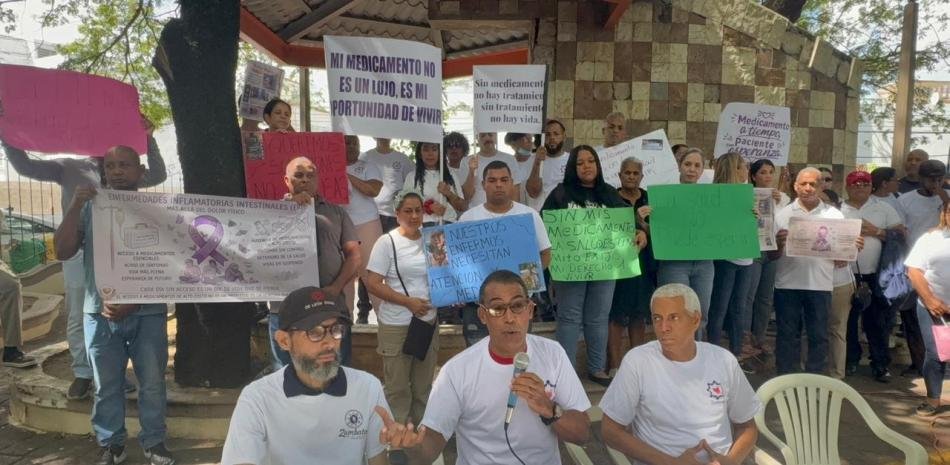
The testimonies were presented as part of the complaints made by FUNDENICC about the difficulties that patients with inflammatory bowel diseases face in accessing specialized treatments through the High Cost Medicines Program.
decentralization
During the activity, the foundation’s spokesperson, Diógenes Cruz, attributed part of the delays patients face to the centralization of administrative processes in Santo Domingo, a situation that, according to what he stated, particularly affects those who reside in provinces in the Northern region.
“We ask that Santiago be decentralized from Santo Domingo to avoid delays in procedures. There are patients from Dajabón who are notified a day before to receive their medication and, if they cannot travel, they must wait until the following month, with all that that entails,” he expressed.
Inclusion of medications in the ARS
Likewise, those present requested the President of the Republic, Luis Abinader; to the Minister of Public Health, Víctor Atallah, and the director of the High Cost Medicines Program, Carlos Sanchez Solimán, manage the inclusion of these treatments within the coverage of the Health Risk Administrators (ARS).
“We ask that you include this type of medicine in your catalog, because according to article 61 of the Constitution, health is a right and today we are not having access to it,” Cruz said.
The patients and representatives of the entity assured that they will continue to promote their claims until they obtain concrete responses from the authorities, although they reiterated their willingness to dialogue.
“We are willing to sit at the dialogue table so that together we can find a solution that is not only temporary, but that is maintained over time,” he concluded.