The “economic vision” spared the Kingdom from external influences and obstacles
The “Saudi Economy” preserves the rights of future generations with a comprehensive planning vision

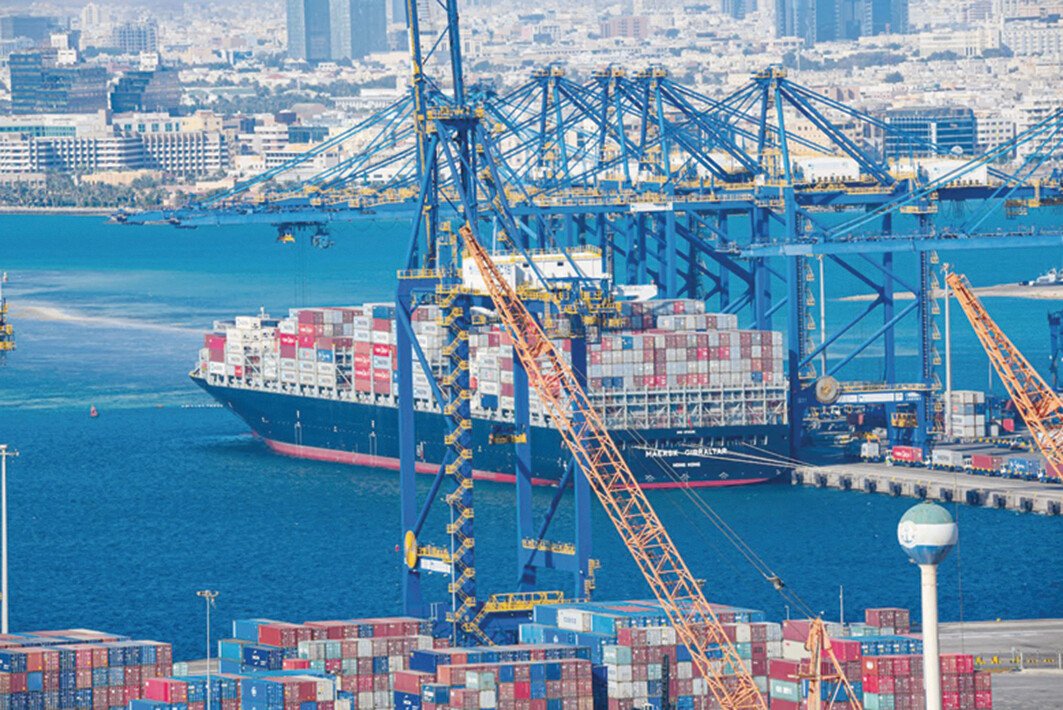
Attention to alternatives to supply chains and their expansion serves the expansionist vision of the economy
The Saudi economy is moving forward towards achieving greater prosperity and building a future that preserves the rights of future generations and guarantees their well-being, consolidating its regional and international standing, as dependence on oil has declined significantly and the contribution of non-oil activities to the gross domestic product has exceeded 55.5%, which confirms the continued success of policies and strategies for economic diversification and reducing dependence on oil as the country’s sole source of income, which the Kingdom has embarked upon under the umbrella of Vision 2030, which has brought about a historic shift in the path of development of various sectors such as tourism, industry, trade, and energy. It worked to expand the role of private sector, and recent official data show that non-oil activities were the main contributor to the growth of real GDP in the first quarter of 2026 by (3.0%), compared to the same quarter in 2025, where they contributed by (1.7) percentage points, and oil activities contributed by (0.8) percentage points, and both government activities and net taxes on products contributed positively by (0.3) and (0.2) percentage points, respectively. Various indicators showed that the Kingdom achieved a jump of more than 20 places in the Kingdom’s ranking in the International Competitiveness Index (IMD) from 39 in 2018 to 17 in the world, and the gross domestic product continued its progress to exceed the barrier of 4 trillion riyals, reaching 4.9 trillion riyals, exceeding the interim goal for the year 2025, and the Kingdom continues the path to consolidating its position as the first economic and political power in the region and a global destination for events and activities, and platforms for sports competitions and artistic and cultural awards, And conferences and economic, industrial, environmental and other initiatives. During ten years, it was the focus of attention of all groups with different interests, hosting major festivals and events, in every field. It hosted the Dakar Rally for seven years, and it is preparing to host the 2027 Asian Cup and Expo 2030, to culminate in this process by winning the hosting of the 2034 FIFA World Cup.
An indicator of strength and flexibility
The geopolitical events taking place in the region have proven that the Saudi economy is strong and resilient and possesses immunity and means of protection capable of avoiding the negatives of various external influences and obstacles, including emergency crises and regional wars, in addition to general international policies and fluctuating protectionism. A recent report issued by the International Monetary Fund highlighted this, as it confirmed that the Saudi economy witnessed strong momentum at the beginning of the year 2026 AD, after the gross domestic product recorded a growth of 4.5% in the year. 2025 AD, supported by the end of the production cuts agreed upon within the “OPEC+” framework, and the continued strength of non-oil activities thanks to domestic demand, with the continuation of positive indicators in the labor market, and the slowdown in the inflation rate to below 2%. Also, regional geopolitical developments and the accompanying disturbances in shipping and shipping traffic affected the economy. However, the Saudi economy showed an ability to adapt and be flexible, supported by the government’s efforts to facilitate the modification of shipping routes and reduce logistical bottlenecks. It also contributed to supporting the continuation of Economic activity.
The statement explained that the Saudi economy enjoys solid margins of safety, thanks to the strength of its foundations, including low levels of government debt, abundant reserves, and the strength of the financial position of the Public Investment Fund, in addition to the strength of the banking sector, which has enhanced the Kingdom’s ability to absorb shocks and maintain macroeconomic and financial stability. The report also touched on the strength of the Saudi economy and its ability to withstand in the face of current regional developments, supported by the strength of its economic foundations, the abundance of reserves, and the diversity of oil and logistical infrastructure, in addition to continuing reforms within Objectives of the Kingdom’s Vision 2030. The report also praised the government’s efforts to contain the economic impact of regional developments, and to continue rearranging spending priorities, in addition to continuing financial sustainability efforts in the medium term, in a way that supports the sustainability of growth, enhances the economy’s ability to withstand, and contributes to supporting economic diversification and private sector growth. The report pointed to the path of reforms that were launched within the framework of the Kingdom’s Vision 2030, stressing that they have contributed over the past years to strengthening governance, improving policymaking, enhancing the flexibility of the economy, and supporting economic diversification, which was reflected in Positively on non-oil economic performance.
Foresight of the planner and implementer
The programs and initiatives of Vision 2030, supported by the farsightedness and intellectual flexibility of the planner and implementer, succeeded in dismantling the link between oil price developments and the economy. The non-oil sector became a fundamental and main tributary that imposed itself in the years following the launch of the vision. The state’s financial stability became a symbol of the success of economic diversification plans. Non-oil activities also now represent more than half of the Saudi economy with a percentage of more than 55% contribution to the gross domestic product, and the growth rate of the gross domestic product for non-oil activities reached 4.9% per year. 2025, driven by the continued expansion of investment in non-oil sectors, and the latest official reports issued showed the growth of real GDP during the first quarter of 2026, by (3.0%), compared to the same quarter of 2025, driven by the growth of oil and non-oil activities by (2.9%) for each, in addition to the growth of government activities by (1.5%), and compared to the fourth quarter of 2025, the adjusted real GDP achieved Seasonally, a decrease of (1.2%). The vision also empowered the Saudi private sector and made it a fundamental driver of the economy and the largest employer of Saudi jobs in recent years, as indicators show that the private sector’s contribution to the gross domestic product has reached 51%, up from 44% since the beginning of the vision, with a value of 2,476 billion riyals, thus exceeding the target for the year 2025. The number of small and medium enterprises grew from 429 thousand establishments in 2016 to more than 1.7 million establishments in 2016. 2025.
Diversification policies and strategies
The success of the policies and strategies of economic diversification and reducing dependence on oil as the country’s sole source of income was reflected positively and significantly on social life and economic sectors in the Kingdom, beginning with a decline in the unemployment rate to 7.2%, very close to the 2030 target, and an increase in women’s participation in the labor market to 35%, approaching the target of 40%. Tourism spending also recorded a record level of 304 billion riyals, in parallel with the expansion of infrastructure, as the number of licensed rooms increased by more than 110% in two years, and the number of tourists reached 123 million visitors, exceeding the target of 100 million, which prompted raising the target to 150 million, and foreign direct investment flows increased five-fold to reach 133 billion riyals in the year 2025 compared to 28 billion riyals in 2017, and the number of companies that opened their regional headquarters in the Kingdom exceeded 700 international companies, achieving a jump from 44 international companies. In 2021.
The various housing support solutions that the Kingdom’s Vision 2030 worked on varied from providing real estate financing, increasing and diversifying the real estate supply, facilitating citizens’ access through electronic platforms, and regulating the market and the relationship between its parties, through new rules and regulations. This was reflected in the increase in the percentage of Saudis owning homes to (66.24%), after it had remained for many years at levels not exceeding (47%). The success of these programs and initiatives also led to organizing and empowering the non-profit sector, improving its work mechanisms, and increasing and diversifying its financing opportunities so that the public and private sectors participate in the development journey, increasing its contribution to the gross domestic product from (0.2%) to (1.4%).