If you want to experience the much-praised magic for yourself, you have to make your way to Vorarlberg in the Bregenzerwald. After the 50th anniversary was celebrated in Hohenems in the spring with the reconstruction of the program of the first Schubertiade (at that time with the festival founder Hermann Prey), the loyal supporters gathered these days at the main venue in the community of Schwarzenberg. Paul Lewis opened Friday with a program in which Mozart’s Sonata in C major K. 330 (beautifully the Andante cantabile) and the Sonata in C minor K. 457 surrounded Schubert’s “Three Piano Pieces,” D 946 and the Sonata in A minor, D 537. Clear, completely free of dross, with measured tempos and at the same time completely in the service of the works, the English pianist captivated the audience.
On Saturday, the Javus Quartet from Salzburg presented themselves for the first time in the acoustically and visually splendid Angelika Kauffmann Hall. The energetic formation with an extremely strong bass foundation (Oscar Hagen on the cello) hit the mark with the compilation: Haydn’s Quartet in G major, op. 77/1, Schubert’s Quartet movement in C minor and the stunningly played F minor Quartet, op. 80 by Felix Mendelssohn (brilliant in the Adagio Primaria Marie-Therese Schwöllinger). In the evening concert, the soprano Nikola Hillebrand enchanted with a pure Schubert-Recital. The selection in the first half couldn’t have been better chosen. Song gems such as “Wehmut”, “Ganymed”, “Wandrer’s Night Song”, “On the Water to Sing”, “Spring Faith” and “Nachtviolen”. Performed with a confidently conducted voice and impeccable diction. Pianist Malcolm Martineau always rounded off the individual scenes with the right pinch of sound spice.
The matinee on Sunday began with violinists Renaud Capuconcellist Julia Hagen and Guillaume Bellom on the piano with Schubert’s Piano Trio in B major, D 898 (the slow movement is heartwarming). Afterwards, violist Gérard Caussé and bassist Lorraine Campet joined in for the “Trout Quintet”. The cello sits on the far right, next to it – inside – the double bass. A profound foundation formed by the two women on the podium in an overall extremely subtle rendition.
This time Konstantin Krimmel opted for large-scale ballad settings by Schubert. In the center “The Bürgschaft” and “The Diver” based on Schiller. They were absolute masterpieces. The clever narrator Krimmel quickly slipped into a variety of roles. The character range of his baritone ranged from delicate simplicity to noble suppleness to menacing fullness. After breaking his fibula with crutches and an orthosis, Krimmel sang while sitting. This meant that the focus was even more on the captivating text colossi, which pianist Ammiel Bushakevitz ideally embedded.
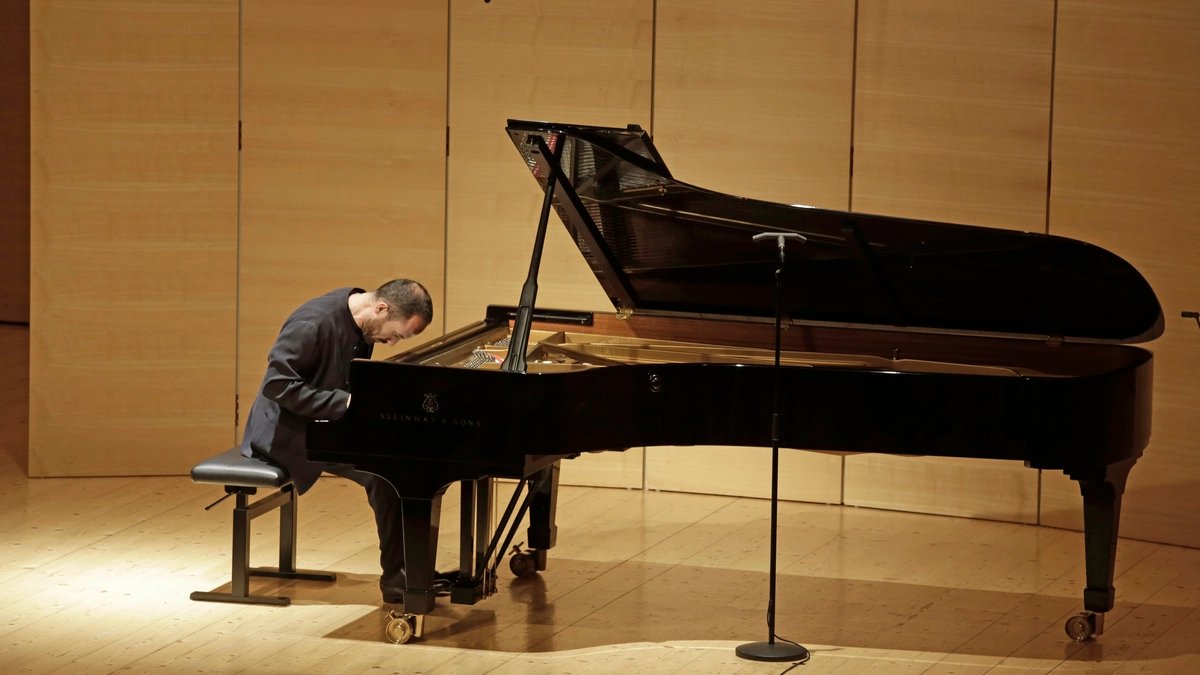
The already demanding program faced an additional challenge due to the current heat wave. Krimmel discussed this before the encore (“let’s see if it works”) and then sang an incredibly beautiful “Summer Evening” by Brahms. Evenings also fought Igor Levit against the high temperatures. After the first movement of Schubert’s Sonata in A major, he took off his jacket and continued his interpretation in a T-shirt, which had a lot of effect – extreme differences in volume, repeated pauses. This didn’t change with Chopin’s Fantasy in F minor, Op 49 and Beethoven’s “Appassionata”. This excess of individuality may seem impressive, partly because of Levit’s breathtaking technique, but it ultimately failed to convince. Of course, that in no way diminished the cheers, but was discussed lively in conversations afterwards.