A study published in BMJ Medicine evaluated data from 111,000 people to determine which forms of exercise and how long were associated with higher life expectancy.

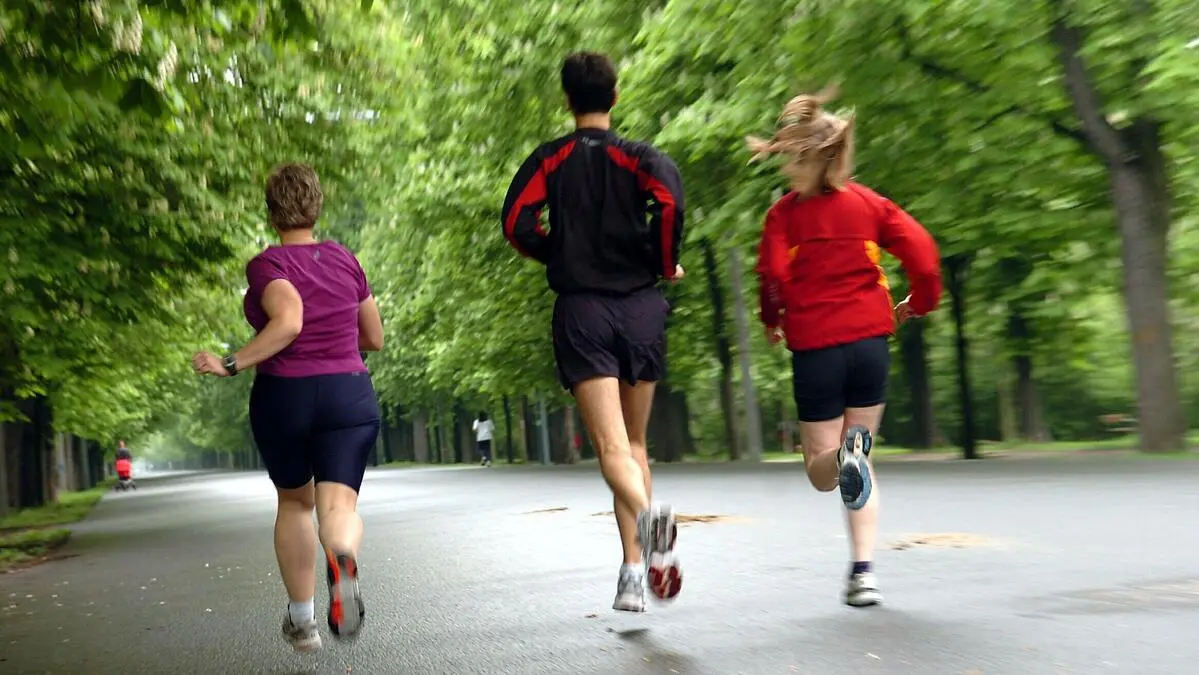
Runners in Prater Hauptallee Clemens Fabry
Add the Press on Google as your preferred news source.
Regular vigorous physical activity reduces all-cause mortality by nearly 20 percent. Among “individual sports,” walking performs best with minus 17 percent. More diverse physical activity is better. This is the result of a new analysis of data from the world’s best-known American long-term studies.
“Regular physical activity was associated with lower mortality. Variety of physical activity was negatively correlated with mortality, regardless of overall activity level. Overall, these data support the notion that long-term physical activity in various forms can extend life expectancy,” wrote Yang Hu of the TH Chan School of Public Health Harvard Medical School in Boston (USA) and his co-authors in British Medical Journal (https://bmjmedicine.bmj.com/content/5/1/e001513).
The scientists used the information from the epidemiological studies best known in medical circles alongside the so-called Framingham study: from the Nurses’ Health Study (1986 to 2018) and from the Health Professionals Follow-Up Study (1986 to 2020). The total of around 111,000 test subjects were either American nurses or doctors or other male health professionals. This has also guaranteed the reliable participation of the test subjects for decades. At the start of the study, all participants were free of diabetes and cardiovascular disease and did not suffer from cancer, respiratory or neurological diseases. Physical activity was assessed at baseline and then every two years.
The most important result: de facto any sport reduced the mortality of the test subjects. “Over 2,431,318 person-years, 38,847 deaths were recorded, including 9,901 from cardiovascular disease, 10,719 from cancer, and 3,159 from respiratory disease. Overall physical activity and most individual physical activities, with the exception of swimming, were associated with lower mortality,” the scientists wrote.
The mortality of the 20 percent group with the greatest amount of physical activity was reduced by 17 percent compared to the 20 percent with the least by regular walking. Slow running was associated with an eleven percent reduction in mortality. Running faster had a 13 percent reduction, cycling reduced mortality by four percent, tennis or squash by 15 percent, stair climbing by ten percent, rowing or gymnastics by 14 percent and strength training by 13 percent. Swimming alone did not have a statistically significant positive effect on mortality.
More different types of physical activity are associated with greater positive effects. “After accounting for overall activity levels, participants in the group with the highest diversity of physical activity had 19 percent lower all-cause mortality and 13 to 41 percent lower mortality from cardiovascular disease, cancer, respiratory disease and other causes compared to the group with the lowest diversity,” the scientists wrote.
“This connection between a high number of sports and a lower risk of premature death was evident at every activity level. In other words: sports diversity contributed to life expectancy regardless of the participants’ total time investment,” said a statement from Harvard Medical School.
According to the researchers, the study results provide a practical benefit for anyone who wants to extend their life expectancy. “People naturally choose different activities over time depending on their preferences and health status. When deciding how to exercise, keep in mind that engaging in multiple types of physical activity can provide additional health benefits rather than relying on just one type,” said lead author Yang Hu.
What is interesting is a graphic in the scientific work that shows the reduction in the risk of death by cause of death: Deaths from respiratory diseases reduce very quickly and most significantly by just over 50 percent. Cardiovascular diseases follow in second place with around minus 30 percent.
The curves for the individual sports usually do not run linearly with the intensity of the physical stress. In several sports (walking, tennis, stair climbing, strength training), a kind of plateau at a lower level is reached as the intensity increases. (APA)
At a glance
– Overall mortality reduction through physical activity: –19%
– Walking: –17%
– Slow running: –11%
– Fast running: –13%
– Tennis/Squash: –15%
– Strength training: –13%
– Variety of activities: –19%
This article was originally published on January 27, 2026.