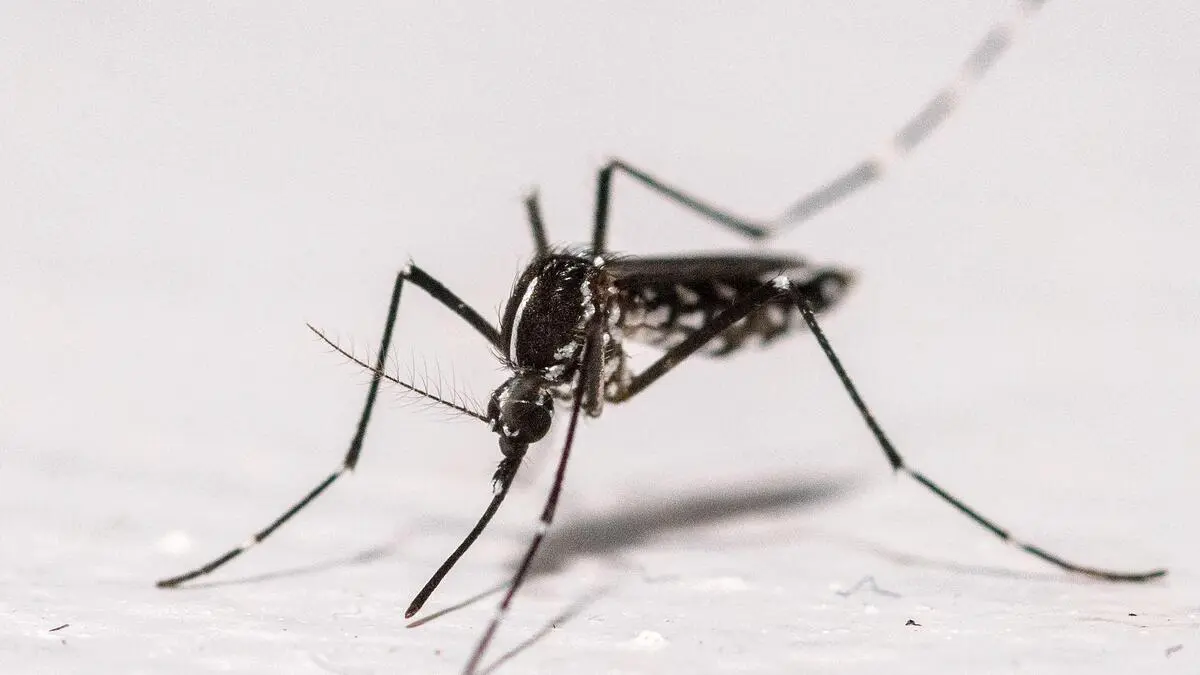
The one who walks with a curve – that’s what Chikungunya means in the language of the Makonde people in Tanzania. The name describes the clinical picture: those affected suffer from severe joint and muscle pain for months to years after the infection and can only walk while bending over. Chikungunya fever, first described in what is now Tanzania in the 1950s, was long considered a tropical infectious disease. But with the Asian tiger mosquito, the carrier of the chikungunya virus, the disease is spreading into Europe. “It is only a matter of time before there are local outbreaks in Austria,” explains Gisa Gerold, director of the Institute of Virology at the Med-Uni Innsbruck.
She leads the new one from the EU The “European-African Vaccine Initiative” project, funded with 14 million euros, in which European and African research institutes are jointly researching the effects of the chikungunya vaccine. Two vaccines are now approved in Europe, but none of them in Africa. The core of the project is therefore a clinical study that is testing the vaccine IXCHIQ® for the first time in East Africa. “We want to help ensure that the chikungunya vaccine is available where it is needed most,” says Gerold.
The study will examine the effect and safety of the vaccine in more detail. “How long does the protection last? Does it also protect against related viruses circulating in East Africa, such as the O’nyong’nyong virus? We are looking for answers to these questions.” In Innsbruck, for example, B. the response of special immune cells, the T cells, to the vaccination, which has not yet been characterized. The Swiss project partners are using a novel electron microscopic method EPFL visible where antibodies bind to the virus. They are researching whether these might also recognize and neutralize related viruses.
The study pays particular attention to HIV-infected patients under treatment whose immune status is normal. “The vaccine has not yet been approved for this patient group, but in the event of a larger outbreak it would be important to vaccinate them too,” emphasizes Gerold. “Safety is the priority: Our partner institutes in Kenya and Tanzania are very experienced in carrying out studies with this patient group, which is monitored very closely. We thereby generate knowledge that is also relevant for Europe.”
In numbers
500,000 People 2025 people worldwide fell ill with Chikungunya.
2007 came There was the first local outbreak of Chikungunya in Europe (Italy, Emilia-Romagna).
Technology transfer between Europe and Africa is another goal of the research project. In follow-up initiatives, vaccine production will be set up in East Africa so that the vaccine is produced locally and quickly available. In Innsbruck, African researchers are learning the latest methods to characterize the immune system’s response to vaccination.
“But the exchange happens in both directions: Scientists from Europe will learn from the very experienced African partners how Gelsen monitoring is best carried out – how we monitor our Gelsen population so that we can quickly see whether and how the virus arrives in our mosquitoes in Austria and whether there is a risk that it will be transmitted to humans.” Gerold says: “We need established partners in order to be able to react quickly to new threats, as we see in the case of Ebola.” This is an important contribution to pandemic preparation.