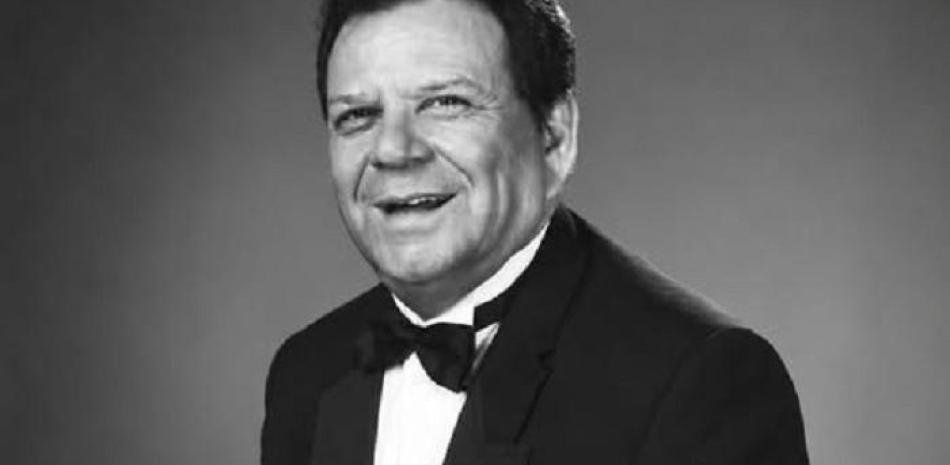
To talk about Roberto Ledesma is to go through one of the most refined and lasting pages of Latin American bolero. His name is associated with an elegant way of singing, impeccable diction and a sober interpretation that managed to excite without resorting to excess.
During more than seven decades of artistic career, the Cuban singer consolidated a privileged place among the great voices of romantic music in Spanish.
Roberto Ledesma was born in Havana, Cuba, on June 24, 1924, at a time of enormous musical wealth for the island. Cuba was then a territory of sones, guarachas, boleros, trios, orchestras and composers who would forever mark Latin American popular music.
In that environment a voice grew that, years later, would be recognized in Latin America, the United States and the Caribbean.
In his recently turned 102 years old, he continues to receive tributes from followers, stations, collectors and musicians who recognize him as a living bolero legend.
This permanence makes him not only the protagonist of the so-called golden age of romantic songs, but also one of its last great witnesses.
The first years of a voice destined for bolero Ledesma’s professional career began in 1953, when he became known as the first voice of the Trío Martino, a Cuban group integrated with the brothers Ernesto and Eugenio Orta.
From his first performances, his warm timbre, his intonation and his restrained way of performing differentiated him within a generation of singers marked by the expressive force of the bolero.
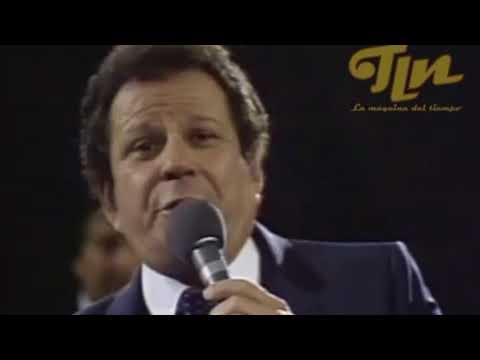
VIDEO. Roberto Ledesma live
With the Martino Trio, Ledesma toured various stages in Latin America during the 1950s, in that group he performed boleros, guarachas and popular Cuban music, in a vocal format that was widely received on the radio, theaters and halls of the time.
It is important to specify that the Trio Martino to which Roberto Ledesma belonged was a Cuban group and should not be confused with the Trio Martino of Colombia.
Although they shared the same name, they were different groups, with different members, trajectories, repertoires and musical contexts.
Ledesma’s group was made up of the Cuban singer and the Orta brothers, while the Colombian Trio Martino developed its own history within national romantic music.
This clarification is essential because Colombia was one of the countries where Ledesma found a special reception.
With the Cuban Martino Trio he visited the country in the 1950s, before becoming a soloist figure of continental reach.
Those presentations allowed his voice to begin to be recognized by Colombian bolero lovers long before his albums circulated widely on radio stations and record catalogues.
The dissolution of the Trío Martino, towards the beginning of the sixties, marked a decisive point in the artistic life of Roberto Ledesma. For many singers, leaving a recognized group could mean an enormous risk.
Around 1960, the bolerista settled in the United States, where he began to perform in clubs, Latin stages and spaces frequented by Cuban, Puerto Rican, Dominican, Colombian and other Latin American communities.
His voice quickly found a place in that musical environment, in which nostalgia for the land of origin, lounge music, traditional bolero and new currents of song coexisted.
Roberto Ledesma began to be recognized for a very particular way of singing without stridency, overflowing drama and with an elegance that made each phrase an intimate statement.
His recordings were widely distributed in Latin America, the United States and the Caribbean, making him one of the most beloved voices in romantic songs.
Songs such as “La Pared”, “Con Mi Corazón Te Quiero”, “Corazón Heido”, “Where Are You Heart”, “Somos Novios”, “It seems like it was yesterday”, “Adoro”, “Esta Tarde Vi Llover”, “Se Me Olvidó Tu Nombre”, “Son de la Loma”, “Romántico Primero” and many more were associated with his name and a way of interpreting that combined technical precision with emotional sensitivity.
Each of these interpretations shows a different facet of the artist, the intimate bolero player, the elegant singer, the Manzanero interpreter, the heir of Cuban tradition and the soloist capable of turning a romantic song into a piece of collective memory.