Monday, May 4, 2026
    The GeoStrategic Consensus
    No Result
    View All Result
    • Login
    • HOME
    • AMERICAS
      • Argentina
      • Brazil
      • Canada
      • Chile
      • Colombia
      • Costa Rica
      • Cuba
      • Dominican Republic
      • Ecuador
      • El Salvador
      • Greenland
      • Guatemala
      • Honduras
      • Mexico
      • Nicaragua
      • Panama
      • Paraguay
      • Peru
      • United States
      • Uruguay
      • Venezuela
    • ASIA-PACIFIC
      • Australia
      • Brunei Darussalam
      • Cambodia
      • China
      • Federated States of Micronesia
      • Fiji
      • Indonesia
      • Japan
      • Kiribati
      • Laos
      • Malaysia
      • Marshall Islands
      • Mongolia
      • Myanmar
      • Nauru
      • New Zealand
      • North Korea
      • Palau
      • Papua New Guinea
      • Philippines
      • Samoa
      • Singapore
      • Solomon Islands
      • South Korea
      • Taiwan
      • Thailand
      • Timor-Leste
      • Tonga
      • Tuvalu
      • Vanuatu
      • Vietnam
    • CARICOM
      • CARICOM – Non-English
        • Haiti
        • Suriname
      • CARICOM Associates
        • Anguilla
        • Bermuda
        • British-Virgin-Islands
        • Cayman-Islands
        • Curacao
        • Turks-and-Caicos
      • CARICOM English
        • Antigua and Barbuda
        • Barbados
        • Belize
        • Dominica
        • Grenada
        • Guyana
        • Jamaica
        • Montserrat
        • Saint Kitts and Nevis
        • Saint Lucia
        • Saint Vincent and the Grenadines
        • The Bahamas
        • Trinidad and Tobago
    • EURASIA
      • Armenia
      • Azerbaijan
      • Balarus
      • Georgia
      • Kazakhstan
      • Kyrgyzstan
      • Moldova
      • Russia
      • Tajikistan
      • Turkmenistan
      • Ukraine
      • Uzbekistan
    • EUROPE
      • Albania
      • Andorra
      • Austria
      • Bosnia and Herzegovina
      • Bulgaria
      • Croatia
      • Cyprus
      • Czech Republic
      • Denmark
      • Estonia
      • Finland
      • France
      • Germany
      • Greece
      • Holy See
      • Hungary
      • Iceland
      • Ireland
      • Italy
      • Kosovo
      • Latvia
      • Liechtenstein
      • Lithuania
      • Luxembourg
      • Malta
      • Monaco
      • Montenegro
      • Netherlands
      • North Macedonia
      • Norway
      • Poland
      • Portugal
      • Romania
      • San Marino
      • Serbia
      • Slovakia
      • Slovenia
      • Spain
      • Sweden
      • Switzerland
      • United Kingdom
    • MIDDLE EAST AND NORTH AFRICA
      • Algeria
      • Bahrain
      • Egypt
      • Iran
      • Iraq
      • Israel
      • Jordan
      • Kuwait
      • Lebanon
      • Lybia
      • Morocco
      • Oman
      • Palestinian Territories
      • Qatar
      • Saudi Arabia
      • Syria
      • Tunisia
      • Turkey
      • United Arab Emirates
      • Western Sahara
      • Yemen
    • SOUTH ASIA
      • Afghanistan
      • Bangladesh
      • Bhutan
      • India
      • Maldives
      • Nepal
      • Pakistan
      • Sri Lanka
    • SUB-SAHARAN AFRICA
      • Angola
      • Benin
      • Botswana
      • Burkina Faso
      • Burundi
      • Cabo Verde
      • Cameroon
      • Central African Republic
      • Chad
      • Comoros
      • Cote d’Ivoire
      • Democratic Republic of the Congo
      • Djibouti
      • Equatorial Guinea
      • Eritrea
      • Eswatini
      • Ethiopia
      • Gabon
      • Gambia
      • Ghana
      • Guinea
      • Guinea Bissau
      • Kenya
      • Lesotho
      • Liberia
      • Madagascar
      • Malawi
      • Mali
      • Mauritania
      • Mauritius
      • Mozambique
      • Namibia
      • Niger
      • Nigeria
      • Republic of the Congo
      • Rwanda
      • Sao Tome and Principe
      • Senegal
      • Seychelles
      • Sierra Leone
      • Somalia
      • South Africa
      • South Sudan
      • Sudan
      • Tanzania
      • Togo
      • Uganda
      • Zambia
      • Zimbabwe
    • HOME
    • AMERICAS
      • Argentina
      • Brazil
      • Canada
      • Chile
      • Colombia
      • Costa Rica
      • Cuba
      • Dominican Republic
      • Ecuador
      • El Salvador
      • Greenland
      • Guatemala
      • Honduras
      • Mexico
      • Nicaragua
      • Panama
      • Paraguay
      • Peru
      • United States
      • Uruguay
      • Venezuela
    • ASIA-PACIFIC
      • Australia
      • Brunei Darussalam
      • Cambodia
      • China
      • Federated States of Micronesia
      • Fiji
      • Indonesia
      • Japan
      • Kiribati
      • Laos
      • Malaysia
      • Marshall Islands
      • Mongolia
      • Myanmar
      • Nauru
      • New Zealand
      • North Korea
      • Palau
      • Papua New Guinea
      • Philippines
      • Samoa
      • Singapore
      • Solomon Islands
      • South Korea
      • Taiwan
      • Thailand
      • Timor-Leste
      • Tonga
      • Tuvalu
      • Vanuatu
      • Vietnam
    • CARICOM
      • CARICOM – Non-English
        • Haiti
        • Suriname
      • CARICOM Associates
        • Anguilla
        • Bermuda
        • British-Virgin-Islands
        • Cayman-Islands
        • Curacao
        • Turks-and-Caicos
      • CARICOM English
        • Antigua and Barbuda
        • Barbados
        • Belize
        • Dominica
        • Grenada
        • Guyana
        • Jamaica
        • Montserrat
        • Saint Kitts and Nevis
        • Saint Lucia
        • Saint Vincent and the Grenadines
        • The Bahamas
        • Trinidad and Tobago
    • EURASIA
      • Armenia
      • Azerbaijan
      • Balarus
      • Georgia
      • Kazakhstan
      • Kyrgyzstan
      • Moldova
      • Russia
      • Tajikistan
      • Turkmenistan
      • Ukraine
      • Uzbekistan
    • EUROPE
      • Albania
      • Andorra
      • Austria
      • Bosnia and Herzegovina
      • Bulgaria
      • Croatia
      • Cyprus
      • Czech Republic
      • Denmark
      • Estonia
      • Finland
      • France
      • Germany
      • Greece
      • Holy See
      • Hungary
      • Iceland
      • Ireland
      • Italy
      • Kosovo
      • Latvia
      • Liechtenstein
      • Lithuania
      • Luxembourg
      • Malta
      • Monaco
      • Montenegro
      • Netherlands
      • North Macedonia
      • Norway
      • Poland
      • Portugal
      • Romania
      • San Marino
      • Serbia
      • Slovakia
      • Slovenia
      • Spain
      • Sweden
      • Switzerland
      • United Kingdom
    • MIDDLE EAST AND NORTH AFRICA
      • Algeria
      • Bahrain
      • Egypt
      • Iran
      • Iraq
      • Israel
      • Jordan
      • Kuwait
      • Lebanon
      • Lybia
      • Morocco
      • Oman
      • Palestinian Territories
      • Qatar
      • Saudi Arabia
      • Syria
      • Tunisia
      • Turkey
      • United Arab Emirates
      • Western Sahara
      • Yemen
    • SOUTH ASIA
      • Afghanistan
      • Bangladesh
      • Bhutan
      • India
      • Maldives
      • Nepal
      • Pakistan
      • Sri Lanka
    • SUB-SAHARAN AFRICA
      • Angola
      • Benin
      • Botswana
      • Burkina Faso
      • Burundi
      • Cabo Verde
      • Cameroon
      • Central African Republic
      • Chad
      • Comoros
      • Cote d’Ivoire
      • Democratic Republic of the Congo
      • Djibouti
      • Equatorial Guinea
      • Eritrea
      • Eswatini
      • Ethiopia
      • Gabon
      • Gambia
      • Ghana
      • Guinea
      • Guinea Bissau
      • Kenya
      • Lesotho
      • Liberia
      • Madagascar
      • Malawi
      • Mali
      • Mauritania
      • Mauritius
      • Mozambique
      • Namibia
      • Niger
      • Nigeria
      • Republic of the Congo
      • Rwanda
      • Sao Tome and Principe
      • Senegal
      • Seychelles
      • Sierra Leone
      • Somalia
      • South Africa
      • South Sudan
      • Sudan
      • Tanzania
      • Togo
      • Uganda
      • Zambia
      • Zimbabwe
    No Result
    View All Result
    Agentially
    No Result
    View All Result
    Home EUROPE Serbia

    Reuten: EU funds for Serbia are threatened, a message to Vučić that the situation is very serious – Politika

    The Analyst by The Analyst
    April 28, 2026
    in Serbia
    Reuten: EU funds for Serbia are threatened, a message to Vučić that the situation is very serious – Politika


    Last Tuesday, a session of the Committee on Foreign Affairs (AFET) was held in the European Parliament, which was attended by the Commissioner for Enlargement, Marta Kos. While talking about the expansion and perspectives of the countries of the region, the commissioner spoke about Serbia in the context of the lack of progress in key areas related to election conditions and the media. She said that the European Commission is considering whether Serbia fulfills the criteria for continuing the payment of funds, and that the EU expects to implement all the promised reforms that the Government of Serbia committed to in the Reform Agenda.

    READ ALSO

    Ice cream without guilt: Made with one ingredient and ready in 10 minutes

    Council of Europe Commissioner for Human Rights: Media freedom is weakening across the European continent

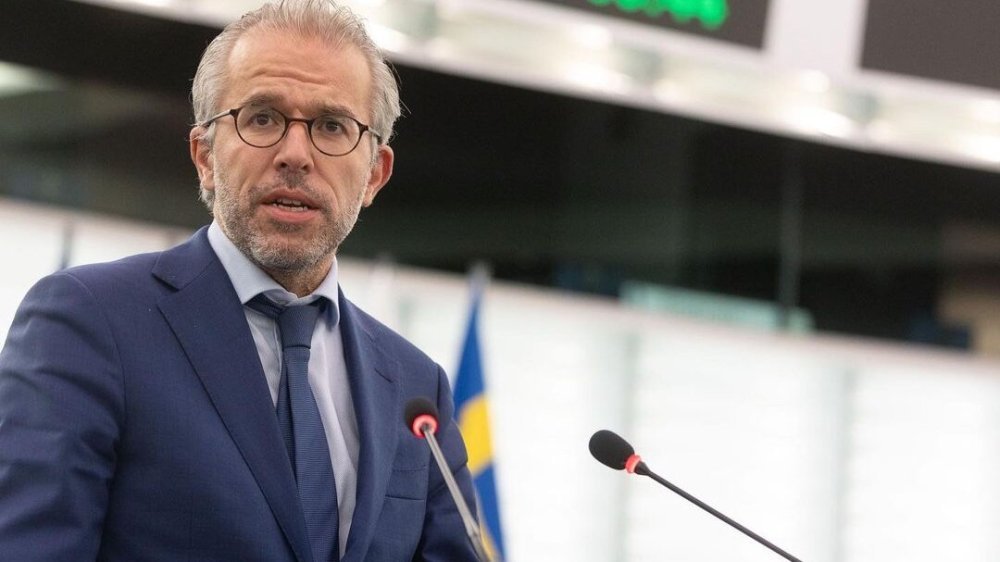
    We discussed the messages of the Commissioner for Enlargement, the way the European Parliament views the current political crisis in Serbia, and the state of enlargement in Brussels with the MP Tys Royten from the ranks of the Socialists and Democrats (S&D).

    Contemporary politics: Commissioner for Enlargement Marta Kos stated during the AFET meeting that the European Commission is assessing whether Serbia meets the conditions for continued payment of EU financial resources. What do you think about this announcement? Do you have the impression that the European Commission is ready to take concrete steps in practice and set red lines for the authorities in Serbia?

    Tice Rotten: First of all, I appreciate the effort and commitment of Commissioner Kos, but it is clear that she still has to convince all her colleagues and member states.

    And this is taking too long, because, in my opinion, we have long since passed the stage of further evaluations, discussions and meetings. We need to see concrete moves.

    I think that the funds for Serbia are now really threatened. The message to President Vučić is that this is becoming very serious. I also hope that we will soon see a serious decision by the Commission, which I believe can be easily justified with solid arguments.

    SP: Members of the European Parliament previously called for a review of EU funds intended for Serbia. Why do you think that such a review is necessary in the case of Serbia and with which funds? The government’s narrative suggests that the EU wants to deny financial support to the citizens of Serbia – how do you respond to that claim?

    TR: But where did you read that? In Serbian newspapers, of course. And that is precisely the narrative promoted by the Serbian government.

    The reality is that this is also a consequence of democratic decline in Serbia – a large part of these funds, due to poor management and non-compliance with the conditions related to their use, do not end up where they should. It is not used in a way that would really improve the living conditions of the citizens of Serbia.

    From that perspective, I actually think that many people in Serbia, maybe not publicly, would support certain measures at this moment, because they simply don’t see the effects of those funds.

    SP: Commissioner Kos also referred to the situation in the media. Do you see what is currently happening in the context of the future of media work within the United Group, primarily N1, as a showdown between the authorities and independent media or as a matter of private companies, as represented by the Serbian government? What can the EU do to protect independent media in Serbia?

    TR: Yes, of course. But this is exactly the argument that Viktor Orbán used in Hungary when he took control of the entire media space allowing it to be bought off by his close associates. So it’s not a convincing argument.

    The reality is very grim. And especially if we know that elections could follow at some point, it is very indicative that at this moment the government of Aleksandar Vučić is trying to take control of N1 as well.

    N1 and Nova, as everyone knows, are among the last remaining independent media. It is crucial that they remain independent and that their journalists can do their jobs safely.

    It is also extremely problematic that journalists are exposed to attacks, intimidation and pressure. That is really deeply troubling.

    As for what the European Union can do – of course, it has to make it politically clear that it is not compatible with the ambition to become a member of the EU. It should also publicly support journalists and independent media. It is not difficult – on the contrary, it is the minimum I expect from the Commission.

    It’s not interference. It is simply taking a clear stance that you stand with independent media and condemn attempts to portray political pressure as a purely commercial issue. Because that’s not the case, of course. This is a conscious attempt to take control of media freedom.

    And we have to say that clearly, especially on the eve of possible elections, because media freedom is a key element of free and fair elections.

    This was already a problem in the 2023 elections, when I led the observation mission. Then we clearly pointed out the media’s bias in favor of the government. The election was not fair, despite the existence of REM and everything else. I think that the situation now, before the next elections, could be even worse.

    SP: While messages from the EU indicate that the country is regressing, especially due to recently adopted judicial laws, the Government has formed a new Operational Team, headed by chief negotiator Apostolović, with the task of speeding up the accession process. Do you have the impression that Serbia is really working to speed up the negotiations, as portrayed by the Serbian media?

    TR: What I would like is for us to have more direct contact with the citizens of Serbia, for there to be media spaces where we can honestly discuss what is really happening.

    This new Operations Team is, in my opinion, just a repeat of what we already saw last year. I remember that at the beginning of 2025, the same ambassador, the same representative of the Serbian government, came to the European Parliament and said that everything will finally happen this year and that Serbia will do everything necessary.

    My answer then was very simple, and it is the same today: show us. Enough said. We want to see concrete results. I do not mean the passage of one or two bills, as we saw in late 2025, which seemed more like an attempt to appease the Commission again. I mean real improvements on the ground.

    SP: You supported the appeal of the rector of the University of Belgrade, Vladan Đokić, addressed to the international community. Shortly after the appeal, the Rector met with Commissioner Kos… How do you interpret the Rector’s visit to Brussels and how do you assess the state of academic freedom in Serbia?

    TR: What I really appreciated in the rector’s statement was that he simply stood up for his students. No more, no less. He stood up for academic freedom, safety and the basic right of students to be safe in the place where they should be educated.

    As he himself explained, people were being filmed and followed. There was clearly no safe environment for students or faculty. That is why its reaction is essential for any vital and functional society.

    I also want to be very clear in a broader sense: we are on the side of the citizens of Serbia. There is no dilemma. We want the citizens of Serbia to be part of the European family.

    I fully understand why there is skepticism towards the EU in Serbia. If your government has been talking negatively about the EU for years, why should citizens have a positive attitude towards it? And if at the same time they see that the same EU is cooperating with a regime that makes their daily life difficult, then it is clear that skepticism is growing.

    So I understand why people are not particularly enthusiastic about the EU at the moment. But I believe that will change when people start to see concrete changes in practice. I am convinced of that.

    SP: Do you think that might change after the election?

    TR: Yes, but gradually. First, to hold elections, first to bring about a real change in the political environment. Then we could see a gradual change in public sentiment.

    Why? Because over time people will have access to more independent media, get more reliable information about what has been done and what still needs to be done within the reforms. They will better understand the implementation of reforms and what they actually mean in practice.

    There is also another important point. In my opinion, it is completely unjustified to continue with the hope that giving in to Vučić will somehow preserve his role as the so-called factors of stability in the region. That logic of stabilocracy is the opposite of stability. When we see real changes in Serbia and when the country moves in the right direction, I am convinced that the region as a whole will start to look more positive. Now we see the opposite – things are not going well in Serbia, and this instability and uncertainty is spreading throughout the region.

    SP: During the discussion in AFET with Commissioner Kos, the future of the enlargement policy in the region was also discussed. How do you assess the current state of the process? Do you think the pace of 2025 will continue in 2026?

    TR: I am a strong advocate of expansion. I believe that we must strengthen our bloc. We have urgent issues related to Ukraine and Moldova, but it is absolutely clear to me that, whatever we do with them, we must not leave the countries of the Western Balkans aside. We must progress with them as well.

    But there is also responsibility on the part of the region. There were countries that came very close to fulfilling all the conditions, then for various reasons they fell back again.

    My message is simple: anyone who can improve within the existing methodology should do so.

    In my opinion, Montenegro and Albania are the clearest examples. They should be received as soon as possible, as this would send a strong signal that this process is real and that we are serious about its completion.

    SP: Some believe that the enlargement methodology itself should be revised. You said you don’t support it. Do you think that the member states are ready for such a discussion?

    TR: I don’t support it precisely because we don’t have time for it.

    My position is: everyone who can advance within the existing rules should do so. And for the rest, we need maximum creativity. This also applies to Ukraine and Moldova, but also to the remaining countries of the region.

    At the same time, something must change within the region itself. We see the same pattern over and over: the country moves forward, the progress begins to threaten the interests of certain political elites, and then there is a setback. That is unacceptable.

    After the wars in the former Yugoslavia, we promised a European perspective to this region. Now we have a new war on our continent, which we hope will end in a just and lasting peace. But what after that? Are we going to drag this process out indefinitely?

    Too many member states and colleagues use the argument that the EU must first reform itself internally. My answer is simple: if you use that argument, then you are obliged to work on those reforms.

    However, we often see that the same people who reject reforms, especially those that would facilitate decision-making, then use the lack of reforms as an excuse that the EU cannot accept new members.

    Albania and Montenegro can easily fit into the existing structure of the EU. These are relatively small countries and their admission would not further complicate the functioning of the Union. So when people use that argument, they often actually want to cover up their fear of expansion. And that is something that we have to honestly face within the EU as well.

    We must openly tell our citizens: this is in our interest. You don’t have to idealize the candidate countries. It is enough for you to understand that it is in our strategic interest to strengthen the European Union – both through the admission of Ukraine and through the inclusion of the countries of the Western Balkans.

    Follow us on our Facebook and Instagram page, but also on X account. Subscribe to PDF edition of Danas newspaper.

    Source link

    Related Posts

    Ice cream without guilt: Made with one ingredient and ready in 10 minutes
    Serbia

    Ice cream without guilt: Made with one ingredient and ready in 10 minutes

    May 4, 2026
    Council of Europe Commissioner for Human Rights: Media freedom is weakening across the European continent
    Serbia

    Council of Europe Commissioner for Human Rights: Media freedom is weakening across the European continent

    May 4, 2026
    Džamonja Ignjatović: After the tragedy, the state reacted with visible and ad hoc measures, but a strategy is needed – Society
    Serbia

    Džamonja Ignjatović: After the tragedy, the state reacted with visible and ad hoc measures, but a strategy is needed – Society

    May 4, 2026
    Slavoj Žižek: How Netanyahu’s candidate for head of the Mossad found an intellectual basis for his actions in my works – World
    Serbia

    Slavoj Žižek: How Netanyahu’s candidate for head of the Mossad found an intellectual basis for his actions in my works – World

    May 3, 2026
    Greece will suspend the EES system at the borders during the summer, claims the consul in Thessaloniki
    Serbia

    Greece will suspend the EES system at the borders during the summer, claims the consul in Thessaloniki

    May 3, 2026
    On the reputation after the tabloid scandal – Alexey Kisjuhas
    Serbia

    On the reputation after the tabloid scandal – Alexey Kisjuhas

    May 3, 2026
    Next Post
    Fire at British air base housing US B-52 bombers involved in operations in Iran

    Fire at British air base housing US B-52 bombers involved in operations in Iran

    POPULAR NEWS

    Justin Bieber fans flood Coachella festival for headlining show – Entertainment

    Justin Bieber fans flood Coachella festival for headlining show – Entertainment

    April 20, 2026

    Over 600 flee homes as Army, NPA clash in Negros Occidental

    April 21, 2026

    Ex-DPWH exec recalls P800-M ‘delivery’ to Zaldy Co 

    April 20, 2026

    Former PM Paluckas suspends party membership, to waive immunity over criminal probe

    April 24, 2026
    Pres. Ali challenges CARICOM to transform into health research powerhouse

    Pres. Ali challenges CARICOM to transform into health research powerhouse

    April 23, 2026

    EDITOR'S PICK

    Salvadoran teen convicted of assault for groping girls at Virginia high school

    Salvadoran teen convicted of assault for groping girls at Virginia high school

    April 10, 2026
    Suspension of receiving approval application files for the import of medicines and medical devices

    Suspension of receiving approval application files for the import of medicines and medical devices

    May 1, 2026
    “During 8 years, not a single apartment was built in Gyumri.” Vardan Ghukasyan’s son-in-law gave a report

    “During 8 years, not a single apartment was built in Gyumri.” Vardan Ghukasyan’s son-in-law gave a report

    April 21, 2026
    The war in the Middle East, Khamenei reacts: A new chapter opens for Hormuz without the American presence, we will protect nuclear and missile technologies!

    The war in the Middle East, Khamenei reacts: A new chapter opens for Hormuz without the American presence, we will protect nuclear and missile technologies!

    May 2, 2026

    Recent Posts

    • (VIDEO) “Evil bee” interrupted Trump in the middle of a statement, the scene from the White House made everyone laugh
    • How to care for seedlings: the crucial first 20 days
    • Parliament #52: Record number of generals and former employees of the Ministry of Internal Affairs
    • Slobodna Dalmacija – Vučić doesn’t like her: a year after she filmed beatings at a protest in Belgrade, female students are still not allowed in Serbia

      © 2026 Agentially - Navigating shifting sovereignties and global risk .

      Welcome Back!

      Login to your account below

      Forgotten Password?

      Retrieve your password

      Please enter your username or email address to reset your password.

      Log In
      No Result
      View All Result

        © 2026 Agentially - Navigating shifting sovereignties and global risk .

        This website uses cookies. By continuing to use this website you are giving consent to cookies being used. Visit our Privacy and Cookie Policy.