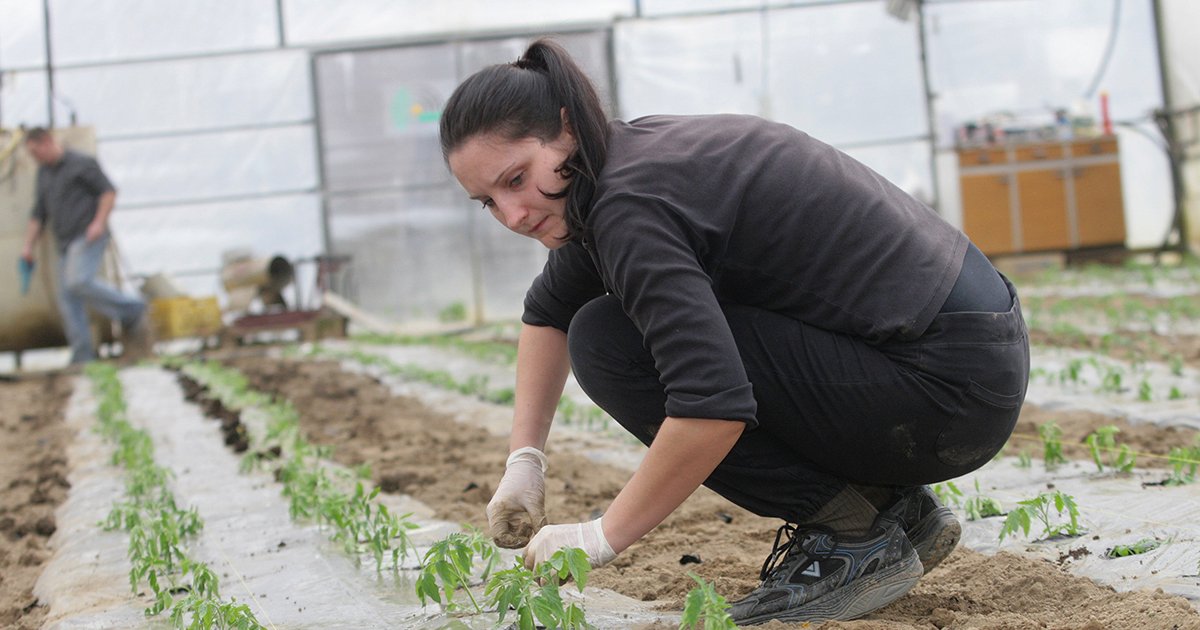
The real art of growing begins the moment you put the seedling in the ground. Professional growers probably know this, but beginners should keep in mind that the first 15 to 20 days after planting are critical for establishing the root system.
If you make a mistake here, the plant will “trot” throughout the season. Poral”Agricultural club” published a guide on what you should pay attention to.
Microclimate management
A greenhouse is not just a shelter, it is a regulator of life. Tomatoes like daytime temperatures of 22°C to 25°C, while peppers require something warmer, up to 28°C. The night temperature should not fall below 15°C (especially for peppers that are extremely sensitive to cold feet).
Ventilation! As soon as the sun rises and the temperature rises above 25°C, open the doors or side hatches. High humidity without air flow is an “invitation” for blight and botrytis.
Root provocation
The biggest mistake of beginners is excessive watering immediately after planting. After the initial watering when planting, try to “starve” the plant with water for a couple of days (if the soil is not extremely dry).
This will force the root to go deeper in search of moisture, instead of staying on the surface. The drip system is standard. Water must not go on the leaf, because a wet leaf in the greenhouse means disease.
Water only early in the morning while the soil is still cool.
Nutrition and biostimulators
In the starting phase, the focus is on phosphorus (P). It is crucial for root development. Use water-soluble fertilizers with an emphasis on phosphorus (eg formulations 10-40-10 or similar).
My advice is to apply biostimulators based on amino acids or seaweed through watering. They help the plant to overcome “transplant stress”.
Prevention is the only cure
Indoors, pests multiply by geometric progression.
Blue and Yellow Duct Tape: Install Now! They are your “detectors”. Yellow strips are for whitefly and aphids, and blue for thrips (especially dangerous for peppers due to viruses).
Fungicidal treatment: Ten days after planting, perform preventive protection against root neck diseases (eg copper-based preparations or specific fungicides for soil pathogens).
Formation of the breeding form
As soon as the intense growth of the tomatoes starts, start cutting off the axillary buds. Do not allow them to grow more than 5 cm, because they waste the plant’s energy unnecessarily.
With peppers, it is important to remove the first flower (the so-called “royal flower”) that appears in the first fork of the branches. If you leave it, it will pull all the food and the rest of the plant will be stunted.
And finally, one golden rule of the agronomist: Go into the greenhouse every morning, but not only to work, but to observe. The leaf tells you everything – if it is dark green and slightly curled in the morning, the plant is happy. If it is pale or “sad”, check the moisture and the root.
If you want a bountiful and healthy crop, the right planting time can make a bigger difference than the choice of seed. April and May are key months for every garden – but only if you know what to plant and when.