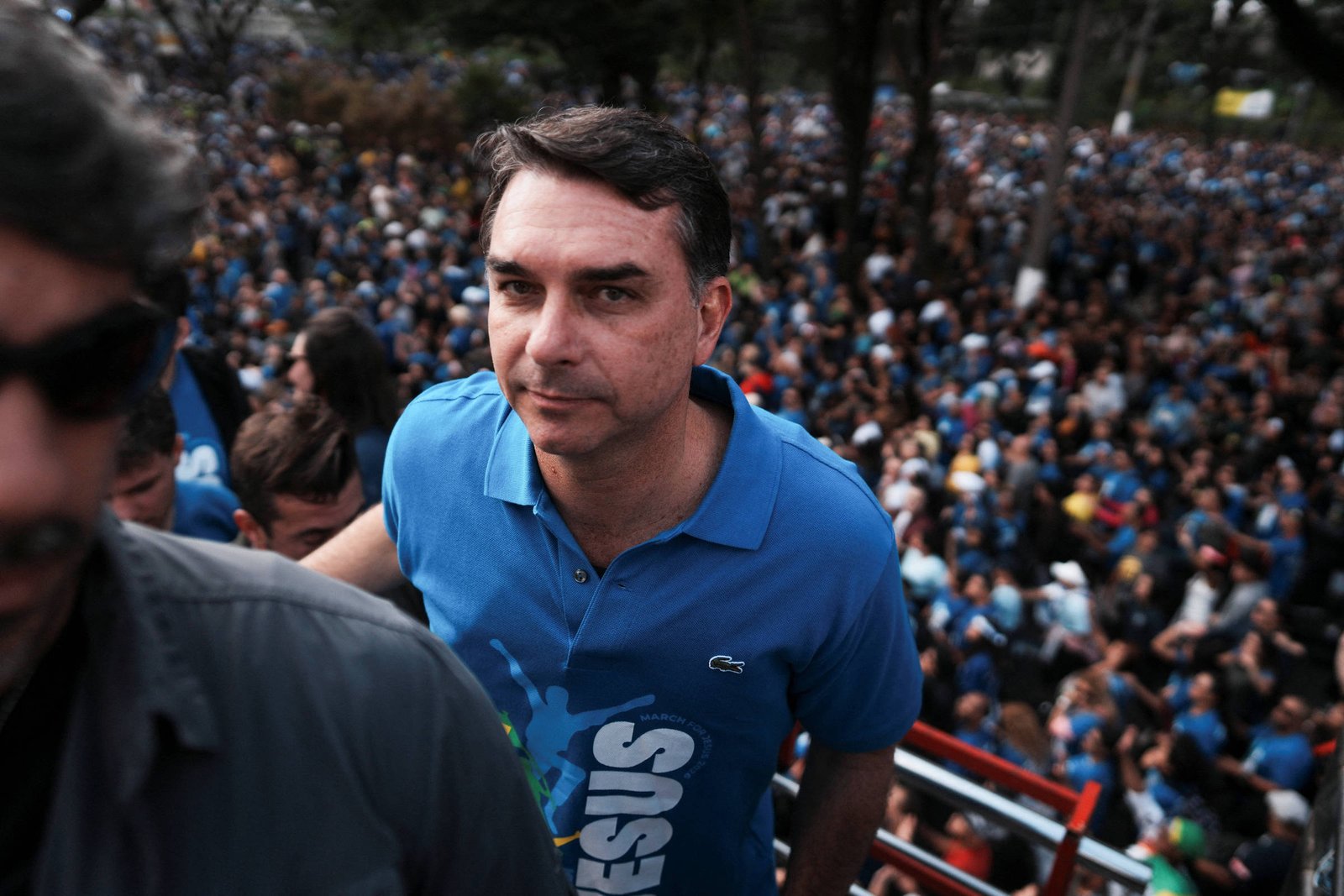
Evangelicals were responsible for the senator’s downfall Flavio Bolsonaro (PL-RJ) in Genial/Quaest survey released this week. In it, the son of Jair Bolsonaro appears with 38% of voting intentions for president in the second round, six points behind Lulawith 44%.
An exclusive section that considered the voters’ religion shows that Jair Bolsonaro’s son maintained in June, in the second round, the same percentage of votes among Catholics that he managed to obtain in May: 34%.
Among evangelicals, the drop was nine points: he had 61% of voting intentions, compared to 52% now. They were the ones who pulled Bolsonaro’s son down in the research.
Lula, although with a percentage far from that of Flávio, rose from 24% to 31% among voters from this religious group.
One of the explanations may be the improved evaluation of the government among this religious group: in April, 28% approved of Lula’s administration; in May, 30%; in June, approval jumped to 35%.
Disapproval of the Lula government fell from 68% in April to 65% in May and 60% in June, the survey shows.
Evangelical leaders interviewed by the column state that the explanation for the drop may also lie in the fact that the candidate was caught in a lie in the case of his involvement with the Master Bank.
In March, when the column revealed that the INSS CPI had located his cell phone number among the former banker’s contactsthe senator even said that the two had never had contact. He also stated that his number would not exactly be a secret, which would justify his being on the agenda. Daniel Vorcaro.
A survey by consultancy Ativaweb DataLab, which analyzed more than 17 million public mentions on social networks in the first 20 hours after the March for Jesuslast week, already showed problems for Flávio Bolsonaro among this public.
According to the survey, 51.9% of mentions of the senator had a negative tone. The consultancy relates part of the criticism to the speech in which he stated that Brazil is experiencing a “spiritual war” and that “evil will be expelled from the government”.
The researchers identified a significant volume of demonstrations by Christians criticizing the transformation of the March into a space for electoral dispute.
with DIEGO ALEJANDRO, JULLIA GOUVEIA and KARINA MATIAS
LINK PRESENT: Did you like this text? Subscribers can access seven free accesses from any link per day. Just click the blue F below.