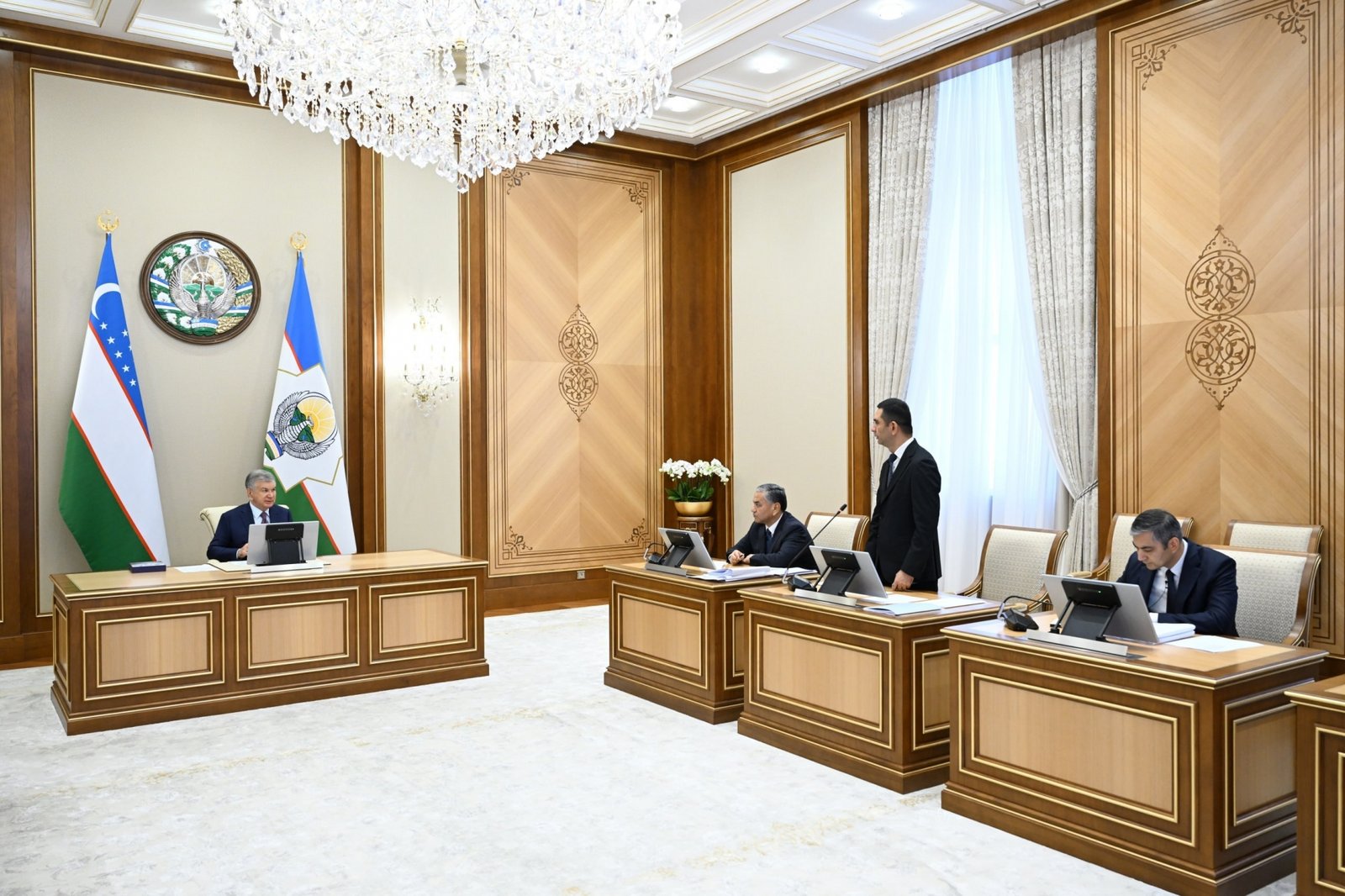
In Uzbekistan, artificial intelligence will help manage mahallas (a neighborhood community based on the principles of self-government – editor’s note) and identify social problems of their residents. On June 22, the President of the Republic of Uzbekistan Shavkat Mirziyoyev was presented with a project for digitalization of activities and the creation of the National Institute for Mahalla Development.
To quickly solve the problems of mahalla residents, it is planned to connect the information systems of 35 ministries and departments to the Digital Mahalla platform. The platform will allow you to identify these problems, analyze citizens’ requests and quickly find the necessary solutions, reports press service of the President of the Republic of Uzbekistan.
In addition, using artificial intelligence technologies, a system will be introduced that can identify in advance the most pressing issues in each community and propose measures to solve them.
This year, declared in Uzbekistan as the “Year of Development of Mahallas and the Whole Society,” the government intends to provide permanent jobs to 1 million people, lift 181 thousand families out of poverty, increase the number of mahallas free of poverty to 3.5 thousand, and also reduce the overall level of unemployment and poverty to 4.5%.
The authorities also intend to expand the economic opportunities of mahallas. Together with banks, portfolios of business initiatives and investment projects will be formed for each of them, taking into account local specifics. It is expected that this will create new jobs and additional sources of income for the population.
The presentation presented the results of work with 37 districts and 915 makhallas, classified as the most complex in terms of development level. 12 trillion soums ($1 billion) have been allocated from the republican budget to modernize their infrastructure.
Additional measures of financial support for mahallas were also reported. Another 200 billion soums ($16.6 million) have been allocated to the Republican Mahalla Fund, and new financing mechanisms will ensure permanent income for mahallas amounting to about 300 billion soums ($25 million). In particular, part of the fines for sanitary violations and illegal construction will be directed to their budgets. In addition, the share of revenues from land and property taxes remaining at the disposal of mahallas will increase from 10 to 15%.
The funds received are planned to be used to repair internal roads, build pedestrian zones, children’s and sports grounds, create parks, as well as support low-income families and employment programs.
Special attention will be paid to vocational training and social rehabilitation of 245 thousand citizens who have previously committed offenses.
During the presentation, the issue of scientific support for reforms in the mahalla system was also considered. According to the authorities, out of almost 20 thousand scientific studies, only 10 are devoted to certain aspects of the activities of mahallas. In this regard, it was proposed to create a National Institute for Mahalla Development, which will work in close cooperation with the Academy of Public Administration.
The new institute will engage in scientific analysis of reforms, study and disseminate best practices, as well as prepare practical recommendations to improve the efficiency of mahallas. Through the institute’s system, it is planned annually to improve the qualifications of about 21 thousand mahalla workers.
Shavkat Mirziyoyev supported the presented initiatives and instructed to ensure the full launch of the Digital Mahalla platform, expand the sources of income of mahallas, organize the activities of a new institute and develop the construction of mahalla facilities on the basis of public-private partnership.