Synopsis: Mr Hun Manet says that although this transition will bring some unavoidable challenges, it is an important and necessary step for the nation to pursue greater global opportunities and achieve true economic independence.
Prime Minister Hun Manet Saturday said Cambodia should prepare for its graduation from the United Nations’ Least Developed Country (LDC) status by 2029, stressing that the Kingdom cannot rely on external support indefinitely.
Speaking at the 3rd National Day of Micro, Small and Medium Enterprises (MSMEs) at Koh Pich Convention and Exhibition Center, Mr Hun Manet reaffirmed the government’s commitment to achieving the transition as part of Cambodia’s broader economic transformation agenda.
Acknowledging that graduating from LDC status will bring short-term economic challenges, he said, “Although this transition will bring some unavoidable challenges, it is an important and necessary step for the nation to pursue greater global opportunities and achieve true economic independence.”
Under the current framework, Cambodia benefits from concessional development financing and preferential market access, including duty-free export schemes under various Generalized System of Preferences (GSP) arrangements.
Mr Hun Manet noted that exiting LDC status would gradually reduce those preferential advantages.
“When we exit LDC status, preferential tariff conditions will be reduced,” he said. “International partners will see that we can stand on our own and will no longer ease conditions. We will have to borrow at standard market rates or negotiate alternative arrangements. Our exports may move to mechanisms such as GSP Plus, but conditions will not be the same as today.”
Despite the expected challenges, he rejected calls to delay the transition in order to preserve short-term benefits.
“Do we want to continue relying on others and remain poor forever, or do we face the difficulties, move beyond LDC status and strengthen ourselves to become a fully developed country in the future?” Mr Hun Manet asked.
The premier said the Royal Government remains committed to the 2029 target and has spent years strengthening the country’s foundations to create greater ownership and competitiveness.
“If we do not dare to face some problems, we will not be able to seize more opportunities,” he said, adding that stronger competitiveness would create better prospects for the Cambodian people, businesses and long-term national prosperity.
He noted that preparations for the transition began well before 2023 and said current efforts under the Pentagon Strategy – Phase 1 are focused on strengthening domestic capacity, expanding market access and improving private sector competitiveness.
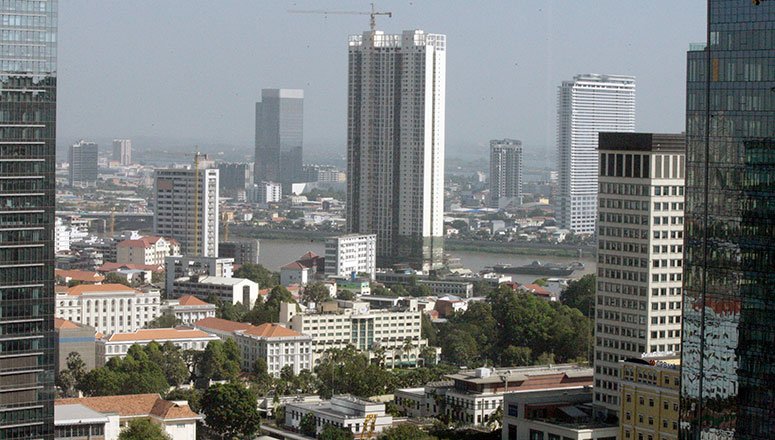
Mr Hun Manet linked the LDC graduation target to Cambodia’s broader ambition of moving from lower-middle-income status to becoming an upper-middle-income and eventually high-income economy, emphasising that achieving this goal will require adaptation and greater use of technology.
Responding to critics who questioned the government’s ambitious timeline, the prime minister maintained a firm stance, saying: “Some say our goals are too ambitious and that we should be embarrassed. I am not embarrassed.”
“If we do not dare to set high goals and work hard to achieve them, we will remain where we are. I am not speaking out of pride for myself, but out of pride for our nation and our people. We must move forward together with ownership, confidence and resilience,” he stressed.
Last week, Ambassador Keo Chhea, Permanent Representative of Cambodia to the United Nations, said at the Joint United Nations General Assembly-ECOSOC Special Thematic Event on the Midterm Review of the Doha Program of Action for the Least Developed Countries (DPoA for LDCs), that Cambodia remains fully committed to implementing the DPoA and achieving a smooth and sustainable graduation from LDC status in December 2029.
He went on to add that to support irreversible and sustainable transitions, the Royal Government of Cambodia has established a National Committee for Cambodia’s LDC Graduation to oversee the development and implementation of the smooth transition strategies.
“Cambodia calls for renewed global solidarity, stronger partnerships, particularly in financing for development, technology transfers, capacity building, climate change resilience, and smooth transition support,” Chhea added.
Speaking to Khmer Times, Sam Seun, a policy analyst at the Royal Academy of Cambodia, said that such commitment reflects a positive determination and sends a clear message of goodwill and strong resolve from Cambodia’s Permanent Representative to the United Nations in leading the country toward graduation from LDC status.
“I highly appreciate the commitment shown by Cambodia’s Permanent Representative to the UN and the Royal Government of Cambodia, which has repeatedly reaffirmed its determination to lead Cambodia out of LDC status,” he said.
Regarding the implications, Seun said Cambodia’s first challenge after graduation would be receiving fewer preferential treatments than under LDC status. Development assistance, concessional loans, and preferential arrangements from partner countries would increasingly be assessed based on Cambodia’s status as a lower-middle-income country, meaning financing could involve interest payments and additional obligations.
“I congratulate this achievement, but I also call for a comprehensive assessment of people’s livelihoods and living standards because becoming a lower-middle-income country while facing severe social inequality would not be a positive outcome,” he stressed.
It may be recalled that Deputy Prime Minister and Minister of Economy and Finance Aun Pornmonirothon held discussions on the ‘Draft National Strategy on the Development of Micro, Small and Medium Enterprises 2026-2030,’ aimed at supporting Cambodia’s long-term vision of becoming a high-income country by 2050 and ensuring readiness for graduation from LDC status in 2029.