The high number of initiatives mentioned in the 49-page extraordinary report speaks for itself. Last year alone, 30 people contacted the ombudsman’s office, and self-governing regions registered more than 500 complaints in less than two years. According to Dobrovodský, this shows that it is not just some communication dispute between doctors and patients, but a phenomenon that indicates interference with the rights to free care.

You don’t pay, we won’t investigate you
Patients described specific situations to the public defender of rights when they “decided about money” and left the doctor with a long nose. “I was booked for an examination… They had a notice on the door about the payment of an administrative fee… I didn’t have cash, they didn’t have a terminal, it was impossible to agree on payment for the next examination, so the doctor, who ordered not to examine the patient without paying the fee, refused to examine me and ordered me to a new date,” described one of the women who filed the complaint.
It has also been shown that the laws do not protect low-income, elderly or chronically ill patients. “My pension is 760 euros… 112 euros in doctor’s fees… I can’t afford that according to my pension,” said a senior citizen to the ombudsman.
Another initiative from the end of last summer describes the case of an insured woman who tried to undergo a gynecological examination at the clinic to which she belongs based on her address of permanent residence. “However, during electronic communication and on the spot, I was informed of the obligation to pay a one-time registration fee of 39 euros and a fee of 15 euros for the exact date of the examination,” she wrote to the ombudsman. Since she did not pay the fees, she could not take the tour.
The doctor asked another woman for an annual administrative fee of 30 euros during a preventive check-up, despite the fact that she had not paid anything like that to him before and had not performed any other action on her.
He wants the deputies to hear it too
The Ombudsman requests that the deputies discuss his extraordinary findings at the next meeting of the National Council. He started doing the survey on his own initiative, as he perceived a deepening difference between the constitutional guarantee of a citizen’s rights to free care and practice.
When he compared the incentives, he found out that health care providers (hospitals, polyclinics, ambulances, doctors, dentists, etc., editor’s note) demanded direct payments from patients – insured persons without support in laws. In addition, for items whose content was unclear, inconsistently marked or overlapped with services already covered by public insurance.
Dobrovodský claims that the payment problems were not individual failures, but, as it turned out, a systemic problem. “On the contrary, it was a recurring phenomenon, which by its nature signaled the possible failure of the normative framework, the inconsistency of its interpretation and the lack of effectiveness of the control mechanisms of public authority,” he said in the report.
According to the ombudsman, even the fact that the patient expects a fee from the doctor can discourage the patient from using a preventive examination. Dobrovodský considers this to be serious, also considering that during the checks, doctors catch illnesses in the general public.
How is it in the laws?
Several times he also encountered the objection that it is possible for a doctor to ask for payment when health care is supposed to be free. “They asked for an explanation of why they pay insurance premiums for public health insurance, when they still have to pay a fee for the examination,” said Dobrovodský, adding that the self-governing regions gave him a similar explanation. He therefore decided to clarify how it is with free healthcare. He examined whether the regulations, which speak about payment for health care, are formulated in a sufficiently understandable way so that they do not arise in a double interpretation and the patient is not exposed to informational or economic uncertainty.
The ombudsman explained that although the constitution states that citizens have the right to free care on the basis of insurance under the conditions established by law, it does not imply an absolute guarantee of free care. This was also confirmed by the Constitutional Court.
“In other words, it follows from the interpretation of the Constitutional Court that not every performance required of a patient in contact with a medical facility must be automatically inadmissible. It is up to the legislator to decide what part of health care and services related to it will be subordinated by law to coverage paid for by health insurance, and what part will be left for direct payment by the insured,” he explained.
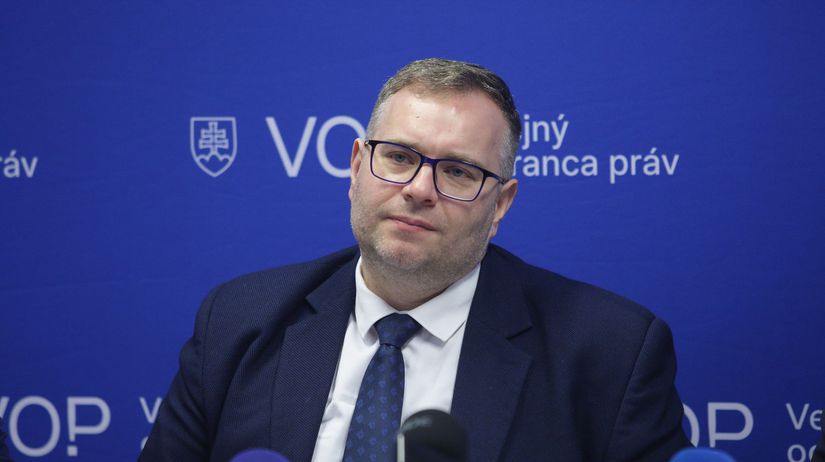 Photo: TASR, Maroš Herc
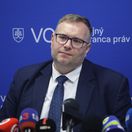
Róbert Dobrovodský Public Defender of Rights Róbert Dobrovodský during the press conference to present the survey on the determination of electoral districts before the elections to the self-governing bodies of municipalities and to the bodies of self-governing regions and the submission of the Public Defender of Rights to the Constitutional Court, Bratislava, February 2, 2026
What you can and can’t pay for
The Act on the Scope of Health Care states that, on the basis of public health insurance, medical services that lead to the diagnosis of the disease, as well as those provided during the treatment of the disease, are fully reimbursed.
The public defender of rights also looked at how the law defines what is specifically part of the practice of a doctor. “Among these activities (legislator, editor’s note) included ordering the insured for an examination, including ordering for a specific time, writing a medical prescription or medical voucher, writing a recommendation for specialized outpatient care or institutional care, writing a proposal for spa treatment and confirmation of a visit to a doctor or other health worker,” the public defender of rights pointed out.
It is also linked to prohibitions that say what a hospital or an outpatient doctor is not allowed to do. In particular, he cannot demand payment from the insured, which is covered by the insurance. To condition the examination on the determined co-payment of the insured person or to ask the patient to pay for the examination in case of illness in excess of the amount of the co-payment of the insured person.
Also important in this regard is the judgment of the Supreme Court from 2011, which refuses to allow providers on the basis of public insurance to attach an additional item to the health service, referred to as, for example, a “surcharge for comfort” or a “penalty fee”, if this is not supported by law. They cannot even pay for food during hospital treatment, stay in bed, processing data in electronic form, stay of an accompanying person, drawing up a medical report or extract from medical documentation.
Dobrovodský also drew attention to the so-called creative charging. It appeared in cases where the provider defended a certain fee by claiming that it was neither a medical procedure nor a service related to the provision.
What is (above) standard
A vague definition of what is (above) the standard also contributes to the patient’s uncertainty. According to the ombudsman, in the opinions of the regions, there was an opinion that in the absence of a statutory fee, an “extra-standard fee” can be accepted, if it is voluntary, the patient knows about it in advance, and the examination is not conditional upon its payment.
“From the statements of some self-governing regions, I also observed that health care providers do not only associate the above standard with comfort in the provision of health care, but in some cases also with the quality of the health care itself, e.g. with better equipment, additional education of health workers, etc.,” he clarified.
In the case of registration fees, Dobrovodský refers to the guidelines of the Ministry of Health. This says that the registration fee is not a provision of health care or a service related to it, and the contract doctor cannot claim payment of such a fee. It is also not possible to collect a fee for providing the doctor’s mobile number.
According to the public defender of rights, ambulatory doctors openly admit that the fees are used to cover administrative, technical and operational services, thus compensating for underfunded services.
Who oversees it
One of the complaints in connection with the payments was also aimed at the ineffective control of the authorities, which silently tolerate the current situation. The Ombudsman considers the supervision of whether doctors fulfill their duties to be crucial. For example, have they placed a price list of all procedures in an accessible and visible place, do they follow it, but also follow the list of medical procedures for which money can be asked from the patient.
He also sees the problem in the lack of a mechanism, thanks to which the regions could verify some of the obligations of the ambulances. For example, the obligation to publish the price list of all services on the website. However, as he pointed out, the provider is not obliged to inform about whether or not it has a website. “Also in this area, the legal regulation creates the illusion of transparency rather than the conditions for a truly effective control mechanism,” he pointed out.
According to Dobrovodský, people should not have to pay extra for the fact that the outpatient sector is facing personnel pressure.
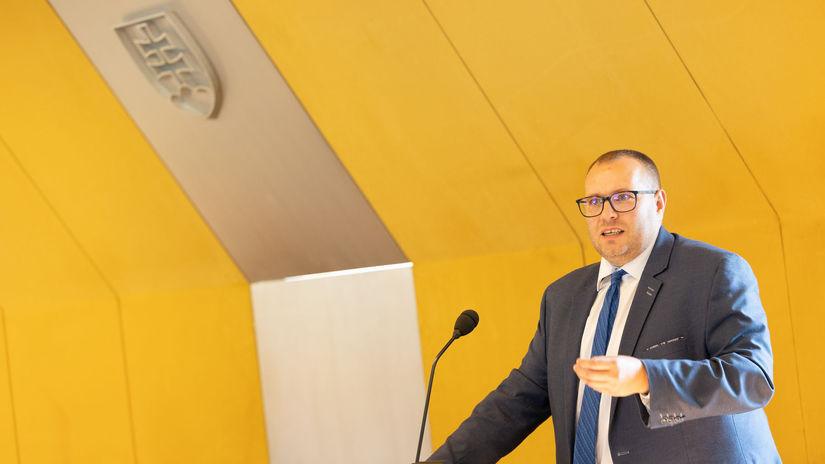 Photo: Robert Hüttner, Pravda
Róbert Dobrovodský Róbert Dobrovodský
Breaking the law ‘pays’
The ombudsman’s personal survey also showed another problem – appeal procedures conducted by the Ministry of Health currently last on average a year and sometimes significantly longer. “Such length of administrative proceedings weakens not only the punitive, but also the preventive effect of the decision. A sanction that comes years later and which, moreover, may not be economically significant, will hardly deter health care providers from illegal actions,” the ombudsman pointed out.
A separate topic is the amount of fines and the question of whether they have a deterrent effect at all. Moreover, the sanctions are too low according to the regions. “Since the enforcement of sanctions is very lengthy, they also pointed out in individual cases that the health care provider will “earn” the fine in a very short time and the violation of the law will “pay off” for him economically,” he explained.
At the same time, Dobrovodský mentioned several solutions. One of them is a general ban on charging with specified exceptions. The second possibility is to admit, within the established limits, that a certain range of direct payments can play the role of additional financing.