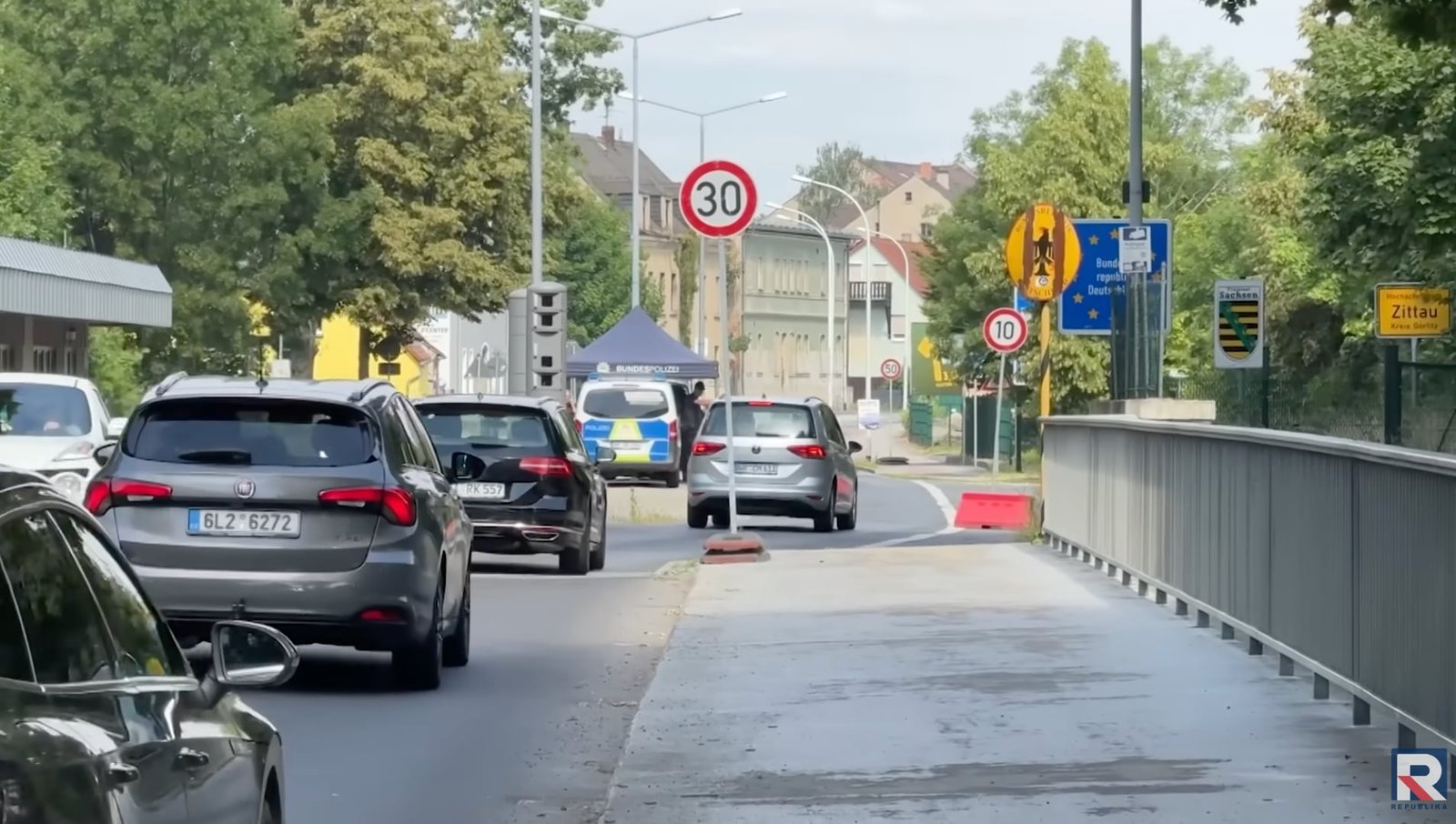
German law professor Dominik Brodowski challenged the actions of the German government, arguing that the border checks violated EU law, and won at first instance. The Administrative Court in Koblenz ruled that an identity check carried out in June 2025 in Perl, after arriving from Luxembourg, was unlawful.
Checks in breach of EU law
The court also found that the extension of border checks from March to September 2025 violated EU law. Under the Schengen Borders Code, such measures are permitted only in the event of a threat to public order or internal security. This could apply, for example, to a sudden surge in irregular migration putting pressure on a state.
Although EU countries have a certain margin of discretion in assessing threats, the court held that Germany exceeded those limits. It failed to provide sufficient evidence or a reliable justification, and did not compare migration data with its capacity to receive migrants, making it impossible to assess the proportionality of the measures. The judges emphasized that isolated serious crimes do not prove that a state is overwhelmed, and that the cited migration phenomena were not sudden in nature.
An appeal to a higher court has been allowed. The German Interior Ministry announced it would analyze the reasoning of the judgment and decide on further steps.
Plaintiff: the case should not be treated in isolation
The plaintiff, Professor Dominik Brodowski of Saarland University, described the ruling as an important signal for European integration and the principles of Schengen. He stressed that the court had comprehensively examined the legality of checks within the EU and that the case should not be treated as an isolated incident.
The incident occurred during his bus journey from Luxembourg to Saarbrücken, when he was subjected to a routine check at a parking area along the A8 motorway. The professor argues that such actions violate the principles of Schengen, which in principle abolish checks at internal borders.
Border checks in Germany have been in place since September 2024 and have been extended several times, most recently until September 2026. The ruling was welcomed, among others, by Saarland’s Minister-President Anke Rehlinger, who emphasized the need for clear legal grounds and European cooperation instead of permanent checks, as well as by the organization Europa-Union Deutschland, which pointed out that Schengen rules cannot be suspended arbitrarily.