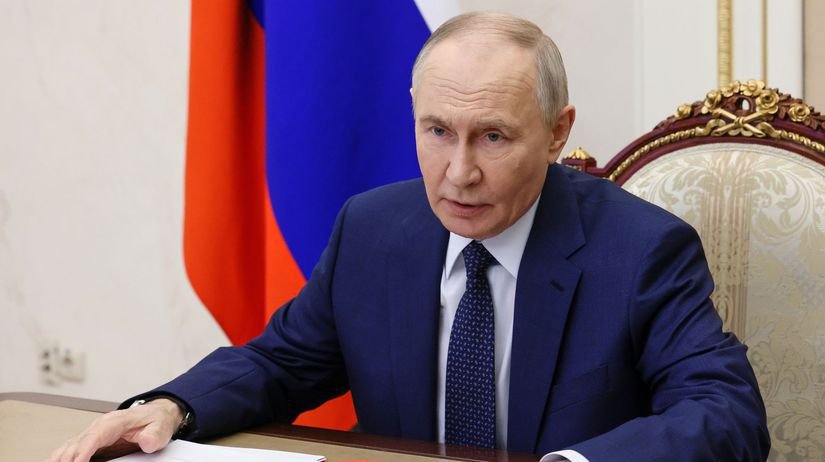
Russia’s Federal Service for the Protection of Constitutional Officials (FSO) has significantly tightened protection for President Vladimir Putin in recent months amid fears of a possible coup or drone assassination.
On Monday, the Financial Times, CNN and other media reported on this, citing a source close to an unspecified European secret service. The Kremlin did not comment on these reports.
Putin reportedly spends more and more time in underground bunkers, where he deals with such details war against Ukrainesuch as the names of individual villages conquered by one side or another, and is more and more detached from civilian life in Russia. He worked in a bunker in the Krasnodar region for several weeks, and state media used pre-filmed footage to give the appearance of normalcy.
A person who knows Putin told the FT that he is still reeling from the shock of last year operation Cobwebduring which Ukrainian drones attacked strategic air bases deep in Russian territory. Concerns about Putin’s security were allegedly strengthened by January the kidnapping of the Venezuelan president Nicolás Maduro by US special forces.
CNN reports that the security service has severely limited the number of places Putin goes, and the president and his relatives have stopped spending time at residences in the Moscow region and Valdai. Putin has yet to visit any military facilities this year, although he made such trips regularly last year. Security inspections of people who visit the head of the Kremlin have been tightened. His personal chefs, security guards and photographers are not allowed to travel on public transport or use phones with internet access. Surveillance devices were installed in their homes.
The Russian leadership is not only worried about Putin’s safety. Disputes broke out between the various security services late last year over who bears responsibility for failing to protect high-ranking military officials who have been targeted in attacks linked to Ukrainian intelligence services. Putin finally decided that the FSO will now protect ten generals. Until then, she was only concerned about the safety of the Chief of the General Staff Valeriy Gerasimov.
According to the FT, Russian political scientist Andrei Kolesnikov compared Putin to a new sculpture by the British street artist Banksy, which represents a man whose face is covered by a flag. “He only listens to the security services that control all areas of life and hopes that people will adapt to this new normal,” Kolesnikov said. But the Russian public’s support for Putin has been falling, and according to polls, it is at its lowest level since the fall of 2022, when the president announced a partial mobilization. Social media is filled with complaints about mobile internet being shut down, taxes burdening small businesses or cattle being wasted in Siberia.
CNN reports that, according to a European intelligence report, both the Kremlin and Putin himself have been worried since early March about possible leaks of sensitive information and the threat of a conspiracy or coup against the president. They are mainly concerned that someone from the Russian political elite could use a drone for an assassination attempt. In this context, former Minister of Defense and current head of the Security Council Sergei Shoigu, who “maintains significant influence in the highest military command”, is mentioned. CNN notes, however, that the report does not provide any evidence to support the claims about Shoigu, who in the past was considered a person very close to Putin.
CNN writes that it is rare for Western intelligence services to release information from the inner circles of the leadership of enemy countries, which they likely obtained from electronic sources or from people whose disclosure could lead to their compromise. However, according to CNN, the release of the report may reflect the hope of European officials that Russia will collapse from within. Critics accuse European officials that this hope is their only strategy for defeating Russia in Ukraine.