Text and image Edwien Bodjie
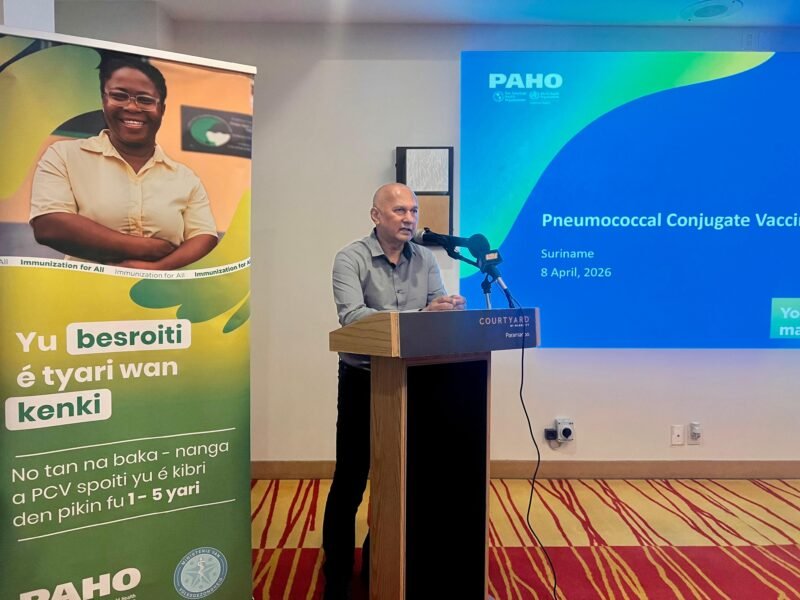
PARAMARIBO — “Vaccines have saved millions of lives worldwide. It is important that correct information reaches society.” With these words, Radjesh Ori, director of the Office for Public Health Care (BOG), opened the meeting on Monday Conversation on Vaccinations.
The information session focused on the National Immunization Program (NIP) and the activities surrounding the 24th Vaccination Week in the Americas (VWA). Against the background of a declining vaccination rate and new health risks, we looked at expanding the vaccination program and ways to strengthen society’s confidence.
“The media plays a key role in restoring confidence in vaccinations. People must start to trust vaccinations again.”
BOG director Radjesh Ori
According to Ori, the role of the media should not be underestimated. He indicated that misinformation has increased sharply, especially after the Covid period. “The media plays a key role in restoring confidence in vaccinations. People need to start trusting vaccinations again,” he said.
Expansion with pneumococcal vaccine
An important moment during the meeting was the introduction of the pneumococcal vaccine (PCV) in the national vaccination schedule. This vaccine provides protection against infections caused by pneumococcal bacteria, including pneumonia, blood poisoning and meningitis.
According to Ori, this is a disease that still takes a heavy toll worldwide. “Every year, almost 300,000 children under the age of five die from pneumococcal infections. We have been working on expanding our vaccination program for years and are pleased that this vaccine is now being added. This will allow us to prevent a lot of illness and death.”
The vaccine is offered free of charge and included in the regular schedule. In addition, there will be a catch-up campaign for children between one and five years old who have not previously been vaccinated. The vaccine may also be important for the elderly.
Vaccination rate under pressure
In addition to the expansion of the program, the vaccination rate in Suriname was also discussed. For some diseases this remains below the desired level. For measles, coverage is around 80 percent, while at least 90 to 95 percent is needed to prevent outbreaks. These figures are in line with broader developments in the region, where health authorities warn of an increasing risk of infectious diseases.
Doctor Richard Kartomo, affiliated with the BOG, provided a substantive explanation of the pneumococcal vaccine. He explained that the bacteria spread through coughing and close contact and can cause serious illnesses.
Young children in particular are at increased risk. According to Kartomo, research shows that a significant proportion of affected children die or suffer from lasting complications. “Vaccination can significantly reduce those risks,” he said.
He further indicated that the vaccine is already widely used internationally and has proven its effectiveness. By including it in the national program, protection now becomes accessible to a larger group.
Regional developments
The situation in the region was also discussed. PAHO advisor Doctor Edmund Gue painted a worrying picture of the development of measles in North and South America. The region has now lost its status as a measles-free area.
More than 14,000 cases have already been registered in the first months of 2026, almost as many as in all of 2025. According to Gue, vigilance is necessary. A vaccination rate of at least 95 percent is required to prevent further spread. He also pointed to targeted strategies to vaccinate difficult-to-reach groups, such as residents of the interior and migrants.
Joint responsibility
Gue makes an appeal to both society and the media. Because, according to Orie, vaccinations are the most effective ways to prevent diseases.
Gue: “The situation in the region is worrying, it is important that we continue to share correct information and work together to strengthen trust.” This year’s slogan is: “Your decision makes a difference”. This makes it clear that individual choices have direct consequences for public health.