Tegucigalpa, Honduras
A little more than 13 million lempiras was spent by National Loss Reduction Program (PNRP) of the National Electric Energy Company (Enee) in the purchase of cell phones and mobile plans that, according to information held by LA PRENSA Premium, ended up in hands other than institutional use.
LA PRENSA Premium previously revealed that during the previous Enee administration, almost 200 million lempiras were reported in travel expenses, tickets and meals without sufficient public trace. Now, this unit documents another aspect of that same pattern: more than 13 million lempiras in cell phones and mobile plans whose institutional destination is also unclear.
On May 17, 2023, the PNRP launched the private tender LP-ENEE-PNRP-001-2023 for the acquisition of telephone service and data plan.
Twenty-two days later, on June 8, the minutes of receipt and opening of offers were made. There the first alert arose: the Transparency and Fight Against Corruption Unit of the Enee stated in its incident report that it was not called to that stage of the process, an omission that marked from the start a purchase with fewer internal controls.
The record of receipt and opening of offers also does not contain the signature of any representative of the Transparency and Fight Against Corruption Unit of the Enee. Its absence reinforces what was noted in the incident report: that this department was not summoned.
After searching the Honducompras portal of the State Contracting and Acquisitions Regulatory Office (Oncae), the LA PRENSA Premium team detected that this process concluded with the signing of the contract PNRP 69-2023on November 8, 2023, identified as “supply, acquisition of telephone services and data plan”, for a little more than 6.6 million lempiras.
The amount is equivalent to an average cost of about 6,651 lempiras for each of the thousand contracted packages.
The contract included one thousand mid-range smartphones with their respective mobile plan. From the paper, it established devices with a camera of at least 12 megapixels, 4 GB RAM, 64 GB storage, 5,000 mAh battery and Android 11 or higher system, in addition to 35 GB of data for browsing, unlimited calls to all networks, unlimited WhatsApp and warranty for factory defects.
The first purchase was completed in 2023, but a year, three months and 16 days later the PNRP committed public resources again in another similar contract. On February 24, 2025, the contract was signed PNRP-21-2025 for more than 6.3 million lempiras, equivalent to an average cost of about 6,300 lempiras for each of the thousand services contracted with cell phone included.
The second hire was structured differently. This time it was not the device that was put in the foreground, but rather a thousand mobile phone services that included cell phones, under the description of “telephony service and data plan.”
The contract included more than 30 GB per month for browsing, unlimited calls to all networks, unlimited WhatsApp, a validity of 12 months and phones with specifications higher than the first purchase: camera of at least 24 megapixels, 6 GB RAM memory, 5,000 mAh battery, Android 14 system or higher, as well as cable, charger, warranty for factory defects and insurance for theft and damage.
The process included a thousand telephone services with mobile internet, unlimited calls and unlimited WhatsApp. But, just like the previous purchase, each package also included a cell phone. The difference was that this time the contract provided for a progressive delivery and activation of the devices, in accordance with the contractor’s request.
Between the two contracts, the PNRP spent 13 million lempiras for two thousand cell phones and their respective mobile services. The expense was documented. What was not clear was the fate of these devices once they entered the institution.
However, the reviewed documentation did not allow us to establish with certainty whether this second contract corresponded to the annual payment derived from the first purchase or whether it was a new independent acquisition.
Cell phones outside institutional use
But the delicate point is not about how the cell phones were purchased, but what happened to them afterwards. A source who was closely familiar with that operation told LA PRENSA Premium that within Enee there was no clarity about which people in the PNRP the devices were delivered to or about the specific use to which they were given.
According to this information, the cell phones were not, for the most part, in the hands of the program staff. Part of these devices ended up in the possession of people outside the PNRP and with no known employment relationship with the structure that was to use them in the field.
In simpler terms, Enee not only committed more than 13 million lempiras in two mobile phone contracts. He also lost clarity about the destination of goods that were purchased with public funds for a specific program.
However, consulted by LA PRENSA Premium, the former coordinator of the PNRP, Lesly Vanessa Ariasmaintained that the cell phones and data plans were assigned to the program’s technical staff, including specialists, supervisors and field crews.
He explained that the devices were used to assign jobs to crews, record tasks performed, attend to new services, requests, complaints and claims, review anomalies, replace damaged equipment and maintain communication between electrical technicians and supervising engineers.
“(The cell phones) were delivered with assignment records. There is a record for each assigned plan. The documents are in the PNRP; I no longer have access to that information, but the new administration has people in charge there,” said Arias Salazar.
Trace still unclear
To establish whether these cell phones are still within the program and to whom they are assigned today, LA PRENSA Premium consulted the general manager of Enee, Eduardo Oviedo, who responded that they could not comment on the issue because the PNRP is under an intervening board.
Meanwhile, that commission, appointed in March of this year, did not rule on the case because it is identifying alleged irregularities that will later be recorded in a report.
However, officials of the current government confidentially told this investigation unit that among the cases subject to review by the intervening commission is, precisely, the private bidding process LP-ENEE-PNRP-001-2023, from which the first purchase of cell phones and mobile plans was derived.
According to this information, until now there is no report that clearly establishes to whom these devices were delivered, how they were used or if they are still within the PNRP.
In addition, this research unit attempted to establish, through requests for information, how many employees the program had during the previous administration, but on different occasions the response was that, due to the change in administration, these data were still unclear.
Given this lack of official information, this medium consulted former coordinator Arias Salazar, who estimated that before her departure the PNRP had around 1,550 technicians and about 300 administrative staff, that is, almost two thousand employees in total.
If the program had almost two thousand employees, as its former coordinator maintains, the purchase of two thousand cell phones and mobile services was enough, in terms of volume, to cover practically its entire structure.
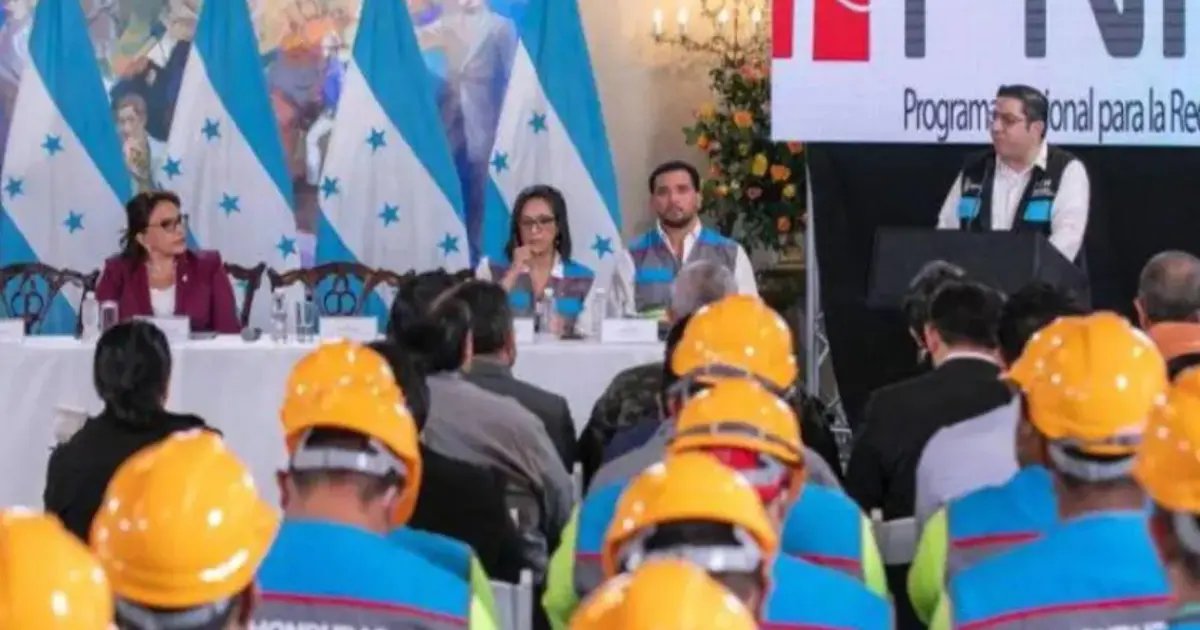
The dimension of the program helps to better understand the case. The PNRP was promoted in 2022 by the government of former president Xiomara Castro as a solution to reduce energy lossesrecover income and execute actions such as installing meters.
However, part of his documentary trail leads to a million-dollar purchase of cell phones whose institutional fate today no one clearly explains.
In other words, a program created to reduce losses and organize the operation of the state company ended up dragging a file in which more than 13 million lempiras in cell phones and mobile services were suspected of discretionary use and without clear traceability within the institution itself.