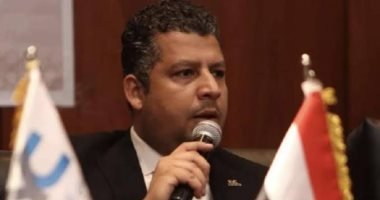
Dr. Mohamed Mamdouh, Chairman of the Board of Trustees of the Egyptian Youth Council and Secretary of the Economic Rights Committee of the National Council for Human Rights, confirmed that one of the most serious challenges facing the human rights system at the international level in recent years is not only the violations or humanitarian crises, but rather the attempts of some Political organizations Ideological groups hijack human rights discourse and use it as a tool for political conflict and pressure on states and governments.
Over the past decades, the world has witnessed a remarkable transformation in the nature of political conflicts
Mamdouh said that over the past decades, the world has witnessed a remarkable transformation in the nature of political conflicts, as confrontations are no longer limited to the traditional political sphere, but rather have expanded to new arenas, including international media, non-governmental organizations, and some platforms that speak in the name of human rights, which in some cases have become part of battles for influence and political polarization.
It is necessary to differentiate between real human rights work and attempts to politicize it
Mamdouh pointed out: However, those who follow various international experiences discover that this phenomenon is not linked to a specific country. After the collapse of the Soviet Union, some Eastern European countries witnessed the use of some entities that raised slogans of democracy and human rights as part of internal political conflicts between forces competing for power and influence. Countries in Latin America also witnessed the use of the human rights issue by opposing political movements in the context of their internal battles and attempts to mobilize external support and support against their opponents. He added that many international studies and writings have also dealt with the phenomenon of what is known as front organizations or entities that It presents itself as part of independent civil society, while in reality it exercises political or ideological roles that go far beyond the boundaries of professional human rights work, which has sparked wide discussions within international circles about the necessity of distinguishing between real human rights work and attempts to employ it to achieve political goals.
Trying to use human rights discourse as a means of political pressure
The legal expert noted: The Middle East region was not far from this phenomenon, as some political organizations, after their ability to influence within the public sphere declined or lost their popular incubator, resorted to transferring part of their battles abroad by investing in human rights and media discourse and trying to employ it as a means of political pressure.
Mamdouh stressed that the Brotherhood represents a clear model of this path in the Egyptian case, as it has tended over the past years to rely increasingly on media platforms and some entities that adopt a human rights discourse with the aim of influencing external public opinion and international decision-makers in an attempt to reproduce its political presence through tools different from those that have lost their effectiveness within Egyptian society.
He explained that the problem does not lie in human rights criticism or in the presence of observations on human rights conditions. Objective criticism is one of the most important tools for reform and development, and it also represents an integral part of the role played by national human rights institutions in accordance with international standards and the Paris Principles. However, the real problem appears when human rights work turns into a selective discourse that searches only for facts that serve a specific political narrative, and in return ignores any developments, reforms or efforts made on the ground.
The sound human rights approach is based on monitoring and documentation
He added that the sound human rights approach is based on monitoring, documenting, verifying, and listening to all parties, while ideological methodologies depend on adopting prior results and then searching for facts or information that support them, which ultimately leads to a loss of confidence in the human rights discourse and weakens the credibility of the institutions that adopt it.
He pointed out that a number of countries around the world faced similar challenges when separatist groups, radical movements, or political organizations that had lost their ability to mobilize people sought to use international pressure mechanisms and human rights and media platforms as an alternative to traditional political action, which confirms that the phenomenon is of a global nature and is not limited to a specific country or region.
He stressed that confronting this phenomenon is not by restricting civil society or questioning the importance of human rights work, but rather by supporting serious human rights institutions, enhancing transparency, expanding the availability of information, and enabling independent national institutions to perform their oversight and advisory role in accordance with recognized international standards.
He stressed that the strength of any country in the face of smear campaigns is not measured by its ability to respond only in the media, but rather by its ability to build strong institutions, enhance community participation, and achieve real progress in the files of rights, freedoms, and economic and social development, making the facts on the ground the strongest response to any attempts at distortion or political exploitation.
The real battle is the credibility of human rights discourse
He concluded his statement by emphasizing that the real battle that the world faces today is not only a battle of information or competing narratives, but rather a battle over the credibility of the human rights discourse itself, warning that the continued politicization of human rights and turning them into a tool for conflict between organizations and states would harm the real victims and undermine confidence in the international human rights system, stressing that defending human rights begins first with preserving the independence and integrity of human rights work itself, far from any political or ideological employment.