In the face of criticism from the opposition in Congress, which agrees that little or nothing has been done by the government of Keiko Fujimori In his first 100 days, the Minister of Labor and Employment Promotion, Juan Sheputchallenged deputies and senators to debate and considered that there is a “bad faith” in the aforementioned power of the State.
“The population, as is obvious, has had very high expectations regarding the government of President Fujimori. And to the extent that these demands raised by the citizens have not been able to be consolidated, it seems to me a good result that close to 50% (of the citizens) have rated (the Executive) between good and average,” he said in reference to the latest Datum International survey.
According to the opinion study, only 10% consider Fujimori Higuchi’s administration to be “a good government.” 47% describe it as “a regular government”, 38% as “a bad government” and 5% do not know.
Sheput maintained that the surveys should be read in a complementary way, remembering that 41% believe that the Fuerza Popular government can improve.
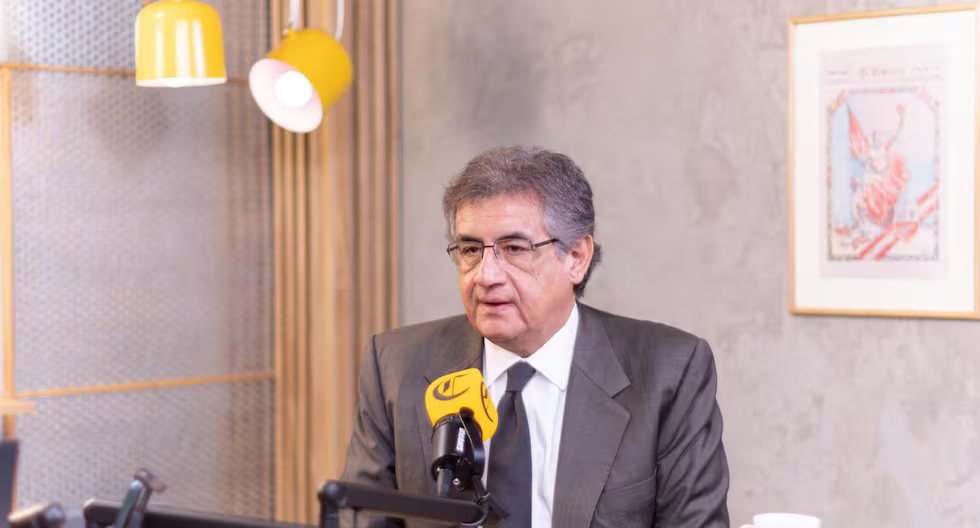
“And if we add to that that we have a mess in Congress of bad faith, of people who constantly say that nothing has been done, thereby generating a story or trying to manipulate public opinion. Despite all that, the result (of this latest survey) seems acceptable to me,” he added in “We Have to Talk,” a video podcast from El Comercio.
The head of MINTRA considered that the main fact of the first 100 days of Fujimori Huguchi’s mandate is having recovered “the presidential institution.”
“The presidency of the Republic has been recovered as an institution and as a fundamental value of any democracy. No one can deny that there is a head of state who is received by other heads of state, presidential diplomacy has been recovered and she has a properly cohesive Cabinet. And, in economic matters, it is evident that trust has increased at the business and labor level,” he expressed.
He acknowledged that security policies “still need to mature,” but stressed that the government is acting against El Niño.
“Yes, there is a north, there are pillars. What happens is that people are looking at the dispersed part: if there is a rocket, they are looking at the smoke that comes out. I think we should be more objective. And I would love to debate with some of the people who are opposed to what we are doing. I am willing to debate with all of them (Ernesto Zunini, Jorge Nieto, among others),” he remarked.
“(From the opposition) they say that we have not done anything, well, let’s talk,” he added.
According to the latest Datum International survey, 68% think that the Fujimori government has not made any progress to reduce insecurity. 25% believe that something, while 3% believe that a lot.
In this regard, Sheput pointed out that the processes to implement the citizen security policy “are not overnight,” but rather there must be police intelligence, investigation, operations and arrests.
“Unfortunately, the legacy of five years of inactivity in relation to the fight against crime has therefore generated that (this evil) is structural in some areas and (organized crime) has to be combated in a differentiated way, as it was classically. Today we have a transnational crime that has funds from illegal mining, drug trafficking and smuggling. All these social diseases have been consolidated in the previous five years,” he stressed.
The day before, Senator José Mercedes Castillo (Together for Peru) told Epicentro that “to date, we have not seen anything.” “Let the people evaluate this, I don’t see any progress,” when asked about the 100 days of the Fujimori government.
For his part, the spokesman for the Together for Peru bench in the Chamber of Deputies, Ernesto Zunini, questioned that the Executive has not issued a single legislative decree on citizen security and El Niño, despite the fact that Congress granted the powers more than 10 days ago.
“Ten days since powers were granted and we have ZERO decrees on citizen security and the El Niño phenomenon. The Government demanded speed and put undue pressure on Congress, but so far it has not been able to demonstrate that it has concrete proposals to address these emergencies. While crime advances and the time to prevent the damage of El Niño is shortened, there are no excuses anymore!”, he wrote in X.
Deputy Víctor Piñán (Obras) maintained that the Fujimori government “still has many pending issues,” especially in the fight against citizen insecurity, “where absolutely no progress has been made.”

(Photo: Giancarlo Ávila/ El Comercio)
“We are going to see how the Executive reacts to the El Niño phenomenon. And well, there have been many ups and downs, initially due to the request for powers and then in the Senate. I believe that the Executive must start working (…) Honestly, if they asked me to give a note, I would disapprove of Mrs. Fujimori,” he said in We Have to Talk.”