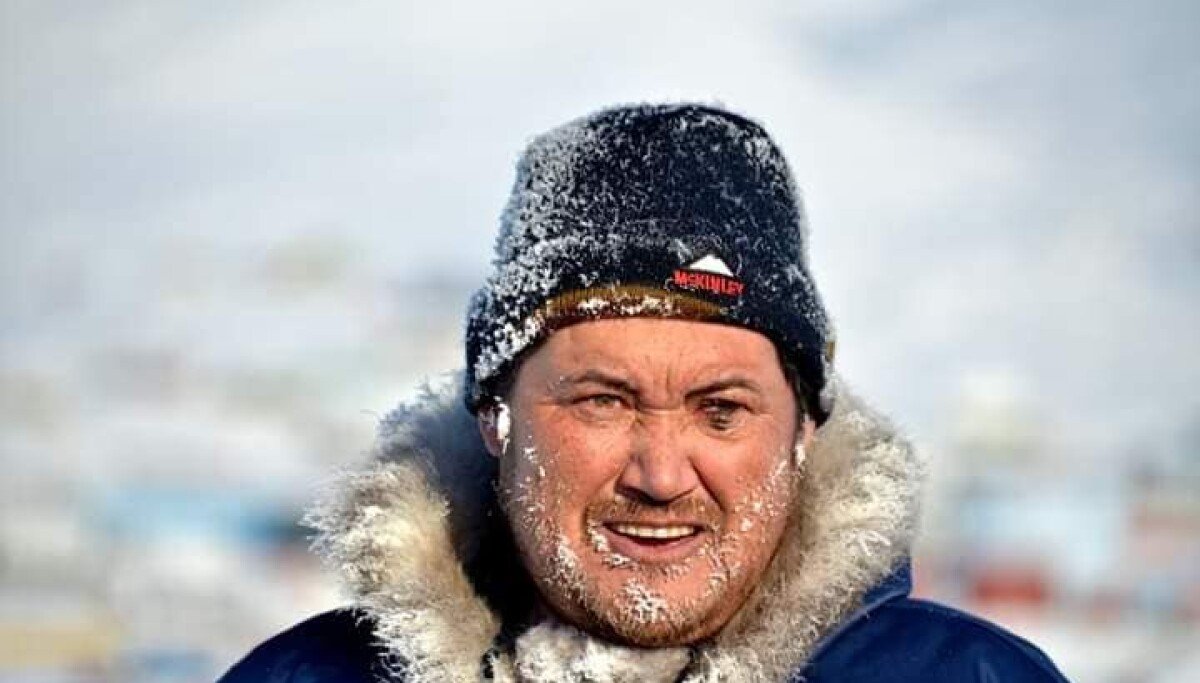
K’ulutana Kvist is 61 år old and has been fishing for halibut since he was eight years old. He says that he learned fishing from older men who, with age, had less strength to catch and therefore started fishing for halibut.
– When I grew up with my grandparents, I didn’t have any fishermen as role models, and that’s why I started fishing. My grandmother held me back from hunting, perhaps because she was worried about me, says K’ulutana Kvist.
K’ulutana Kvist is 61 år old and has been fishing for halibut since he was eight years old. He says that he learned fishing from older men who, with age, had less strength to catch and therefore started fishing for halibut.
– When I grew up with my grandparents, I didn’t have any fishermen as role models, and that’s why I started fishing. My grandmother held me back from hunting, perhaps because she was worried about me, says K’ulutana Kvist.
When halibut fishing began
When the fish factory in Qaanaaq first opened in 1987, K’ulutana Kvist was among the first to purchase halibut. But the prices were so low that many preferred to sell their catch privately rather than to the factory.
– I was among the first to procure halibut for the procurement site, and we delivered over 100 kilos. At that time, halibut only cost 3 or 4 kroner per kilo, so we made very little money, he says.
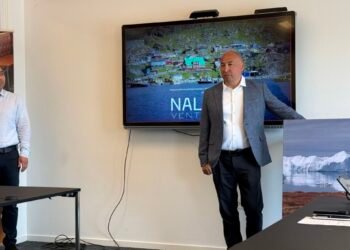
Today, fishermen receive 23 kroner per kilos when purchasing for Inughuit Seafood I/S. The director of the company, Ujuut Olsen, says that twice as many halibut have been procured this year as last year.
– Last year, 59 tonnes of halibut were procured for the factory, and this year almost double that, around 127 tonnes, has already been procured. As fishing is still going on, I hope we can reach 130 tonnes, says Ujuut Olsen.
According to K’ulutana Kvist, the number of fishermen has also increased.
– There used to be around 40 fishermen, but now I reckon there are between 60 and 70. Those who fish well also earn well, he says.
– The most skilled fishermen can earn between DKK 50,000 and DKK 70,000 per month.
Attempt to operate procurement site
Although the halibut fishery is doing well today, this has not always been the case. In the past, several companies tried to operate a shopping center in Qaanaaq, but had to close again because the operation was not profitable.
– The companies Arctic Green Food and Nuka A/S tried for two or three years to run the procurement site, but they stopped again, says K’ulutana Kvist.
In order to get the factory up and running, Jens Danielsen, Naimannitsoq Petersen and K’ulutana Kvist formed a partnership with a view to starting a business. This later led to the establishment of Inughuit Seafood I/S in 2014.
– When people were once again without a place to buy, in 2008 we set up a working group in the prisoners’ association to establish Inughuit Seafood I/S, he says.
With support from the Thule Foundation and with Royal Greenland as co-owner, Inughuit Seafood I/S opened on 1 October 2014.
– Residents of Qaanaaq, Siorapaluk, Qeqertat and Savissivik can become co-owners of the fish factory by contacting Inughuit Seafood I/S, says K’ulutana Kvist.
The ice determines the fishing
Although climate change can be clearly felt, fishing is increasing.
In the past, halibut fishing began already in October, when the ice settled while the sun was still out. Today, fishermen can often only start in December or January.

– Back when it was much colder, the ice used to be about two meters thick. Now it is only about 1 meter and 30 centimeters thick, and therefore it has become easier to fish because it is easier to make a hole in the sea ice, says K’ulutana Kvist.
When the ice breaks up, halibut fishing stops. Many fishermen then switch to narwhal fishing, but it can be financially difficult for those who do not kayak or work as crew members during the fishery.
– Those who cannot kayak lose a large part of their income opportunities. In periods of bad weather, it becomes difficult to catch narwhals, and then some will lack money – especially those who do not have a spouse with work, he says.
K’ulutana Kvist is therefore pleased that Naalakkersuisut can now provide up to 85 percent in support to fishermen in Qaanaaq and East Greenland who want to acquire boats. He believes that it can create new opportunities for halibut fishing after the ice melts.
– If we are to find more halibut, we have to go further out in front of Kiatak, to the deep and more remote areas. That is why we need bigger boats and vessels, he says.
– The young people will benefit greatly from it in the future. Naalakkersuisut’s efforts give hope, and we owe them a thank you for that.
Ten snowmobiles handed over
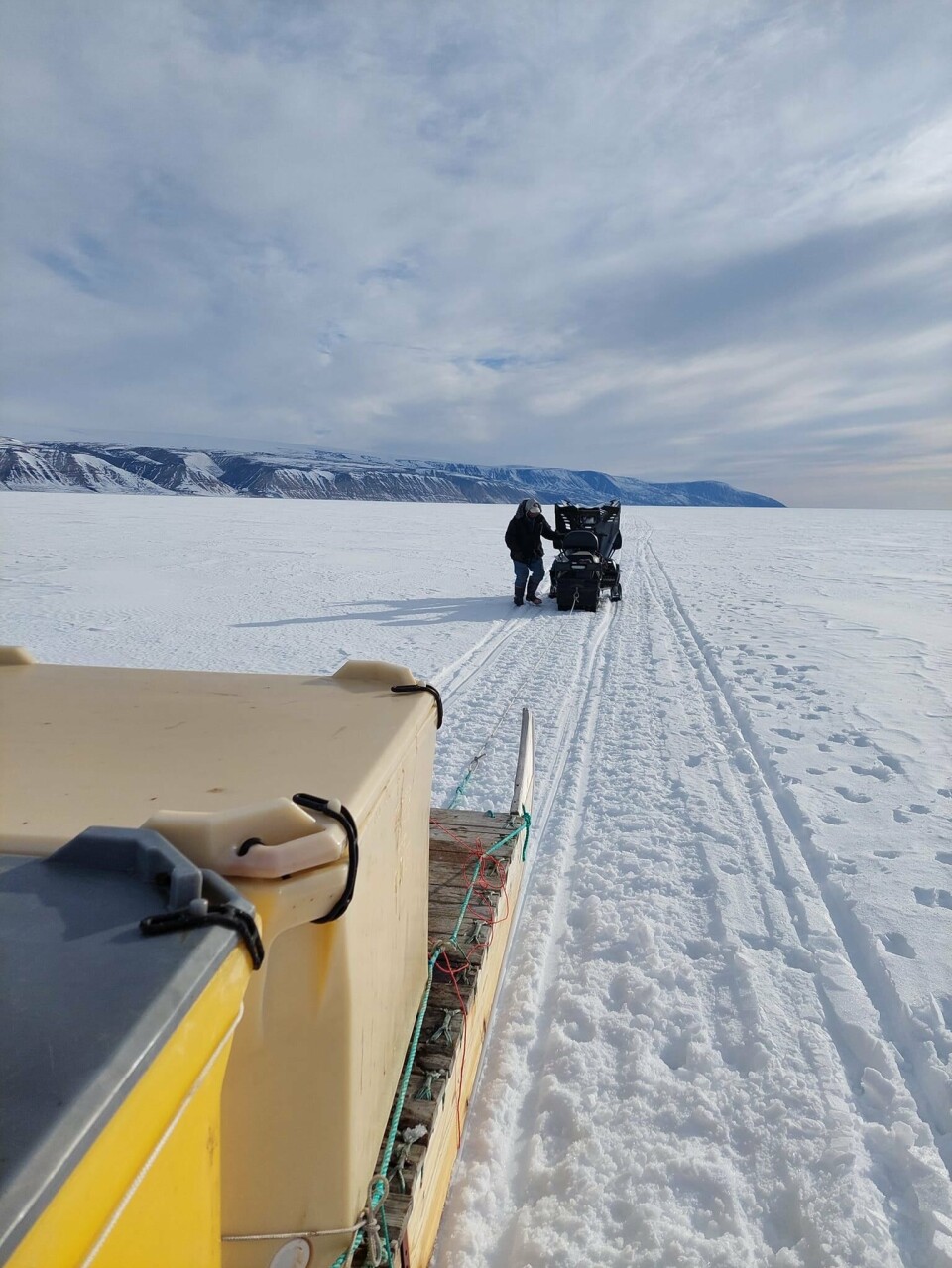
This autumn, the Thule Foundation handed over ten snowmobiles to the fishermen. According to K’ulutana Kvist, they will be a great help in the further development of fishing, and they have already been put to good use.
But there are also challenges involved.
If the snowmobiles break down, there is a lack of workshops and mechanics to repair them. Therefore, the fishermen often have to carry out the repairs themselves.
– Due to the lack of mechanics, we have to repair the snowmobiles ourselves, and thus the warranty is void, says K’ulutana Kvist.
Desire for further development
If halibut fishing is to be developed further, K’ulutana Kvist believes that there is a need for better harbor conditions, easier access to fishing equipment and workshops for repairing snowmobiles.
– If business in Qaanaaq is to develop, I believe that Naalakkersuisut must implement these plans, he says.
He also hopes that more young people will take an interest in fishing in the future.
– I would like to encourage everyone who can and is healthy to fish. If we don’t have the will, we fall behind in development. Then we just get to stand and watch while others develop new things. The will lies in man, says K’ulutana Kvist.
A tradition that will not disappear
The transition from catching to fishing has happened quickly and is still continuing, but K’ulutana Kvist is experiencing that more young people are interested in fishing.
– There are still some who would rather be catchers than fishermen, he says.
Even if the number of fishermen grows, he does not think that the fishing culture will disappear.
– As long as the city exists, there will always be trappers. Catchers will not disappear. But man has to constantly adapt, concludes K’ulutana Kvist.