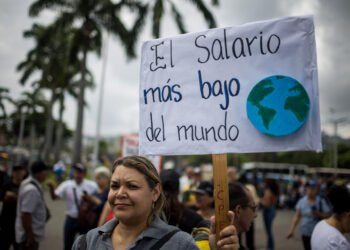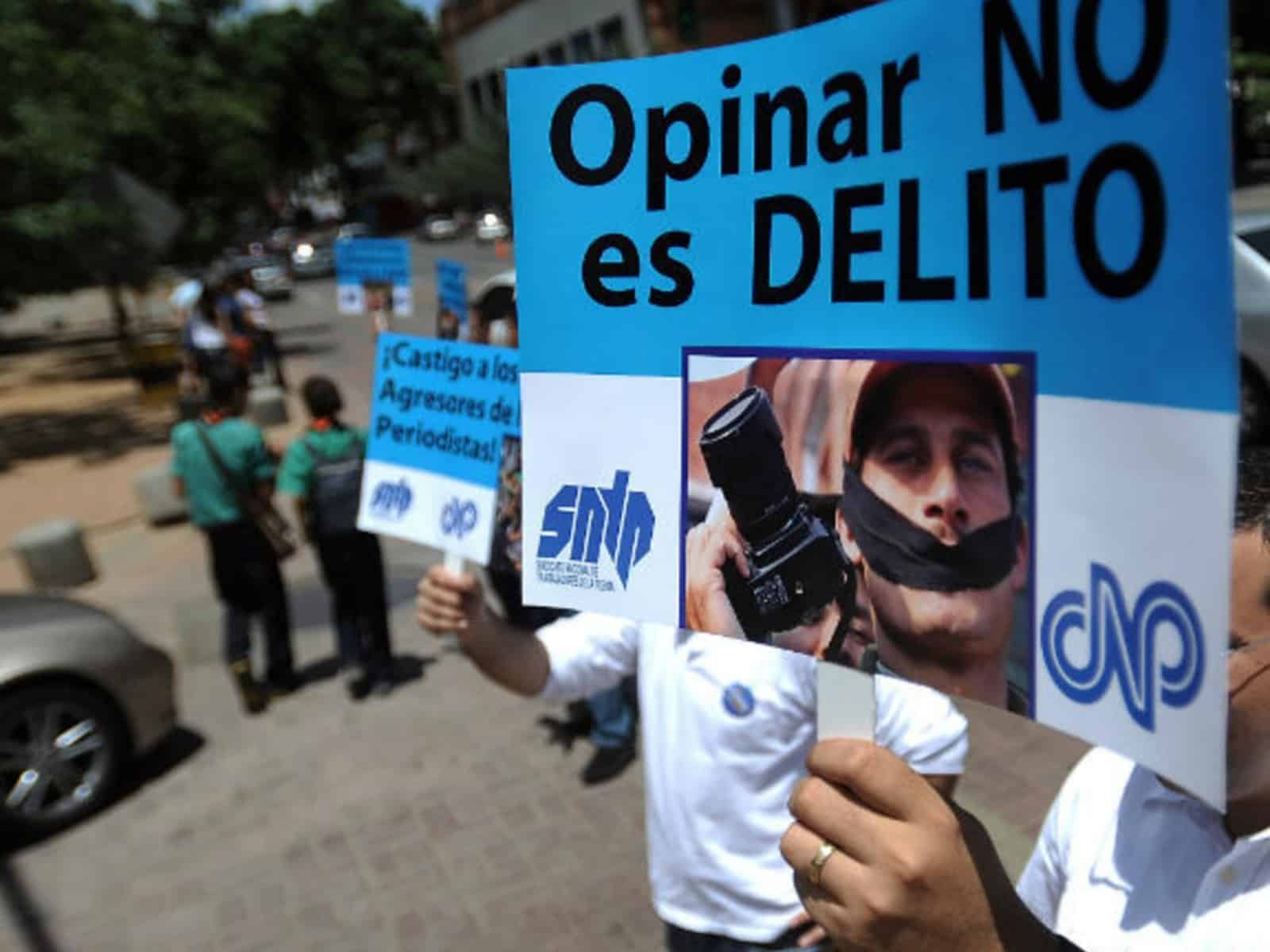
The Press and Society Institute (IPYS) of Venezuela and the National College of Journalists (CNP) denounced this Sunday that the persecution against journalists and censorship in the country have not stopped, after the capture of Nicolás Maduro on January 3.
Ipys, a non-governmental organization that is responsible for measuring the pulse of press freedom, demanded “the dismantling of the structural censorship mechanisms” that it considers exist in Venezuela.
Ipys’ statement came about World Press Freedom Day. The NGO stressed that there are journalists who no longer sign their stories and who have learned to practice their profession within “certain margins” to continue reporting.
In this sense, he assured that more than eight out of ten journalists “acknowledged having modified their way of working in response to an environment that imposes limits” such as the Venezuelan one.
Attacks in numbers
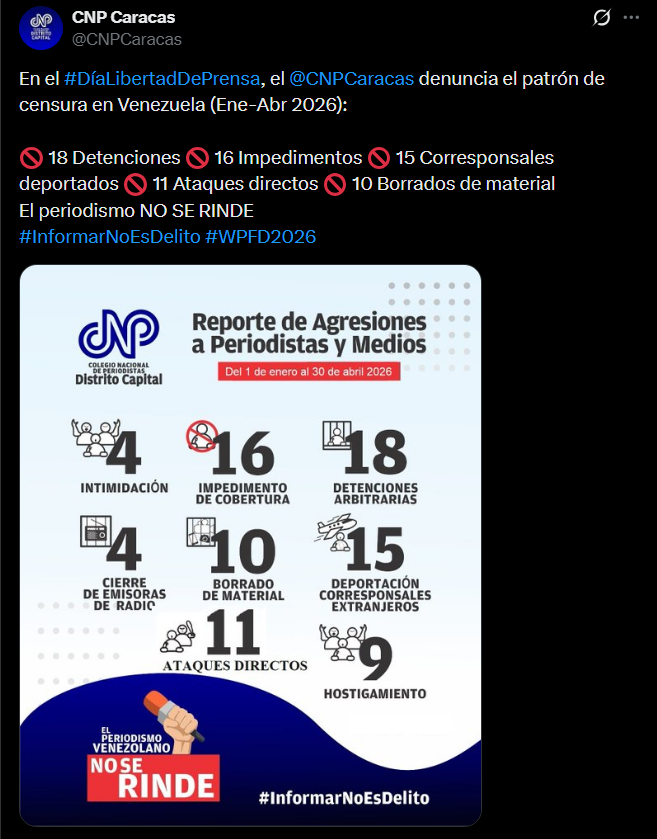
The National College of Journalists, a union body that brings together Venezuelan journalists, indicated this Sunday in a post by X that attacks against media workers continue.
According to the infographic published between January 1 and April 30, there have been 4 intimidations, 16 coverage impediments and 18 arbitrary arrests, among others.
IPYS considers that the impact is no longer measured “only in recorded attacks”, but in something that it considered “more difficult to quantify”, such as the topics that journalists fail to cover, the questions they avoid asking and the stories that are never told.
“Arrests of journalists during coverage, review and forced deletion of informative material, physical and verbal attacks, closures of stations and public warnings against media showed that documenting and disseminating information continues to imply an immediate risk, even in moments of high visibility,” denounced the NGO.
IPYS advocated for “democratic reconstruction” which, in its opinion, involves recovering “a minimum of guarantees that are absent today” and that implies the “cessation of judicial persecution”, the full release of “those who have been detained for expressing themselves” and the dismantling of the “mechanisms that sustain structural censorship.”
Journalism continues, but under what conditions?
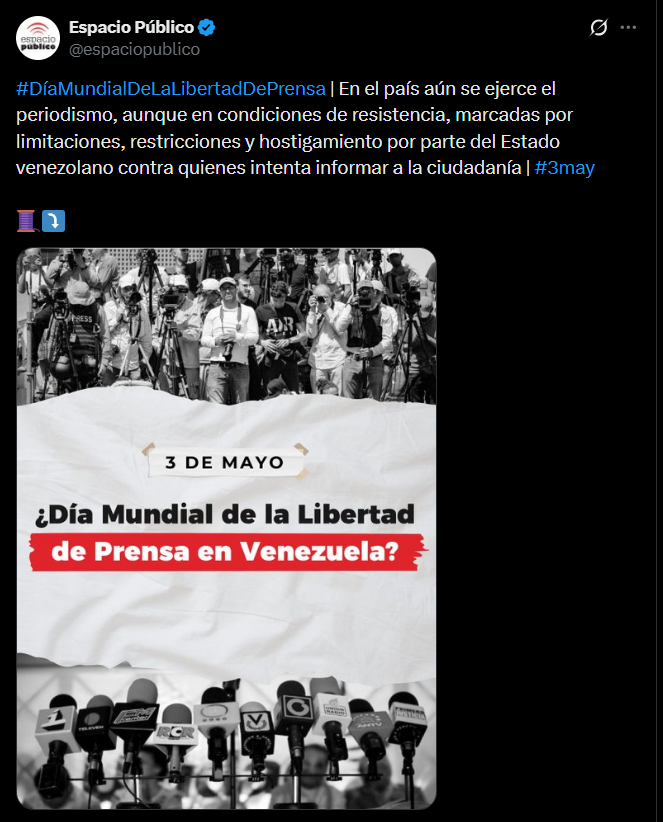
“Journalism is still practiced in the country, although in conditions of resistance, marked by limitations, restrictions and harassment by the Venezuelan State against those who try to inform citizens,” is the conclusion reached by Espacio Público, a Venezuelan NGO dedicated to recording cases of censorship and attacks on journalists. Its own director was detained in illegal conditions by the government of Nicolás Maduro.
Espacio Público, like Ipys, considers that the harassment against journalists in Venezuela responds to a pattern of control over information and public space.
Venezuela occupies the last place among 23 countries evaluated in the Chapultepec Index of Freedom of Expression and Press 2025, according to the report released last March by the Inter American Press Association (IAPA), which analyzes the conditions for the exercise of journalism in the Americas.
Venezuela is, along with Nicaragua, one of the countries “without freedom of expression”, according to the report
With information from EFE