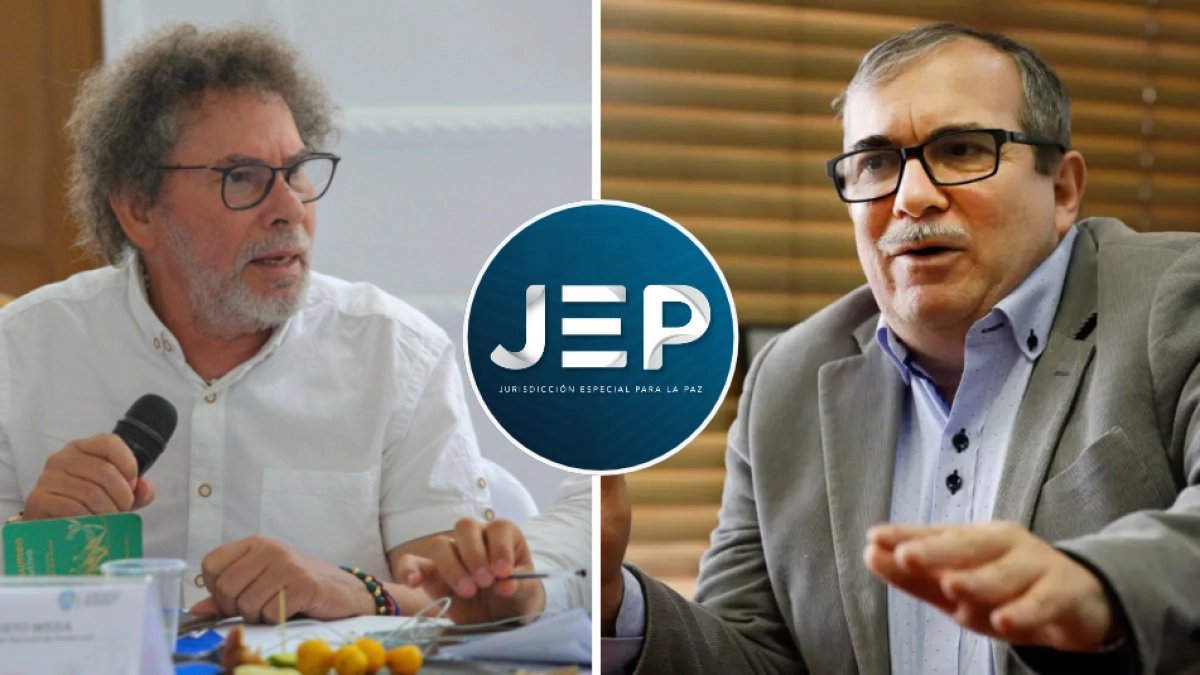
On the night of this Tuesday, November 3, the Special Jurisdiction for Peace (JEP) He charged 11 former commanders of the extinct Magdalena Medio and Caribe blocks of the extinct FARC.
Among the accused are also two members of the former secretariat: Rodrigo Londoño, alias Timochenko, and Pastor Lisandro Alape Lascarro, or Pastor Alape. The other nine were regional leaders.
READ ALSO
JEP press release
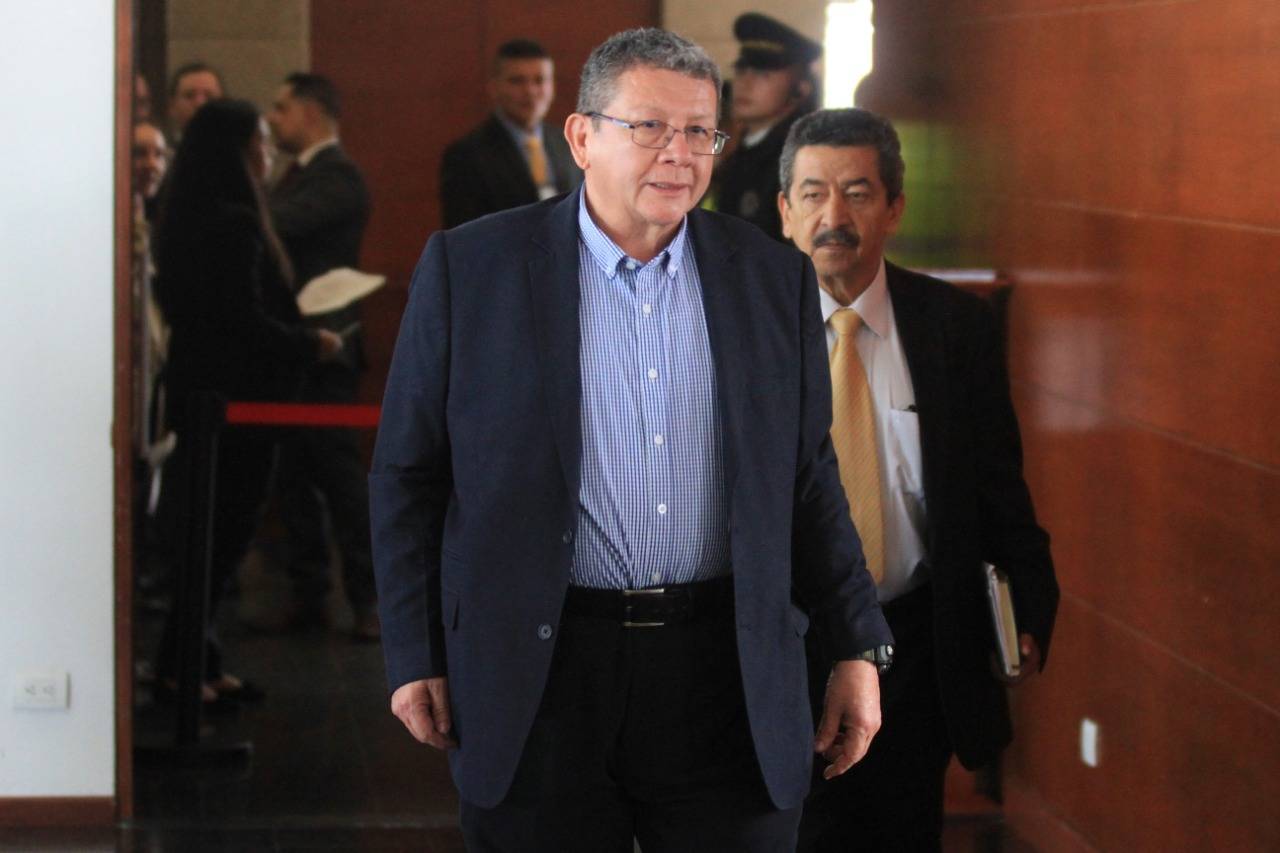
The former heads of the FARC Julián Gallo (i), Pastor Alape (c) and Rodrigo Londoño. Photo:Isabel Valdes. J.E.P.
The decision was announced through press release number 142, in which the facts and why the peace court adopted this measure are detailed.
These former commanders would have committed multiple war crimes and against humanity in the midst of the investigations of Case 10.
Among the regional commanders are Erasmo Traslaviña Benavides, alias Jimmy Guerrero; Pedro Trujillo Hernández, alias Alberto Cancharina; and Jairo Reinaldo Cala Suárez, alias Jairo Quintero, ringleaders of the extinct Magdalena Medio Block.
READ ALSO
For the Caribbean Block, they were charged Abelardo Caicedo Colorado, alias Solís Almeida; Osmany Landero Fajardo, alias Hernando González; Gilberto de Jesús Giraldo David, alias Aldemar Altamiranda; Luis Alejandro Cuadras Solórzano, alias Leonardo Muñoz; Uriel Antonio Oviedo Aldana, alias Mañe, and Héctor Enrique Hernández López, alias Fabio Borges.
Of those indicated, only alias Mañe had been captured before the peace agreement.
The Truth Recognition Chamber concluded that those investigated “are most responsible for the war crimes of homicide, forced displacement, “intentionally directing attacks against the civilian population, destroying or seizing enemy property.”
In addition to “direct attacks against assets protected by International Humanitarian Law (IHL) (such as hospitals, schools and churches), “killing or injuring treacherously (through deception), torture, cruel treatment, rape and sexual violence.”
READ ALSO
Likewise, they will have to respond to Restorative Transitional Justice for crimes against humanity such as “murder, forced population transfer, forced disappearance, torture and other inhuman acts, rape and sexual violence”which cannot receive ‘judicial forgiveness’ due to their seriousness.
“The decision documents acts committed by the extinct guerrilla that marked national history, such as the guerrilla takeover of Chalán and the attack with a “donkey bomb” in the same municipality of Sucre, in 1996; the attack against the caravan of Álvaro Uribe Vélez, in Barranquilla, when he was a presidential candidate, in 2002; and multiple massacres perpetrated in rural areas, such as that of the La Duquesa farm, in Tibú, Catatumbo, in 2004,” they described in the press release.
Patterns of crime and clarification
The JEP magistrates Óscar Parra, Alejandro Ramelli and Marcela Giraldo. Photo:JEP.
Among the documented events is also the car bomb against Caracol Radio in 2010.
The investigation also established that forced displacement was the most recurrent crime, with 263 events recorded, followed by 204 homicides and 53 forced disappearances.
The decision was based on the analysis of the stories of 733 victims, 72 reports from human rights organizations, complaints from the Prosecutor’s Office and versions of former members of the guerrilla.
The investigation reconstructed the events that occurred in territories where the presence of the State was scarce and ordinary justice failed to advance due to threats and murders of judicial officials.
READ ALSO
The JEP identified two major crime patterns: social and territorial control through persecution, murders, threats, sexual violence and forced displacement, in addition to the crimes committed during armed confrontations.
The 11 former commanders will have a term until December 8, 2026 to acknowledge its responsibility in writing or reject the accusations.
If they accept the facts and contribute to clarifying the truth, may participate in a recognition hearing and eventually receive restorative sanctions that include effective restrictions of freedom, but not prison.
READ ALSO

If they deny their responsibility, Their cases will go to the Investigation and Prosecution Unit of the JEP and they could face a trial with sentences of up to 20 years in prison.
The decision also seeks to clarify the whereabouts of 54 missing people and respond to the victims’ demands for truth and justice.
Raúl Andrés García Suárez
Editorial Latest News
raugar@eltiempo.com