The president’s government Abelardo De La Espriella is, once again, a few hours away from the deadline to carry out one of its bets in Congress: the submission law, which must be approved no later than this November 4 and that seeks to establish a legal framework so that members of criminal gangs and illegal armed structures lay down their weapons and submit to justice.
Under the pressure of the little time remaining for its last debates in the plenary sessions of the Senate and the House and with the precedent of the procedural errors that occurred in the Budget debate, which forced the Executive to issue it via decreeis that the representatives met this holiday Monday to continue with the process of the submission law, which has had difficulties at various times in forming a quorum.
Minister Iván Cancino, in the debate of the submission law in the plenary session of the Chamber. Photo:MINJUSTICE
The formal discussion in plenary It started around 5:00 p.m. and was preceded by several statements, challenges and requests to change the agenda and postpone the vote. At around 10:00 at night, the legislators approved the positive report with 90 votes against 44 and defeated the negative one, presented by the Historical Pact, with 102 votes against 47. However, the opposition claimed a procedural defect, since the speaker Daniel Briceno He did not give a presentation before voting opened.
READ ALSO
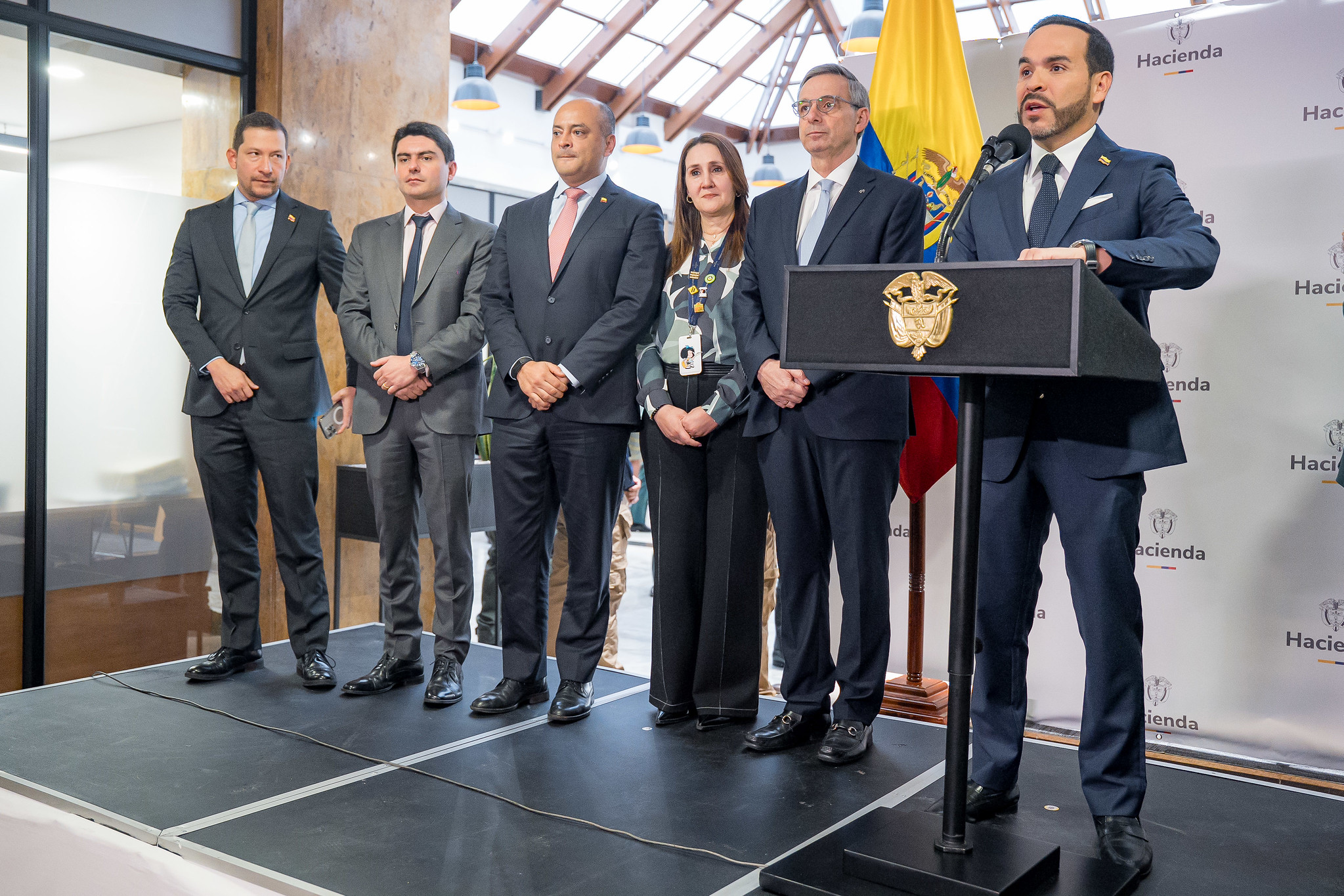
And although the ruling party denied that there was an irregularity, the vote ended up being reopened to avoid inconsistency and stop the constitutionality demands that the Pact promised to present. The reopening was also questioned by several legislators.
Previously, the president of the House, Nicolas Barguil (Conservative Party), said publicly that the objective of the summons was to approve the project that same day: “It is a law that gives the State the tools to continue confronting criminal structures and strengthen actions to recover public order. The objective of this Monday is to advance its approval, so we can guarantee that if the Senate and Chamber texts are different, we can reconcile this Wednesday”.
The desire to move forward with this proposal is that it is an extension of the public order law, which expires on November 4 in accordance with the provisions of the ‘total peace’ law of the previous government. It was in this mandate that the last extension of this norm was given, which has established the peace and security policy of each administration since 1997.
In Congress and in the Government, the thesis predominates that if the new extension is not enacted this Wednesday, everything contained in the Public Order Law, 418 of 1997, would collapse, which would affect several issues that have been added to this legislation, such as the case of the witness protection program of the Prosecutor’s Office.
READ ALSO
In addition to the legal aspect, not achieving approval of the law It could hit the image of the De La Espriella government and call into question its ability to reach consensus. And this after the controversy over the procedural defect in the discussion of the 2027 Budget, one of the reasons why it came out Rodrigo Lara of the Ministry of the Interior, a portfolio that in the coming days will be fully assumed by the former attorney Alejandro Ordóñez.
And although there are voices in the Legislature that assure that discussions on this legal framework could be resumed after November 4, the Executive does not want to take risks and is intensifying dialogues with the benches to maintain the quorum and achieve the necessary votes in the plenary sessions. In turn, The technical teams of the Ministry of Justice are paying full attention to ensuring that the texts of both chambers coincide and thus move away from the controversial antecedent.
The times, in any case, are tight, because although the House of Representatives resumed the debate, the part of the Senate plenary is missingwhich was scheduled for this Tuesday. Both chambers will only have one day to reconcile and vote on the text. If there is a failure in any step, as happened with the Budget in the article 65the public order law would lose validity and the Government would have to look for new alternatives to fully carry out its intentions.
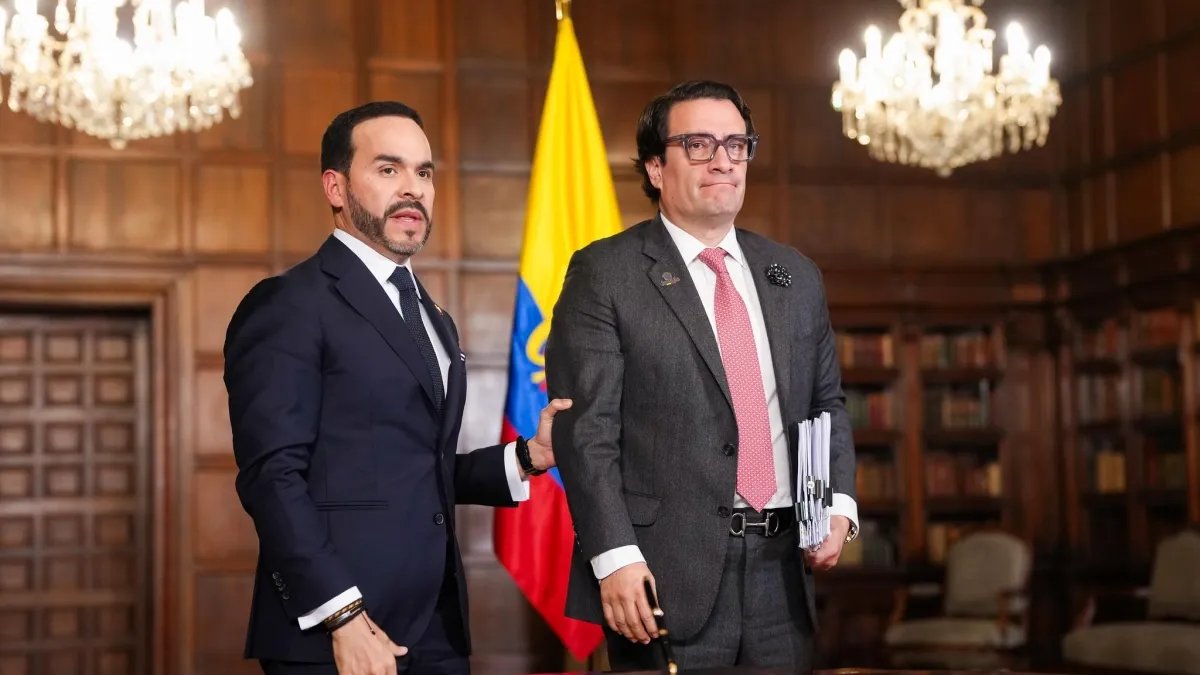
Iván Cancino, Minister of Justice, in Congress. Photo:Minjusticia.
“We hope to move the project forward. Zero return of goods for people. No arrest warrants will be issued. Extradition issues will not be suspended. To submit, you have to comply with very clear rules, obviously leaving weapons behind, listing assets, listing people, finding missing or kidnapped people, giving information about the organizations’ links with various sectors of the population, not necessarily politicians,” said the Minister of Justice. Ivan Cancinowho has been leading the process and temporarily taking charge of the Home Office.
The Legislature assures that space has been given to the submission law and that a clear example is that it has been cited more frequently. “We are moving forward with the submission law. We scheduled Tuesday to debate the articles. We are working at full speed. When have you seen the Senate work on a Wednesday, Thursday and Friday? We are delivering for the Colombians,” said the president of the Senate. Honorio Henriquez (Democratic Center).
Honorio Henríquez, president of the Senate. Photo:@SenateGovCo
And the speaker coordinator, Hernan Cadavidalso highlighted the progress achieved: “The archival presentations, the majority presentation, were voted on and progress is being made with an important article. Yes, we have time against us, but I see the will to move the project forward”.
Among the points approved are article 14, which creates differentiated criminal treatment for those who submit; 22, which seeks to establish special protection for victims of sexual violence; on the 23rd, political disqualifications for those who submit. The bulk of the project remains, especially those points that generate controversy, such as the penalties for those who submit to and commit crimes such as money laundering.
PENDING ADJUSTMENTS
In addition to the questions raised by the opposition, from the Ombudsman’s Officewhich in general terms is in accordance with the law of submission, some proposals were made to the De La Espriella government to adjust parts of the articles and specify some terms in order to guarantee the rights of the victims.
From Congress, defender Iris Marín maintained her support for the initiative, but asked for the review of some points: “The Ombudsman agrees with the approach of the billhas a comprehensive approach that takes into account security policies and the strengthening of justice. It also makes progress in victims’ rights.”
The Ombudsman, Iris Marín Ortiz. Photo:EL TIEMPO-Screenshot
The objections he raised are two. One has to do with the proportionality of the sanctions for those who submit to justice. And there are some criminal surrogates that could lead to reducing the time that a beneficiary serves in prison: “We require a plan, and for that we call on the Government to activate the financing commission for the reparation of victims.”
Another adjustment that he requested is that the definition of the illegal groups that can be submitted be specified. He said that two issues must be eliminated: the ability to affect peaceful coexistence and citizen security. “This generates, said in colloquial terms, that a gang of apartment workers can submit. Or more critical interpretations for human rights, such as that events related to social protest are understood as organized crime.
Only 24 hours left to approve the project in its entirety, close the chapter of total peace of the previous mandate and give ground to one of the promises that De La Espriella made during the campaign regarding security.
POLITICAL DRAFTING