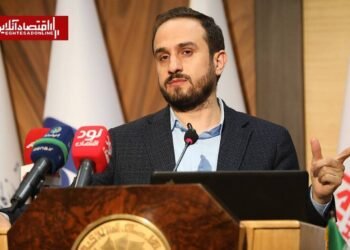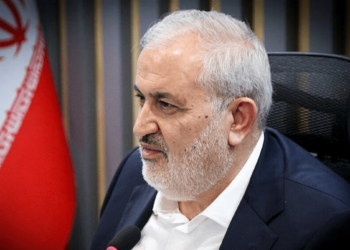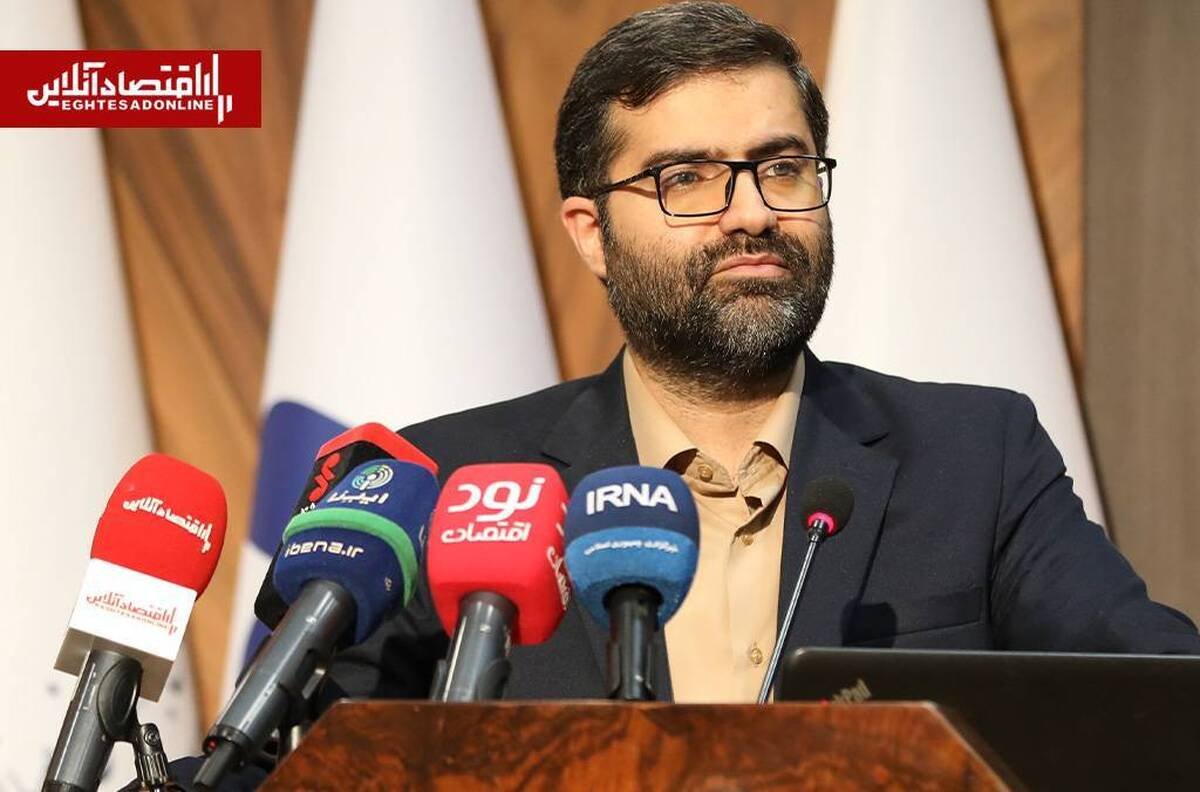
According to Ekhtazonline reporter, in the business conference in crisis, which is being held by Ekhtazonline media group and National Entrepreneurship Organization, Saqab Esfahani, the vice president and head of the Energy Optimization and Strategic Management Organization, while explaining the latest situation of the country in post-war conditions, said that the country is in one of the most complex and decisive periods of its history and this period should be evaluated without preliminaries and with a strategic perspective.
He added: We were in a difficult and costly confrontation, but despite all the difficulties, we were able to successfully navigate the path at the strategic level. This is the first time in modern history that Iran has come into conflict with a country that is more than 15 times our size and power, and yet, we have not failed in any of the strategic indicators.
Esfahani clarified that the criteria for victory in asymmetric wars are completely different from classical wars, and the enemy, especially in the official positions and comments of personalities such as the former American president, had set his goal to “change the map, change the political geography, or change the governance structure of Iran,” but “none of these goals were achieved.”
The vice president and the head of the Energy Optimization and Strategic Management Organization explained: Today, the territorial integrity of the country has been preserved, the internal cohesion has not only not been damaged, but has been strengthened. The vital functions of Iran’s economy have not been lost; It may be weakened in some areas, but it is still standing and active. Most importantly, the enemy’s political will could not be imposed on us.
He pointed out that Iran has neither given land, nor been occupied, nor has the state structure collapsed, nor has the economy failed, while “the indicators targeted by the enemy were precisely designed to cause such a collapse.” According to him, this situation is “unprecedented in the last 2,500 years of Iran” and the other side is now designing a “way out of the deadlock” that it has created.
Esfahani emphasized that the country should be ready for possible sudden and risky actions by the enemy in the current situation and explained: “In such wars, the other side negotiates in the field of diplomacy and seeks to change plans in the military field. Therefore, it is necessary to maintain balance points and manage the situation.”
At the same time, he stated that every great victory comes at a cost and “it is not right to hide this fact” because people will see the results in the coming days. He added: “Some reserves of the country were damaged, some fields were challenged, some forces and industries were damaged. These are the real costs of war and should not be hidden from the people.”
In another part of his speech, Esfahani said that the damages caused in the field of oil, gas, gasoline and diesel were less than the initial estimates, but it will take “about one and a half to two years” to return to the pre-war situation – which was also not favorable. He stressed: “The energy imbalance, which was challenging before the war, is now both deeper and more obvious.”
He added that the government is in one of the most difficult periods in its history, and despite political complications, external restrictions and recent events, “it managed to manage this difficult phase successfully.”
The vice president then pointed to the organization’s plans for this year and explained: “Our main goal is to maintain the flow of energy for the production sector – including industry, agriculture and services – as much as possible. “If we don’t plan, this year, especially in winter, we will face a sharp decrease in energy supply to the industry.”
He stated that although increasing energy production or diversifying the country’s energy portfolio are correct strategies, they are “not responsive in the short term” and will yield results in the medium and long term. According to him, “the effective short-term strategy is to reduce consumption and increase productivity, not simply increase supply.”
Esfahani clarified: “We have to target consumption.” If a mining unit consumes 70 megawatts but can reach 50 megawatts by modifying the equipment and technology, it is the right path. Iran’s economy has been involved in industrial exhaustion for years, and there is a huge saving capacity in this sector.
He pointed out that the energy imbalance of the industry is highly dependent on the consumption of the household sector and “as long as the household consumption accounts for 70-80% of the network load in peaks, the pressure on the industry will continue.” “Policies that only restrict industry but leave the domestic sector alone are completely wrong,” he said.
He explained three strategies to reduce household consumption: 1. extensive replacement of household equipment by the government; According to him, it is “costly and ineffective”.
2. sharp increase in energy prices; which is “not sustainable and feasible” due to past unsuccessful experiences.
3. Designing an incentive-based incentive system; That is, if households consume less than the quota, they are allowed to sell the excess quota to the industry.
Esfahani explained: “For the first time, we have to accept that mandated policies will fail. When people benefit from saving, they modify their consumption model; No order, no coercion.”
He added that this model can also be implemented in the industry; “Instead of energy subsidies being given to production inputs, they should be allocated to technology and equipment renewal.”
He emphasized: “With this method, the problem of dissatisfaction will be solved without the direct help of the government and with the same available resources; As I say: it is fried in its own oil.
Esfahani stated that the future of investment in Iran is not in producing more energy or producing more home appliances, but in “increasing productivity and changing lifestyles”. He said: “A large part of today’s crisis in Iran’s economy is caused by low productivity, and this critical period is the golden opportunity to correct it.”
In the end, the vice president emphasized: Mandatory and coercive approaches are not sustainable. The historical experience of the past 40 years has shown that any policy that was supposed to be put together after the emergency, has never been put together. Therefore, we must enter the field with the right approach from today.
The head of the Energy Optimization and Strategic Management Organization, emphasizing on changing the governance approach, said: “Government is a burden for governance, and we should remove the burden of government from governance by handing over affairs to the private sector.”