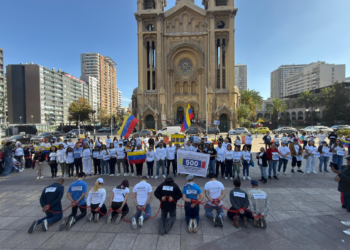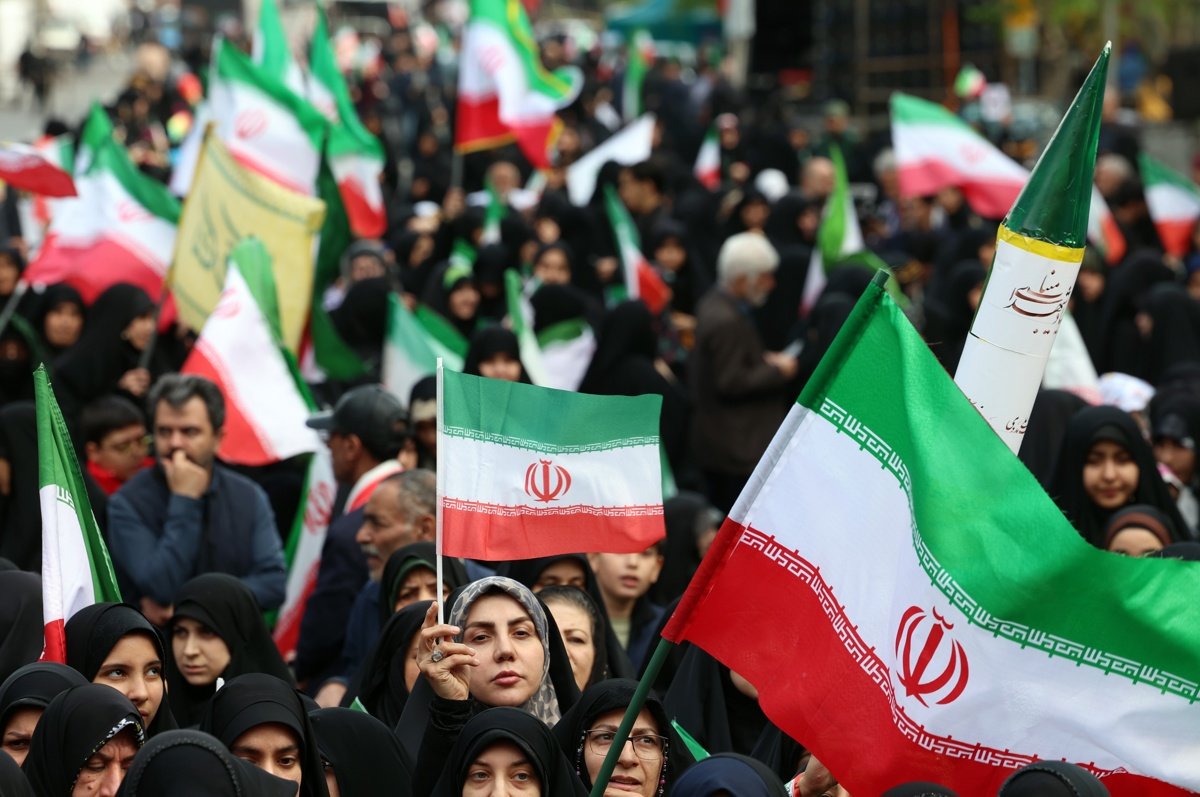
Thousands of people formed human chains this Tuesday in front of power plants and bridges in different cities in Iran to protest against the threats of attacks by the President of the United States, Donald Trump, who has warned that he will attack these infrastructures if Tehran does not reopen the Strait of Hormuz.
In Tehran, hundreds of people gathered outside the country’s largest power plant, Damavand, carrying Iranian flags and condemning US threats to attack vital infrastructure, according to images broadcast by Iranian state television.
In the western city of Kermanshah, a group of protesters gathered in front of the Bisotun power plant, where they carried photographs of the late Supreme Leader Ali Khamenei and his successor and son Mojtaba Khamenei, denouncing that attacking electrical infrastructure constitutes a war crime, according to the Mehr agency.
Human chains also formed in front of the thermal power plant in the northwestern city of Tabriz and the Shahid Rajaei power plant in the northern city of Qazvín.
The mobilizations were replicated in other parts of the country. In Dezful (southwest), students formed a human chain on the city’s historic bridge, more than 1,700 years old, in their defense against Trump’s threats.
These actions are part of a government campaign that called on the country’s youth to form human chains today to “stage a symbol of unity and resistance against the enemy,” according to the Deputy Minister of Youth Affairs of the Ministry of Sports, Alireza Rahimi, said this morning.
Rahimi indicated that “the young people of Iran, with any ideology or preference, will unite to tell the world that attacking public infrastructure is a war crime.”
Figures of Iranian culture, including the Iranian musician Ali Gamsari and the singer Benyamin Bahadori, yesterday began to settle in the vicinity of power plants and bridges in the face of Trump’s threats to “unleash hell” if Tehran does not reopen Hormuz before 8:00 p.m. on Tuesday the 7th in Washington (00:00 GMT on Wednesday).
Since the beginning of the war, Tehran has blocked the transit of ships through the Strait of Hormuz, through which 20% of the world’s oil transits, and only allows passage to ships from countries it considers allies, which has skyrocketed the price of oil, among other products.