An omelette sounds like a dish that can’t go wrong – just a few eggs, a pan, a few minutes, and you’re done. However, many unknowingly make the same mistake, which results in the food being dry and not at all like the soft, airy omelette that you want.
In fact, the problem is almost never in the recipe itself – it lies in one seemingly small detail that significantly affects the result, and it can be easily changed the next time you stand at the stove, the cooking experts from “Serious Eats” teach.
The main mistake: too high a temperature
Most people cook an omelette on too high a heat, thinking that it will be faster. As a result, the eggs set too quickly – the moisture evaporates, and the texture becomes dry, even a little rubbery.
Eggs are very sensitive to heat – they actually like to be cooked slowly and evenly rather than being “shocked” on a hot pan.
What happens to the egg in the pan?
When the mass reaches a too hot surface:
- protein breaks down too quickly,
- the liquid separates and evaporates,
- the texture becomes dense rather than creamy.
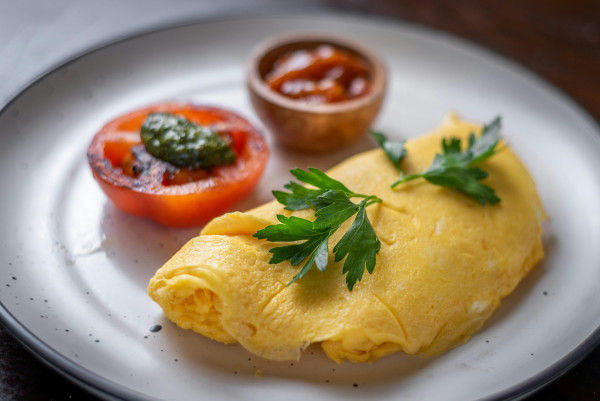
That is why omelettes in restaurants are soft and juicy – they are not fried in a hurry.
How to fix it (really easy)!
To make the omelet soft and airy, reduce the heat and cook on medium or even low heat.
Take your time – let the eggs coagulate slowly. It takes a minute longer, but the result is completely different.
Lightly mixing in the first few seconds helps to get a smooth, creamy texture, and if you want an even better result, add a little milk or cream and a pinch of salt to the egg mixture only at the end of baking – this helps retain moisture and improves the texture.
A dry omelette is not inevitable – it is almost always just the result of too much heat. When you slow down and let for eggs prepare more calmly, they “pay off” with a completely different taste and texture.