In Ireland, the Coalition took flak from all sides for failing to respond adequately to people’s concerns. The capital was paralysed and communities across the country were disrupted by illegal blockades and protesters seizing control of streets.
Managing shocks of this scale in any democracy requires a top-down response, not a bottom-up one. Against that backdrop, the measures announced by the EU to tackle the impact of the energy crisis are welcome.
A number of proposals, including price controls, income-support schemes and tax incentives, are to be introduced to ease pressure on households.
Other initiatives, such as accelerating legislation to boost cross-border grid-sharing and promote renewables, are also being brought forward to expand consumer choice.
All are necessary and, if anything, long overdue. The EU benchmark gas price has risen by almost 33pc since the Iran war began.
The European Commission has described its proposals as a “toolbox” designed to deliver immediate relief for consumers and industry alike. Price pressures are placing enormous strain not just on economies, but on individuals.
If there is any silver lining to the conflict, it is that it has forced governments to focus more urgently on green options.
Reducing our dependence on imported fossil fuels is in all our shared interests
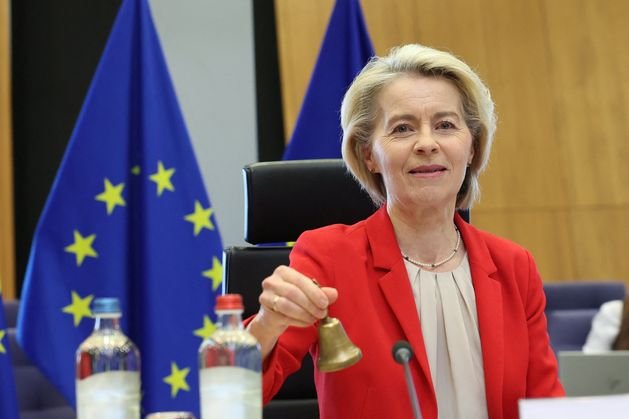
As EU Commission president Ursula von der Leyen put it: “We must accelerate the shift to homegrown, clean energies. This will give us energy independence and security and mean we are better able to weather geopolitical storms.”
In truth, there was already no alternative but to radically reduce carbon footprints. The fragility of supply chains, combined with the absence of any discernible off-ramp to the Gulf conflict, underlines the need for far greater energy self-sufficiency.
EU member states will have to co-operate more closely to manage supplies and mitigate spikes in demand and prices. As Ireland’s EU Commissioner, Michael McGrath, has said: “Reducing our dependence on imported fossil fuels is in all our shared interests.”
There is no closer prospect of resolution in the Gulf. Mr Trump’s serial apocalyptic threats, followed by sudden diplomatic handbrake turns, make it futile to speculate on any deal’s timeline.
In a string of contradictory remarks on Tuesday, he said “I expect to be bombing”, adding that the military was raring to go as a deadline he vowed not to extend loomed. Moments later, he claimed Iran would attend talks starting on Wednesday.
The effect has been to deepen Tehran’s wariness and leave the rest of the world on edge. It is to be hoped that a path back to negotiations can still be found, but that will only be possible if Tehran and Washington abandon their absolutist, maximalist positions.