
Photo: ANTONIO BAT/EPA/Shutterstock
Michelle Roberts Feature, BBC Health
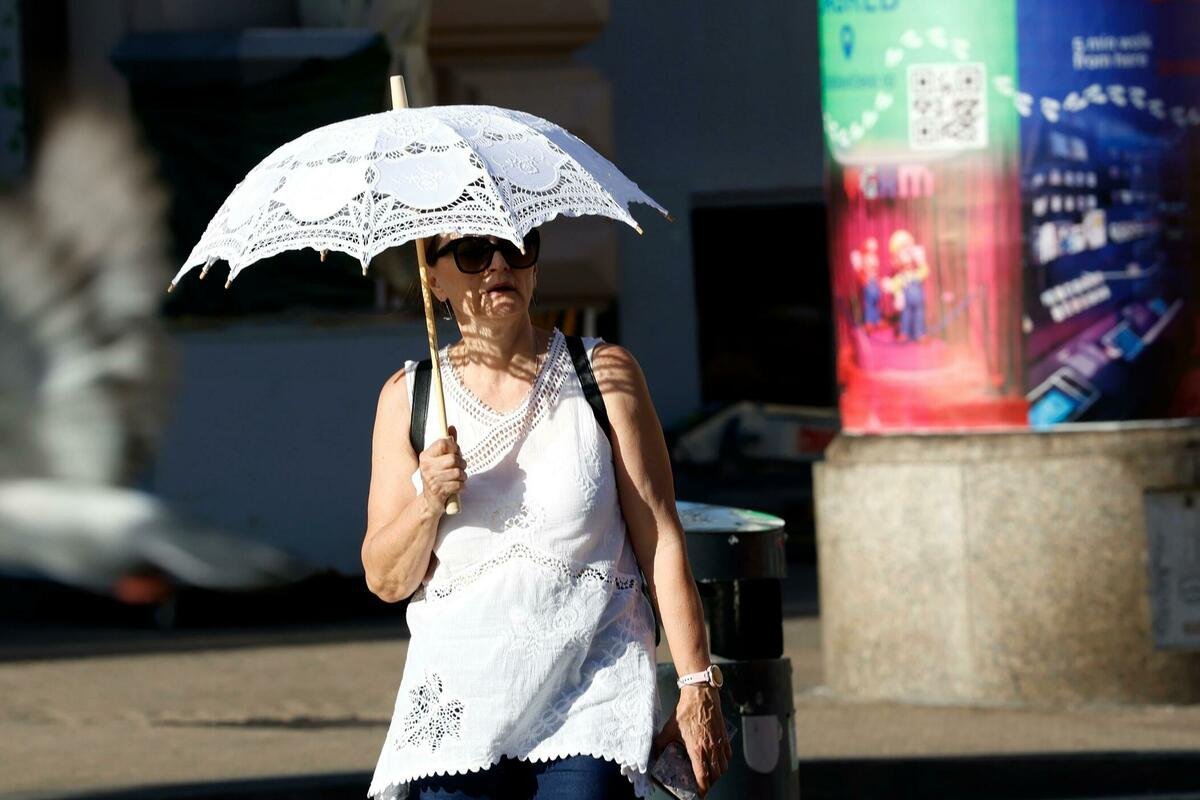
During extreme heat, it’s easy to overheat and experience exhaustion or stroke.
Heat exhaustion it’s usually not serious as long as you can cool down, but heatstroke is an emergency that requires medical treatment.
Certain groups, such as older people, young people and those with chronic diseases may be at greater risk.
What’s the difference?
Heat exhaustion is a condition in which the body has become too warm due to which it is unable to regulate body temperature.
The obvious sign is excessive sweating, feeling hot and weak – your body’s warning signs to cool down – immediately.
Other symptoms include:
- headache
- dizziness and confusion
- loss of appetite
- cramps in the arms, legs and stomach
- rapid breathing and faster pulse
- temperature of 38 degrees and above
- constant thirst
Young children, who can’t tell you how they feel, can become clumsy or sleepy all the time.
Heat exhaustion can affect anyone, even people who exercise regularly and live a healthy lifestyle.
It can happen quickly, in a minute, or gradually – over several hours.
Certain medications can also worsen your body’s temperature regulation, which can cause you to get sunburned, dizzy, or dehydrated.
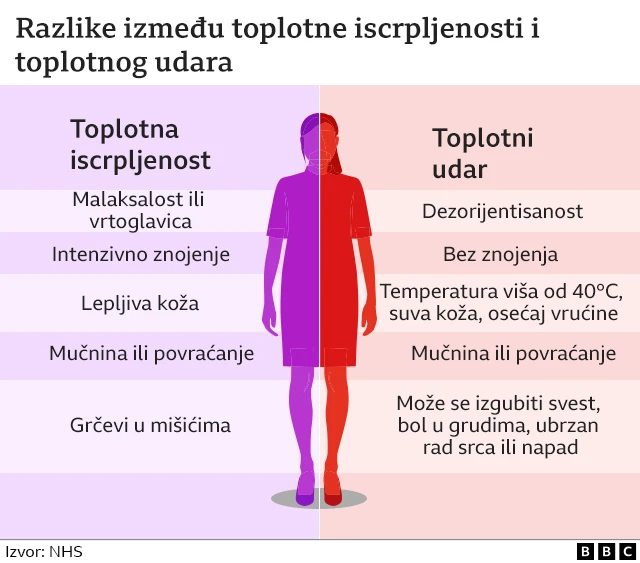
Heat exhaustion can turn into a stroke, which requires immediate medical attention.
This means that the body can no longer regulate the temperature and it rises.
Look out for these signs and act quickly:
- feeling weak after 30 minutes of rest in a cooled room and drinking lots of fluids
- don’t sweat even though you are very warm
- you have a temperature of 40C or higher
- rapid breathing or shortness of breath
- confusion
- loss of consciousness
- no reaction
What to do?
If you suspect that someone near you has symptoms of heat exhaustion:
- place it to rest in a cool place, such as an air-conditioned room or outside in the shade
- remove excess clothing to allow the skin to ‘breathe’
- cool him down – use whatever you have to hand, from a sponge soaked in cold water, a towel, dousing him with water from a bottle or wet cloths to wrap around his neck, arms and legs
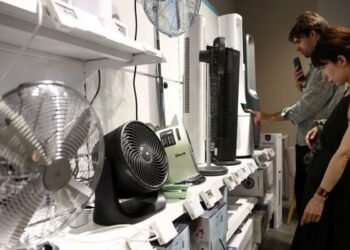
- cool it with a fan or paper while the skin is wet – this helps the water evaporate and cool the skin
- give him water to drink – refreshing drinks will do as well
- stay with the vulnerable until you notice changes for the better
If the condition does not improve after 30 minutes and you suspect that they have heatstroke, call the Emergency Service – for Serbia, North Macedonia and Croatia 194, Bosnia and Herzegovina 124, Montenegro 129 and Albania 127.
You can also contact the emergency services through the unique European emergency number 112.
BBC is in Serbian from now on and on YouTube, follow us HERE.
Follow us on Facebook, Twitter, Instagram, YouTube and Viber. If you have a topic suggestion for us, please contact bbcnasrpskom@bbc.co.uk
Download the application and follow the news


FOLLOW US ON

News