Friday, June 26, 2026
    The GeoStrategic Consensus
    No Result
    View All Result
    • Login
    • HOME
    • AMERICAS
      • Argentina
      • Brazil
      • Canada
      • Chile
      • Colombia
      • Costa Rica
      • Cuba
      • Dominican Republic
      • Ecuador
      • El Salvador
      • Greenland
      • Guatemala
      • Honduras
      • Mexico
      • Nicaragua
      • Panama
      • Paraguay
      • Peru
      • United States
      • Uruguay
      • Venezuela
    • ASIA-PACIFIC
      • Australia
      • Brunei Darussalam
      • Cambodia
      • China
      • Federated States of Micronesia
      • Fiji
      • Indonesia
      • Japan
      • Kiribati
      • Laos
      • Malaysia
      • Marshall Islands
      • Mongolia
      • Myanmar
      • Nauru
      • New Zealand
      • North Korea
      • Palau
      • Papua New Guinea
      • Philippines
      • Samoa
      • Singapore
      • Solomon Islands
      • South Korea
      • Taiwan
      • Thailand
      • Timor-Leste
      • Tonga
      • Tuvalu
      • Vanuatu
      • Vietnam
    • CARICOM
      • CARICOM – Non-English
        • Haiti
        • Suriname
      • CARICOM Associates
        • Anguilla
        • Bermuda
        • British-Virgin-Islands
        • Cayman-Islands
        • Curacao
        • Turks-and-Caicos
      • CARICOM English
        • Antigua and Barbuda
        • Barbados
        • Belize
        • Dominica
        • Grenada
        • Guyana
        • Jamaica
        • Montserrat
        • Saint Kitts and Nevis
        • Saint Lucia
        • Saint Vincent and the Grenadines
        • The Bahamas
        • Trinidad and Tobago
    • EURASIA
      • Armenia
      • Azerbaijan
      • Balarus
      • Georgia
      • Kazakhstan
      • Kyrgyzstan
      • Moldova
      • Russia
      • Tajikistan
      • Turkmenistan
      • Ukraine
      • Uzbekistan
    • EUROPE
      • Albania
      • Andorra
      • Austria
      • Bosnia and Herzegovina
      • Bulgaria
      • Croatia
      • Cyprus
      • Czech Republic
      • Denmark
      • Estonia
      • Finland
      • France
      • Germany
      • Greece
      • Holy See
      • Hungary
      • Iceland
      • Ireland
      • Italy
      • Kosovo
      • Latvia
      • Liechtenstein
      • Lithuania
      • Luxembourg
      • Malta
      • Monaco
      • Montenegro
      • Netherlands
      • North Macedonia
      • Norway
      • Poland
      • Portugal
      • Romania
      • San Marino
      • Serbia
      • Slovakia
      • Slovenia
      • Spain
      • Sweden
      • Switzerland
      • United Kingdom
    • MIDDLE EAST AND NORTH AFRICA
      • Algeria
      • Bahrain
      • Egypt
      • Iran
      • Iraq
      • Israel
      • Jordan
      • Kuwait
      • Lebanon
      • Lybia
      • Morocco
      • Oman
      • Palestinian Territories
      • Qatar
      • Saudi Arabia
      • Syria
      • Tunisia
      • Turkey
      • United Arab Emirates
      • Western Sahara
      • Yemen
    • SOUTH ASIA
      • Afghanistan
      • Bangladesh
      • Bhutan
      • India
      • Maldives
      • Nepal
      • Pakistan
      • Sri Lanka
    • SUB-SAHARAN AFRICA
      • Angola
      • Benin
      • Botswana
      • Burkina Faso
      • Burundi
      • Cabo Verde
      • Cameroon
      • Central African Republic
      • Chad
      • Comoros
      • Cote d’Ivoire
      • Democratic Republic of the Congo
      • Djibouti
      • Equatorial Guinea
      • Eritrea
      • Eswatini
      • Ethiopia
      • Gabon
      • Gambia
      • Ghana
      • Guinea
      • Guinea Bissau
      • Kenya
      • Lesotho
      • Liberia
      • Madagascar
      • Malawi
      • Mali
      • Mauritania
      • Mauritius
      • Mozambique
      • Namibia
      • Niger
      • Nigeria
      • Republic of the Congo
      • Rwanda
      • Sao Tome and Principe
      • Senegal
      • Seychelles
      • Sierra Leone
      • Somalia
      • South Africa
      • South Sudan
      • Sudan
      • Tanzania
      • Togo
      • Uganda
      • Zambia
      • Zimbabwe
    • HOME
    • AMERICAS
      • Argentina
      • Brazil
      • Canada
      • Chile
      • Colombia
      • Costa Rica
      • Cuba
      • Dominican Republic
      • Ecuador
      • El Salvador
      • Greenland
      • Guatemala
      • Honduras
      • Mexico
      • Nicaragua
      • Panama
      • Paraguay
      • Peru
      • United States
      • Uruguay
      • Venezuela
    • ASIA-PACIFIC
      • Australia
      • Brunei Darussalam
      • Cambodia
      • China
      • Federated States of Micronesia
      • Fiji
      • Indonesia
      • Japan
      • Kiribati
      • Laos
      • Malaysia
      • Marshall Islands
      • Mongolia
      • Myanmar
      • Nauru
      • New Zealand
      • North Korea
      • Palau
      • Papua New Guinea
      • Philippines
      • Samoa
      • Singapore
      • Solomon Islands
      • South Korea
      • Taiwan
      • Thailand
      • Timor-Leste
      • Tonga
      • Tuvalu
      • Vanuatu
      • Vietnam
    • CARICOM
      • CARICOM – Non-English
        • Haiti
        • Suriname
      • CARICOM Associates
        • Anguilla
        • Bermuda
        • British-Virgin-Islands
        • Cayman-Islands
        • Curacao
        • Turks-and-Caicos
      • CARICOM English
        • Antigua and Barbuda
        • Barbados
        • Belize
        • Dominica
        • Grenada
        • Guyana
        • Jamaica
        • Montserrat
        • Saint Kitts and Nevis
        • Saint Lucia
        • Saint Vincent and the Grenadines
        • The Bahamas
        • Trinidad and Tobago
    • EURASIA
      • Armenia
      • Azerbaijan
      • Balarus
      • Georgia
      • Kazakhstan
      • Kyrgyzstan
      • Moldova
      • Russia
      • Tajikistan
      • Turkmenistan
      • Ukraine
      • Uzbekistan
    • EUROPE
      • Albania
      • Andorra
      • Austria
      • Bosnia and Herzegovina
      • Bulgaria
      • Croatia
      • Cyprus
      • Czech Republic
      • Denmark
      • Estonia
      • Finland
      • France
      • Germany
      • Greece
      • Holy See
      • Hungary
      • Iceland
      • Ireland
      • Italy
      • Kosovo
      • Latvia
      • Liechtenstein
      • Lithuania
      • Luxembourg
      • Malta
      • Monaco
      • Montenegro
      • Netherlands
      • North Macedonia
      • Norway
      • Poland
      • Portugal
      • Romania
      • San Marino
      • Serbia
      • Slovakia
      • Slovenia
      • Spain
      • Sweden
      • Switzerland
      • United Kingdom
    • MIDDLE EAST AND NORTH AFRICA
      • Algeria
      • Bahrain
      • Egypt
      • Iran
      • Iraq
      • Israel
      • Jordan
      • Kuwait
      • Lebanon
      • Lybia
      • Morocco
      • Oman
      • Palestinian Territories
      • Qatar
      • Saudi Arabia
      • Syria
      • Tunisia
      • Turkey
      • United Arab Emirates
      • Western Sahara
      • Yemen
    • SOUTH ASIA
      • Afghanistan
      • Bangladesh
      • Bhutan
      • India
      • Maldives
      • Nepal
      • Pakistan
      • Sri Lanka
    • SUB-SAHARAN AFRICA
      • Angola
      • Benin
      • Botswana
      • Burkina Faso
      • Burundi
      • Cabo Verde
      • Cameroon
      • Central African Republic
      • Chad
      • Comoros
      • Cote d’Ivoire
      • Democratic Republic of the Congo
      • Djibouti
      • Equatorial Guinea
      • Eritrea
      • Eswatini
      • Ethiopia
      • Gabon
      • Gambia
      • Ghana
      • Guinea
      • Guinea Bissau
      • Kenya
      • Lesotho
      • Liberia
      • Madagascar
      • Malawi
      • Mali
      • Mauritania
      • Mauritius
      • Mozambique
      • Namibia
      • Niger
      • Nigeria
      • Republic of the Congo
      • Rwanda
      • Sao Tome and Principe
      • Senegal
      • Seychelles
      • Sierra Leone
      • Somalia
      • South Africa
      • South Sudan
      • Sudan
      • Tanzania
      • Togo
      • Uganda
      • Zambia
      • Zimbabwe
    No Result
    View All Result
    Agentially
    No Result
    View All Result
    Home ASIA-PACIFIC China

    Hainan Free Trade Port redefines economic openness – Opinion

    The Analyst by The Analyst
    June 26, 2026
    in China
    Hainan Free Trade Port redefines economic openness – Opinion


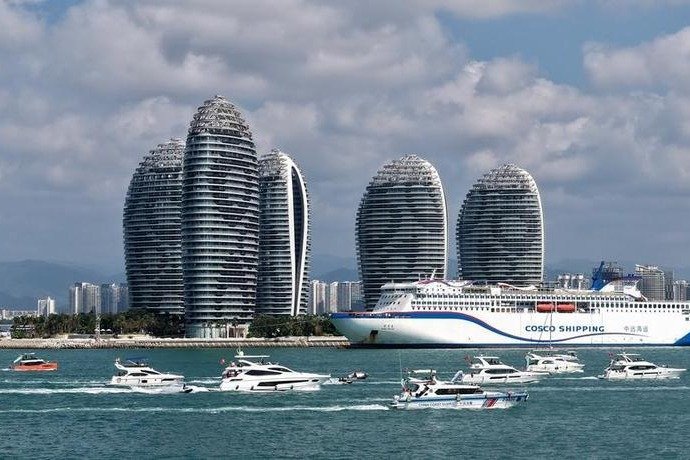
    A drone photo taken on Feb 21, 2026 shows tourists taking yachts in Sanya, South China”s Hainan province. [Photo/Xinhua]

    On Dec 18, 2025, the anniversary of China’s landmark reform and opening-up policy, Hainan launched island-wide special customs operations — a moment that transformed the entire tropical province into the world’s largest free trade in terms of area. Six months on, the numbers are striking, and the strategic logic is becoming clear.

    READ ALSO

    China’s innovation revolution is reshaping the future of technology – Opinion

    Remember past to safeguard future – Opinion

    Trade has surged. By the end of February 2026, Hainan’s total goods imports and exports had reached 65.49 billion yuan ($9.7 billion), up 29.1 percent year-on-year — outpacing the national average by 14 percentage points. Exports alone grew by 55.4 percent.

    Markets in the Association of Southeast Asian Nations, Africa and Latin America have all seen substantial growth, pointing to a genuinely diversified trade base rather than dependence on a single partner or region.

    But statistics alone do not capture what makes Hainan significant. To understand why this experiment matters — not just for China, but for the wider world — it helps to ask a simple question: why choose to open up precisely when so much of the world is closing down?

    The past few years have seen a wave of economic nationalism sweep through advanced economies.

    Tariffs have been raised, supply chains have been “reshored” in the name of security and trade policy has increasingly been wielded as a geopolitical weapon. Hainan represents a deliberate and confident move in the opposite direction, demonstrating that openness need not mean vulnerability.

    What makes Hainan different from previous Chinese free trade zones is not just its scale — though covering an entire province of 35,000 square kilometers is certainly unprecedented — it is the depth of its institutional openness.

    Zero tariffs now apply to over 6,600 categories of goods, up from around 1,900 before. A corporate income tax rate of 15 percent makes it one of the most competitive business environments in Asia.

    The customs framework itself is innovative. Goods move freely within the island; stricter checks apply only when products cross into the Chinese mainland market — what officials call “freer access at the first line, regulated access at the second line”.

    This gives foreign businesses a genuine staging ground: they can process, assemble and add value in Hainan before selling into China’s vast domestic market.

    One provision deserves particular attention. Imported products that undergo at least 30 percent value-added processing in Hainan can enter the mainland tariff-free.

    This single rule transforms Hainan from a transit point into a place where real economic activity — and real economic value — can be created.

    Critics might ask: is this not simply another special economic zone, a familiar feature of China’s development landscape since the 1980s? The answer is no, and the distinction matters.

    Earlier pilot free trade zones — there are now 24 of them, including the pioneering Shanghai FTZ established in 2013 — were designed as contained experiments. Hainan is something qualitatively different: a full-province model that builds on four decades of accumulated experience while breaking genuinely new institutional ground.

    It is a testing ground for cross-border trade financing, greater foreign exchange flexibility, and blockchain-based payment systems.

    For countries seeking alternative financial infrastructure, these pilots are worth watching closely.

    Perhaps the most distinctive aspect of Hainan, and the one least appreciated in mainstream media, is what it offers developing countries.

    The Global South is not a monolithic bloc, but its economies share certain common challenges: they export raw materials and agricultural commodities and struggle to move up the value chain. Hainan’s design speaks directly to these challenges.

    For ASEAN producers of palm oil, rubber, tropical fruits and fisheries products, Hainan offers preferential access to the Chinese market — one of the world’s largest — without the full burden of mainland customs compliance.

    More ambitiously, the value-added processing incentives mean that a Malaysian palm oil refiner or an Indonesian electronics assembler can locate operations in Hainan, add value and ship to Chinese consumers under favorable terms.

    This is a path from commodity exporter to processed-goods exporter — precisely the transition that development economists have long argued is essential for sustainable growth.

    A joint survey released on Hainan’s 100th day of customs operations found that over 70 percent of ASEAN enterprises surveyed already recognize Hainan’s strategic value as a platform for entering the Chinese mainland market. Export growth to ASEAN, Africa and Latin America has expanded substantially since December.

    The cooperation goes beyond trade in goods. Hainan is developing sectoral platforms in tropical agriculture, healthcare, green energy and the digital economy. The Boao Lecheng International Medical Tourism Pilot Zone has become a key channel for the entry of advanced pharmaceuticals into China.

    A green and digital innovation project in Baoting (a Li and Miao autonomous county in Hainan) is piloting climate-resilient development models that can be adapted and replicated in other island nations and developing countries.

    These are not conventional export-processing zones that funnel goods to Northern markets while leaving the local economy largely untouched. They are platforms for a different kind of cooperation — one in which China and developing country partners build capability together.

    Could other countries learn from the Hainan model? The answer depends on what one is trying to learn.

    Rules-based, institutional openness — where businesses can plan around predictable policies rather than arbitrary political decisions — is a sustainable competitive advantage.

    Singapore built its prosperity on this logic. Hainan is testing whether a larger, continental economy can do the same. The answer will be whether foreign enterprises move beyond registering in Hainan to actually producing there; whether the financial innovations gain traction; whether the trade links with ASEAN and the broader Global South deepen into genuine supply-chain integration.

    Traditional export-processing zones tend to create enclave economies: jobs and foreign exchange, but have weak links with domestic industry and little technological transfer.

    Hainan’s design — with its value-added incentives, sectoral cooperation platforms and integration across an entire province rather than a fenced compound — offers a more holistic template. For countries in Africa, Southeast Asia and Latin America that are weighing their development strategies, the lessons are potentially transformative.

    For advocates of multilateralism, Hainan is a timely reminder that trade liberalization can still be driven by unilateral ambition as much as negotiated agreement.

    Malaysia has already identified Hainan as a testing ground for high-standard implementation of the Regional Comprehensive Economic Partnership. If the experiment succeeds, it could provide practical momentum for wider regional integration at a moment when the multilateral trading system is under strain.

    Hainan is still in its infancy. But what the first six months have established is that the foundations are solid. The customs system works. The numbers are moving in the right direction. The institutional framework is in place.

    In a world where many governments are retreating behind walls, Hainan is a door held open.

    For trade partners, investors, and development planners across the Global South and beyond, that invitation deserves a serious response.

    The author is a former senior minister and special adviser to three successive prime ministers of Ethiopia and a British Academy Global Professor at SOAS University of London.

    The views don’t necessarily reflect those of China Daily.

    If you have a specific expertise, or would like to share your thought about our stories, then send us your writings at opinion@chinadaily.com.cn, and comment@chinadaily.com.cn.



    Source link

    Related Posts

    China’s innovation revolution is reshaping the future of technology – Opinion
    China

    China’s innovation revolution is reshaping the future of technology – Opinion

    June 26, 2026
    Remember past to safeguard future – Opinion
    China

    Remember past to safeguard future – Opinion

    June 26, 2026
    A new age of monetary multipolarity – Opinion
    China

    A new age of monetary multipolarity – Opinion

    June 26, 2026
    Moving AI innovation from laboratories to factory floors – Opinion
    China

    Moving AI innovation from laboratories to factory floors – Opinion

    June 25, 2026
    Japan’s meddling in Taiwan – Chinadaily.com.cn
    China

    Japan’s meddling in Taiwan – Chinadaily.com.cn

    June 25, 2026
    China

    Heihe dance competition opens with China-Russia friendship matches

    June 25, 2026
    Next Post
    Dengue outbreak in South Efate | News

    Dengue outbreak in South Efate | News

    POPULAR NEWS

    World Cup 2026.. This is the list of qualified and eliminated teams after the second round

    World Cup 2026.. This is the list of qualified and eliminated teams after the second round

    June 25, 2026
    A stronger Union for the Mediterranean for a stronger Mediterranean

    A stronger Union for the Mediterranean for a stronger Mediterranean

    June 26, 2026
    Plan to attract 8 million tourists

    Plan to attract 8 million tourists

    June 26, 2026
    Tourists fill Tallinn’s Old Town as locals head out of city | News

    Tourists fill Tallinn’s Old Town as locals head out of city | News

    June 25, 2026
    N.W.T. Fire reports ‘serious incident’ involving wildfire plane near Fort Simpson

    N.W.T. Fire reports ‘serious incident’ involving wildfire plane near Fort Simpson

    June 25, 2026

    EDITOR'S PICK

    PACNEWS TWO, 24 JUNE 2026

    PACNEWS TWO, 24 JUNE 2026

    June 25, 2026
    The effectiveness of the state support program for providing housing for displaced families from Karabakh will be increased

    The effectiveness of the state support program for providing housing for displaced families from Karabakh will be increased

    June 25, 2026

    Artists Explore Spirit and Symbolism of Horses at “Khiimori” Exhibition 70 days

    June 25, 2026
    New study examines growing interest in Catholic faith

    New study examines growing interest in Catholic faith

    June 25, 2026

    Recent Posts

    • UAE Expands Visa-on-Arrival: New Rules for Travellers from Indonesia, Vietnam, Thailand, Philippines, Kenya and South Africa
    • 12.6 billion dirhams, the value of non-oil trade between Dubai and Canada in 2025
    • World sickle cell anemia day.. Yemeni children struggle with pain and lack of medicine and blood
    • Minister of Culture and Arts met with UNICEF officials

      © 2026 Agentially - Navigating shifting sovereignties and global risk .

      Welcome Back!

      Login to your account below

      Forgotten Password?

      Retrieve your password

      Please enter your username or email address to reset your password.

      Log In
      No Result
      View All Result

        © 2026 Agentially - Navigating shifting sovereignties and global risk .

        This website uses cookies. By continuing to use this website you are giving consent to cookies being used. Visit our Privacy and Cookie Policy.